What It Really Takes To Perform at a High Level with Alex Joseph Grayson
TRANSCRIPT
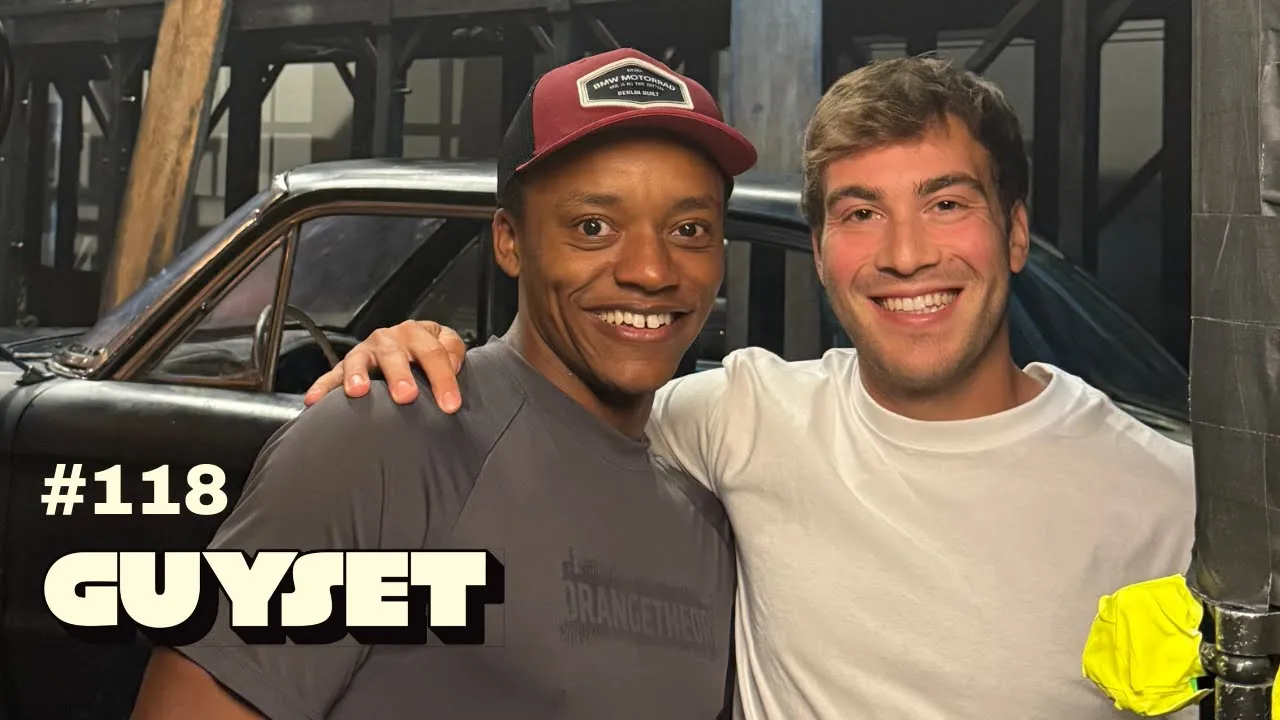
I'm Josh, I'm 25 years old, and I'm here every single Tuesday to talk about what should be talked about for guys in their 20s. Today I'm sitting down with Alex Joseph Grayson, who is currently starring as Dallas Winston in The Outsiders on Broadway. What I love about Alex is how intentional he is about everything, from his daily routine to how he approaches rejection in one of the most brutal industries out there.
We dive deep into what it actually takes to perform eight shows a week in one of the most physically demanding roles on Broadway. Alex breaks down his workout routine, his pre-show warmups, and how he decompresses after literally fighting on the stage every single night. But this conversation goes way beyond fitness and Broadway. Alex shares his four daily wins framework that completely changed how I think about building self-respect and momentum and that I will actually be implementing into my everyday because I loved it.
We also talk about dealing with rejection, joining new environments as an outsider, and why he believes every young guy needs to channel their energy into ferociously pursuing their dreams rather than playing by the rules designed to keep them small. If you've ever felt stuck in a routine, struggled with rejection, or wondered how to build unshakable confidence, this episode is for you. Without further ado, please welcome Alex Joseph Grayson to Guys.
you
Josh Felgoise (01:52.654)
Nice to meet you. Thanks for doing this. Very nice to meet you. How long have you been an outsider so far? I'm coming up on six months, which is really hard to believe, but time is moving very fast. Did you know that you always wanted to be on Broadway? I did not. I did not. It is something that I have sort of...
been guided into. I don't want to say stumbled. I think I've been a lifelong performer and I was lucky to have parents that sort of supported me on that and were like, you know what? needs a venue for this desire to express. I was doing a lot of like exhibitionist sort of street performing as a kid.
Very disorganized, just sort of like if I was out and about with my parents, I'd be singing or dancing. And I was obsessed with Michael Jackson as many kids were that were my age. you know, I think such a theatrical personality, Michael Jackson, you know? Yeah, yeah. And I think that was fascinating to me. And I was trying to emulate some of those things. And my mother is also an artist.
not professionals, she just, she paints and does sculpture and everything. She's actually a nurse by trade, but I was exposed to art at home in a way that it was just something that we did. And I was lucky to keep encountering people that were involved in more structured forms of artistic expression, whether it was being in the band at church or
doing community theater. did my first musical when I was 19 years old, actually. And it was a community theater production of Jesus Christ Superstar. I did an audition. They just needed more, they needed more boys. So I just joined the ensemble and that was my first exposure to this sort of like theater thing. So I had no idea what Broadway was until I was like 19 years old, actually.
Josh Felgoise (04:14.498)
And how old are you now? I'm 36. okay, nice. You look really young, by the way. Thank you so much. You're welcome. I probably, I would have thought you were like 27 maybe. What was your audition process like for the show? Like, it hard to get into the show? It was a little extended, so I auditioned for the original Broadway cast.
before the show opened on Broadway. I didn't get it the first time around, which is okay. And I sort of moved on from it. But about seven, eight months ago, the guy that was playing this role before, I think he booked a movie or something came up and I just so happened to be available. And they brought me in for one more audition. in total, I've only done...
three rounds of auditions for this show. An initial audition, callback, back before it opened on Broadway, and then sort of like a last minute come in and do the material again for the director. And then it took a little bit of time. And I actually booked another Broadway show and ended up going with The Outsiders because it's a hit show.
You know, and it's a lot of fun and I think that people really love it. can you share what the other show was that you booked? I don't know if this is like top secret. I didn't sign an NDA. It was actually the great Gatsby. Cool. OK. Yeah. Wait, I'm so curious about the situation of not getting the role and then getting it again later. Like, did you, I don't know, lose faith in the process? Like, were you really like down about that? And how did you kind of
continue to believe in yourself during that time and then end up here. I think it's so cool that you ended up getting it in the end, right? Yeah, well, you know, it's funny. There are so many things that are out of our control as actors and just just as human beings in general, right in life. And you know, when we're trying to get jobs and everything. And the thing is, I knew I was right for the role and I've dealt with
Josh Felgoise (06:35.214)
rejection for the better part of 10 years, that's how long I've been in New York doing this thing professionally. And it's just normal at this point. I often, for my own ego, I often say, they're loss. I like that. Because I know what I can bring. I know that I elevate stories. That's why I have been doing this consistently. But there are also other things
going on, know, producers have things that they want to do, the director might have a specific vision and their biases. there's no way that I can really expect it to go my way all the time. But I know that if I've been called in nine times out of 10, I can do it. Whether or not they realize that in the room, you know.
That's up to them. That's super interesting and it's very obvious that you've gotten to a very good place with rejection and you're in a career path where you're kind of inundated with it. Like you always are going to be rejected at some point. Do you have any advice for somebody that's, I don't know, in a period of rejection or isn't at a good place with it and gets really down on themselves about it because you seem to be at a great place with it and like even just saying like it's their loss is such a cool way to look at.
being rejected. So do you have any advice on that?
Yeah, I think what I'm realizing very, recently, especially like being in this commercial theater space, once you kind of hit and you start doing things and people start calling you in for stuff and people realize, I like this, people like this guy, it demands a lot of you. Once people realize your value, it demands a lot.
Josh Felgoise (08:35.884)
So what I'm finding is I have to be in a practice of creating things for myself without the pressure of this industry, whatever industry you're in. I think it's important that people are in the practice of creating things for their own enjoyment, for their own sense of accomplishment that are divorced from
the commercial space from the commerce space because then you're actively proving to yourself your intrinsic value, your sort of dedication to something that has meaning. And then it's sort of like, as that sort of mountain of your personal expression and value is building, there are little pieces that you can pull off to give to...
whatever systems are in place that you have to participate in to make some money. But it's also important to put a magnifying glass on where the value is. Obviously, society teaches us that it is good to be accepted by the in-group, right? And if you're on the outside, that's bad. That is reinforced all the time through messaging and all sorts of things. But that is...
that is active messaging that we're receiving at all times because it serves a bigger system. So I think we have to be aware of that and we have to have practices in place where we learn to value ourselves every day. Can you share any of those practices where you've learned to value yourself or how you've learned to? I think what you just said was super interesting. Yeah, well, I will say, so I'm...
I'm really big on investigating shame because I have ADHD. So a big part of that is feeling like for my specific branch of that and as somebody who's not medicated, there's a sense of like the things that I can latch my attention onto and actually get done. And then the things that I can't.
Josh Felgoise (10:55.808)
latch my attention onto that often fall to the wayside, that I forget, that I don't complete, and that's a lifelong thing. So 36 years of that, there's a lot of shame connected to that. So I have had to do a lot of work that is not me dissociating from the shame, but sort of realizing that, okay,
I have feelings about myself in relationship to the things that I'm not able to do. So a lot of my work as a non-medicated person is like, okay, where is the shame? Okay, let's look at that why. Now I have to make an opposite statement about myself constantly and do things that I can control that reaffirm that I am smart, I am able.
I am capable of doing things. am talented. So I do a lot of to-do lists every day. And it's funny, I got this from a guy on Instagram and I wish I could give you his handle, but all of his content is about getting things done. But a big thing is four daily wins.
Can I share that? Can I pull it up? Do I have time to pull this up and read this to you? Of course, that's exactly, that's like exactly the type of thing I love to hear. Yeah, absolutely. Okay. You can edit this out in the interim. Okay. This is cool. Four daily wins. And this is like.
This is game changing. Okay, I love it. Yes, please.
Josh Felgoise (12:41.62)
So, here we go. Okay. A physical win in which I honored my body today. So that's a gym session, doing yoga, just going for a walk, stretching, breath work, anything that I've done to invest in myself. And if I do it and I write it down, boom, check that off, I've won. My self-esteem goes up.
Okay, absolutely. I'll create number two, a creative win. Just being able to say I made something today, whatever it is, that could be that could be like a journal entry, working on a song or a scene or anything or just or even starting to make a post for social media, something like that. But it's it's just something creative that I did for me. OK, specifically for my ADHD.
a focus win so I can make the statement that I gave myself fully to something today. So that is time that I blocked out, completely undistracted to commit to anything. And usually that's where I would focus on learning something, practicing a skill, whatever. Reading, scene analysis is a big thing for me. Like if I'm prepping for an audition,
but blocking everything out, putting it on, do not disturb and just focusing on the one thing for whatever amount of time I choose. And then a clarity win, which is reflection on where I'm at, sort of the mentally, emotionally. So if I hit those four things, the physical win, the creative win, the focus win, the clarity win, even if in total that only amounts to 30 minutes in a day, if I've checked those boxes, it's like,
I can write that down and like, I've instilled some self-respect. There's something I can look at that I've achieved and say, I grew today and I can give the rest of the time to the job that I'm clocking in at or being with family, community, whatever, something where I'm not necessarily centering myself, but I've invested in myself and therefore raised my value.
Josh Felgoise (15:05.698)
Love that. How do you do the clarity one? The last one you said, do you journal? Do you write them down? Like, do you meditate? Yeah, so you could, so that could be a journal reflection, just a moment of gratitude, sort of in meditation. You could do that. Just talking to yourself for a moment. Anything where you're stopping and seeing, basically you're taking your emotional or mental temperature. So,
Cool. I just did an episode today and so it'll be like this will be last week and it was called how to start again and I gave like five tips on like how to kind of start again when you're in not not just like even like a funk but in like a place where you're moving or life feels kind of out of sorts you feel out of whack and like I love those tips I think everything you just said are ways to start again and like I'm so happy you shared that that's really really cool. Did you do all of them today?
no, no, no, no. I had a late start today. but I did, I, I stretched a little bit and I had some coffee and I've got more to do. have a show tonight. So I'm, I'm going to go to the gym before the show. I've got a long warmup. I'm going to go for a walk and, yeah, it's, it's, it's cool. What is your workout routine? Like how do you stay fit during this show? What do you do?
So I used to be a lot more extreme with the gym and my workouts, like gym rat. And I think that the pandemic has changed things a lot. And that's because I think it was very depressing for one thing. And I started the pandemic with a lot of steam.
for like, I'm gonna go run every day, I'm gonna do these home workouts. And then I think I got to a point, collectively, a lot of us got to a point of like, well, what is life going to be? Because we were sort of in mourning of whatever path we were on and sort of like, you do those stages of loss and then I had to sort of sit with that. And then I slowed down and I...
Josh Felgoise (17:26.998)
became kind of sedentary for a time and then things picked back up and then it was like I was jumping back on the hamster wheel. That's the end of my story on that. Now with being in the outsiders, I've never been in a show where I've had to do so much singing, so much physical stunt work and scene work eight times a week. So it's very, very draining and this is the oldest I've ever been. So I am down to.
as we all are. I am down to about three workouts a week. Wednesday is a two-show day as well as Saturday. So usually what happens is I do a big workout on Tuesday. I take Wednesday off from the gym. I'll just do some mobility stretch, my pre-show warmup, which is pretty involved. And then Thursday, another big one.
And then Friday, another big one. And then I'm done with like heavy lifting gym workouts for the rest of the week because doing the show is heavy lifting. like I've had my fair share of scrapes and bruises with this show. It is very, very tough on the body. I mean, there's jumping off of platforms. I carry a guy down stage.
It's kind of it is actually quite surprising how many incident reports I've filled out because of injuries, but it's just the reality of the show. Yeah, the show's and the show's insane. Yeah, have you seen it? Yeah, I saw it like maybe a year ago. I want to I'm going to come see you maybe this Thursday or sometime next week. Hopefully you'll are you going to be there Thursday this week?
Yes. Okay. And then maybe next week either. I'm trying to figure out which day I'm going to come see you because I haven't seen you in it I really want to see you. But yeah, I've go ahead. Sorry. no, I was just going to say I'm going to be on vacation next week. So I'm here. I'm here all this week and then I'm gone. I'll be in L.A. all next week. Okay, then I will definitely make it this week. If you have time. Yeah, of course. No, I would love to. But the show is intense, like the the rumble scene, like it's it's really
Josh Felgoise (19:50.99)
physical, a physical show. What do those workouts look like? Like what are the three big workouts you do? What does the pre-show routine look like? I'm really curious about all of that. So I do like my first day is so first and foremost, I always mobilize first. So that's just it's low. It's low impact. I lie on the floor. I work through all of the all of the joints. Just.
just to send the electrical signals through my body that everything is able to move normally. I have like a little TheraGun or I use a foam roller to just sort of get some myofascial release going. And then I do just some like very light muscle activation. So I'll start to do some like holds on the ground and
body weight squats and things like that. And then I hit my cardio a little bit, a short jog for like five minutes or I do jumping jacks and running in place, things like that. And then I do like a full lift. My day one is chest and back and that'll be about 45 minutes. And I try and lift pretty heavy. I've really been focusing on trying to generate as much
power as possible safely. So I'm doing a lot of low, low rep, high weight work for about four sets each. And I'll, I'll hit chest and back in the same workout, alternating between chest and back with different moves. day two, same thing, but the warmup is extensive. We're talking like, we're talking like 30 minutes. and that maybe that's an, maybe that's an age thing. So I've really tried to get away from the idea of like making the warmup quick.
the shortest part of the workout is actually the heavy lifting phase. So I'm spending a lot of time priming my body and it continues. Like after I finished the workout, I'm cooling down and then priming myself again before I go and do the show because the show calls for even more physical preparation. Day two for me is lower body stuff. And what I figured out,
Josh Felgoise (22:14.134)
And this is true for a lot of people, unless they're pro athletes, we've all got weak glutes. And this is leading to a lot of back pain and hip issues. So my, my mission has been glute activation very recently. So I spent a lot of time doing that. I do like Pilates videos before I do my, my weights. So I'll do, I'll do my warmup. I'll do a Pilates video.
focusing on gluten core stuff. And then I'll jump into my lift and I do like compound stuff, squats and dead lifts and leg press and all that stuff. And then my cool down. And then the last workout day is more isolated moves. So, you know, shoulders, biceps, triceps, I'll even go back and hit like isolated leg machines, but those smaller things that, know, the,
the ego. Right, right. Totally. The ego muscles because it's like we hit all that. So when we're doing our bigger compound lifts, we're we're actually activating everything. But, you know, I like to I like to get a little pumped so that that last workout is more about the pump. But just really the biggest thing is sending the signal to my body that I can endure pressure.
And it's you stress. Have you heard that term before? No, what is that? It's stress that is calculated that you're taking on by choice. That's what's happening when you work out. Cool. So you're consenting to taking on the stress. It's not like the stress of work and things that you didn't see coming. You're actually, trauma is the wrong word.
but you're doing things that are creating tears in your muscle fiber. the body is receiving a form of trauma, but you've sent the signal to your body that, okay, we're gonna put ourselves under duress and that's gonna be okay because we're preparing for it. And then we're gonna honor ourselves in recovery from that.
Josh Felgoise (24:35.914)
and this work is going to serve us later, unlike when we're walking around in Times Square and, you know. Somebody gets in our face. You're actively choosing to bring this dress upon you. Yeah, that's a cool term. I like that. How about a diet, like what you eat in a day, in a show, creatine, protein powder, all of that. I'm really curious. Do you have any tips? No, no, I do not.
I, you know, it's gotta be better. It's gotta be better, but I.
The main thing is like, I can't skip meals or I will suffer. like we need food to live, but pretty much anything that is pre-packaged, anything that is in a bag, anything that has nutrition facts on it, you're better off just not.
Eating the whole food, eating the whole fruit. Unfortunately, we can't really trust that stuff at this point. There's no incentive for... No, I don't know, maybe I'm getting in trouble. There's no incentive for corporations that own food companies to make products that are actually good for people. There are incentives.
to poison people, to sell pharmaceuticals, surgical operations, transplants. You have to eat real food. Where you can get it. I love asking people like you that question because for all intents and purposes, you are an athlete. You're performing eight days a week. You have to keep your body in a really intense physical, in a really good, strong condition.
Josh Felgoise (26:36.364)
So, I mean, for anybody that's looking to get into better shape, I am. Like, I'm always looking to get fitter, get stronger. I love to hear what somebody like you does in a day to, I don't know, feel good and be able to do the role in, like, a really intense way because you perform eight days a week. Like, it's really a crazy job that you have. So getting to do that and comparing yourself for that role, I love to hear what you do. Yeah, and I don't know. I mean, don't know what you're...
your demographic is that listens here, but I will say for people that are interested in doing theater and Broadway specifically, not every show is built the same. Like the last couple shows I've done have been very much park and bark. I just walk out there on stage, sing a song, do a scene and go back into the dressing room. So it's a different, it's a different requirement and things can look very, very different, but for a show like this,
for a big dancing show. Another show that I did was Once on this Island, the national tour of the Broadway revival that Michael Arden directed. That was another one where I had to warm up very, very extensively and then cool down. And the thing about cooling down that is tough is as soon as we, this is what like,
if you've ever run track or ever worked with any sort of like fitness coach or any situation, any team sport, they say once you finish sprinting or whatever, don't just sit down. Like you have to walk it off. You have to walk it off because the body needs movement to help sort of redistribute that blood and calm itself. Like the cure is always movement. When you stop flat,
things kind of overwork themselves because that's a new signal. And it's very important to commit immediately to the cool down. This show that I'm doing right now, everybody's rushing out the door. Everybody's rushing out to sign playbills, get out in a very, very short amount of time. And we do need to get out of the building, but that sort of information
Josh Felgoise (29:02.39)
around you, everybody exiting, everybody rushing out, doesn't support physical needs. And for me, what I have to do immediately is I get my stuff, get rid of my microphone, get rid of my clothes, and you gotta give your underwear, you gotta put your underwear in a ditty bag and give it to the dresser, because they do laundry. okay. So that, have to do that immediately, because they're on a tight schedule. Once I do that, I put my music on and I start my cool down. I start my stretch.
my vocal exercises to relax my cords because I've been singing very, very high. And I have to be religious about that because once I walk out into Times Square, it's like over stimulation. I'm getting on this, I'm getting on the subway or I'm getting in a cab and then I'm sitting or I'm standing still and all of that muscle activation, all of that lactic acid, it just kind of causes everything to get rigid.
So I have to take that opportunity right away after the show ends to start to really massage, stretch, release all that tension. And it just sets me up for the next day. I feel better in the morning. Right. I mean, I think you have arguably the most, one of the most intense roles in the show. Like you have the, some of the biggest songs that you sing, like, little brother is really one of the craziest songs and
It's an intense role. like, after you do all of that, how do you decompress? Like, can you go home and then just like go to bed? Like how do you come down from all of that? Yeah, I'm working on that. I have noticed I'm pretty wired after the show. I actively have to...
I have to meditate, I have to do breath work, or, and this is the thing, I have to give my body permission to let go of that. There's a book, there's a book out there, is it The Body Keeps the Score? I haven't read it, but I've heard it referred to, but that statement alone is true, especially as actors. are putting ourselves through these paces, doing all this.
Josh Felgoise (31:25.282)
this grunting and this this fighting and all this physical work, the body doesn't know the difference between what is real and what is a performance. So I'm cognitively like, OK, well, I'm just saying these lines. I'm doing this thing and I'm like pounding my chest. And I'm like, OK, that's done, but I still feel like, gosh, I really beat myself up. So I kind of have to and I've I probably sound crazy if anyone were to like.
pass me on the street and, and hear me, they'd probably be like, what the get out of here. but I do, I have to talk to myself a lot and I, I often say, you know, thank you so much for, going through that with me because that's a lot and that's a lot eight shows a week. And I I've like pounded my chest in a show and walked off stage and been like, why did I
Why'd I do that to myself? For money? know? Right, no, it's intense. It's just, it's a lot. actively giving myself permission to relax is one thing to say, okay, I'm done with that. But then it's another thing to say, I am done with this and I release this tension. I need, I am.
focusing on my breath, I am going to relax. I'm going to focus on releasing what this day has given to me and preparing myself for the next day. just has to be, for me, it has to be ritualistic and it has to be intentional or else I get more and more more tense and it just builds up. And I can tell when I haven't done enough,
relaxation, enough physical work to get to a neutral place. I get to the building and I feel my body go, oh gosh, this is going to be rough. Yeah. Yeah. Oh boy. Here we go. Do you is there anybody that teaches you all of this or do you just like figure all of this shit out on your own? Like do you have you get thrown into this role and it's like, hey, good luck. Like, how does that work? So
Josh Felgoise (33:47.594)
It's a, it was a, takes a village. It takes a village and rehearsal processes, especially for Broadway are usually very, very, very fast. One of our cast members who's also associate choreographer and former dance captain. She's not dance captain, captaining anymore. Tilly taught me all the choreography for the show. And then I do the show with her most nights. And then Miranda, who's
associate director did all the scene work with me and helped me learn that. And I also worked with representatives from the stage management team to teach me things and people brought props to rehearsal studio. So it's a, it's a group effort. as far as like technique for falling properly, I think
you know, it might behoove them to focus on that in the rehearsal process, I would say, because it's it's important. And, you know, that's the thing I've I've played sports in the past. I played tennis and I ran I ran cross country and I've done a lot of, you know, you just learn when you're in acting school, you just you learn all sorts of techniques. And I think this is this is the disconnect in commercial theater and why it's so important for.
actors to have a value and interest in cultivating techniques and focusing on understanding the technical aspect. And before you just get the thought in your mind, I just have to do it. There's never, never, never, I just have to do it. Never. The question is, how do I do it? I'm being told to do something. How do I do it?
And why is that how I do it? And what is the history of why it is done that way? And what is the culture around why it is done that way? Is there another way to do something that gets the same result? Like, I just think people have to be curious about the technical aspect and what makes something repeatable because here's the thing, capitalism does not support
Josh Felgoise (36:08.878)
sustainability, repeatability, it drains resources until they're gone and then looks for other resources to drain until they're gone with profits as the highest value, right? So unfortunately, as a performing artist, we kind of have to be at war with the whole, the final product thing. And, you know, we have to kind of be like, okay, great.
This is being asked of me, is this possible? If it's not possible, we have to do a negotiation. Yeah. To make it possible. Now that's super, that's super interesting. Yeah. Go ahead. Yeah. It's, it's, I mean, we're using our body and it's probably, you know, I haven't played, I haven't played pro sports, but it's, it's the same thing there. You know, now they have a bunch of trainers and they have, you know, world-class,
dietitians and all these other things, but there's still, you know, these are busy schedules. People get hurt. It's injuries are normal. There's probably a lot of pressure to play through things so you can get that big contract. Or if you're not like a top tier person, you don't want to get cut, right? So people, people take risks and it's you're, doing things that are tough on your body, but technique it's, it's very, very important.
It's very, very important all the time. So that's something that I think that young artists, especially in the musical theater space that want to do Broadway, technique is important. When there's fight choreography, this is a technical show and we have a fight captain and he does a really, really good job. It's so important to understand
the technique of what you're doing, never to just do something because you're being asked to do it because people get hurt all the time. People get hurt on shows and then they're not able to work for multiple years or they have injuries that affect them for years to come. So you have to be smart about protecting yourself and making sure that your body is able to perform the things that are being asked of it.
Josh Felgoise (38:33.038)
I think your comparison to professional athletes and like sometimes people pushing through because they don't want to be cut is super interesting because that's definitely the case for so many young people. Like they just want to keep going and they'll do what it takes even if it's not the right technique. And I think that can be applied to so many different careers too. Like you'll just do whatever it takes to get by or get through and get the next round and get to the next thing. So yeah, I think what you just said is really, really cool.
Are you good friends with people in the show or is it like kind of coworkers? Like I've always wondered that and that people just expect actors and people in shows and movies to just be best friends with people. Like I remember people were so shocked when Drake and Josh weren't good friends and people like you just, you people expect because you're in a show, like that you're good friends with everybody, but you're not just co you are coworkers end of the day. Like what is that relationship kind of like backstage? Everybody could like, yeah, go ahead.
I feel like I can talk to everybody. I am new and just like any sort of family, people have history. People have history and you have like clicks and little tight-knit groups. But I feel like it's a really good group of people that I can talk to.
The show is very tiring, so I don't do a lot of the group functions. We do have like Saturday night on Broadway where we all go down into the basement and we hang out. Sometimes the people have drinks and and food and things like that. So that's nice. We also do big company dinners once a month where all of the staff from the building go down into the lobby and there's there's food and we get a chance to talk with people from different departments. So that's that's really, really cool. But I.
You know, I've joined some companies of shows later on and it's always the same. And this is my whole life. I'm like a military kid. Both my parents, my parents are divorced and they're both army vets and we moved around a lot. my life is a series of moves joining
Josh Felgoise (41:00.174)
a new school with a new group of kids and sort of being on the outside. Like I'm the real outsider, you know? But it's but that's been educational for me. And it's it's just sort of like one of those things I kind of find my footing eventually. And people people accept me, which I which is really, really cool. But shows where I've been there from the beginning, it's like
as time passes and you're developing things, you get to a certain point where it's like, oh gosh, I really know these people. And you grow with them. That's a different experience than joining in year two of a show. Do you have any advice for somebody navigating that? Like joining something later, of, they could apply this to anything, like joining a new company, joining a new school, like any of this can be applied. Do you have any advice?
for somebody in a similar position to you joining something later and kind of feeling like the outsider in that way? I think...
Josh Felgoise (42:13.326)
I mean, it depends on the person. know my...
This is the thing. It's my fifth Broadway show, and this is like most people's Broadway debut here. Got it. So I'm in an interesting place of bringing a lot of experience, and there's certain things that as soon as I came in, I was like, okay, this is an interesting part of the culture. I'm gonna change that because I see where a lack of experience is maybe like...
creating some issues that are easily solvable. And I think this is the thing, you, the job is the job and when you're hired to do a specific job and there's a culture that is sort of the ruling culture, I think you need to investigate first and foremost. You need to see what the lay of the land is.
and figure out what the rules are. So that's been a big thing for me here. Like there's a certain way that things go in the building that I'm not used to, but I've come to understand them. And the first thing I did was just really, really watch. This isn't learning how to do the show, learning my role and my character. This is separate. This is just paying attention to...
how management speaks to staff, how staff engage with management, just the general sort of morale of the building and seeing where the attention goes. And also I think like as a new person in the theater, knowing what you're interested in.
Josh Felgoise (44:11.392)
If you are you interested in being part of that community, not only giving your energy to doing the show, which takes a lot of energy and all that, but trying to engage with a community within the workplace. You know, is that where you wanna build your friend group and everything? And for some people, some people know, like it takes a lot to do eight shows a week. It takes so much.
So to commit to that and then also commit to building a community with people at work, like making work friends, just know it takes a lot. And you can do that. You can find just one person and that's enough. Or two or three. But I think it's really important, especially as an actor, to form strong relationships with people in other departments that you don't necessarily see
every single day all the time. Because those are gonna be very, very valuable relationships because they have a different, not like ally yourself with them because they're gonna make your job easier, not even that. They have a different perspective and they have a much different path than the performer. Or even, this is true outside of theater. This is like- Totally.
Working, like connecting with people that are doing something different than you and seeing what led them to where they are. Because life is interesting. My closest work friend from my last job was on a completely different team. I barely knew what he did at like when we were, and we're still really good friends now. And I understand completely what you're saying. I also think the advice about investigating the workplace before you kind of like make any moves or like do anything.
is really good advice and like you should figure out where everything is, who everybody is, how everybody works, how everybody moves before you kind of impart your own, put your own person onto all of it. I think that's great advice. Yeah. Yeah. What is it like taking over a role and stepping into the shoes of somebody else who's been in that role? Like, how do you navigate that? It's it's interesting. And this is the first.
Josh Felgoise (46:34.594)
This is the first time that I've done this. This is the first time that I've replaced somebody on stage. I've been an understudy and I've been a replacement as an understudy, but when you're, when you're an understudy or swing, you don't really have ownership over anything anyways. So you're dealing with a lot of notes all the time. It's, it's like new every single time, but you really have to stick to the thing. And, you know,
It's interesting, it's like you're threading the needle. And there are things that, like I have a lot of ideas. saw this show, I got to see the show like five times, four times before I started rehearsing for it. And then during the rehearsal process I saw it again. And I had a lot of ideas. And
The director, obviously, she had specific ideas about what the character is, what the character was. And my thing is, things that I'm like, okay, I think this can shift. I always start with, what's the story behind this choice here? What's that about? And if I believe that, I think I'm pretty convincing. When I think that things can shift,
I say, okay, so what about this? And we get into a conversation and then I try things and,
It's a balancing beam. I don't want to say it's a tug of war, like, you know, this is the thing with theater. It's an actor's medium. Film and TV is the director's medium. So no matter whose lines I'm saying, it's me up there. And there's a bit of honoring the idea of what the character is and some of what my predecessor has done.
Josh Felgoise (48:49.506)
but this is very, very fully me in this, well, my version of Dallas. And I think that most people realize that. And it's fun. It's fun to sort of have ownership of this. it's good to be, I get noted a lot from the director, associate director, and that's good because
We need it. I have no sense of how these things are landing on the audience. I know where I'm supposed to stand and sort of like the tempo of scenes and energy, but things shift from night to night. And it's just, you know, it's a, I go a little over to the left and then I get reeled back in to sort of like stay within this frame. Does the director watch every night and you get notes from the director? Is that how that works? No, no, no. She's working on it. So there's a tour.
that's about to go out of this show. And she's been busy. Danya, Danya Tamor, she's had a bunch of shows this season. John Proctor is the villain. So good. I just had two of the guys on here a little bit ago. cool. Yeah. And then now I'm forgetting Trophy Boys. Trophy Boys is the other one. Okay. But she's been busy and then with the tour, but our associate Miranda will be at the show tonight.
She comes once a week and then I always get notes and I'm just like, you know, that's part of it. You get every game that your coach watches, the coach is gonna have something to say to you. That's part of the live aspect of Can you give an example of what a note has been or what you think a note will be tonight or tomorrow night? Really loved...
Hey, Alex, great, and this is an email form. Hey, Alex, really, really great job in the drive-in scene. I love the way the delivery of that line to Cherry was so impactful and really beautifully executed. Can you make sure not to hold your hand so high? Oh, got it. Okay, so it's like, oh, it's like when you do this or like, it's a lot of that.
Josh Felgoise (51:15.118)
The way that your hand is going up, it's just, it's blocking such and such's face, or it's out of the light. Can you just make sure that that comes down? that's so detailed and intricate. I would not have expected that. Yeah, or your inflection is sort of downward at the end of the line, and we're missing the word. Can you just make sure it's energized at the end? You really punctuate it, just so we get the end of that sentence?
So things that support the story. you then thinking about that like the next night? you like, I got to keep my hand down. Like, I have to be really intense about that. Or like, do you forget? Like, if you forget, do you get like in trouble? Like, how does that work? No, I mean, the notes come. This is the thing, like you want it to be. There's great. There has to be grace.
There has to be grace. And it's like, I'm putting an effort in, but also it's live theater. Things happen. There's also like lighting cues get missed. sometimes we're not lit. This is not all the time, but these things happen. Like it's not like a perfect science. It's not a machine. This is a collaboration of human beings. Some people are operating machinery. Some people are on stage performing. There's costumes.
There's hair, there's water, there's all sorts of things that happen that lead other things to happen. And I have often gotten notes on things and it's like, oh, we noticed you didn't say the line. And my immediate reaction is, well, I didn't say the line because my microphone was off and you didn't hear it. there was a big bang backstage that did.
You didn't hear, but everyone was distracted. There's so many elements, but it's important to know what the story is that they're getting out in the audience and what needs to be seen to maintain the story as intended. And that's the thing when you're an audience member, you actually don't know all of the details that are meant to be seen. Right. So whatever version of the story you see, you're going to accept. There's also so much to pay attention to that,
Josh Felgoise (53:36.654)
you're missing so much and you're trying to pay attention to so many different things and like, I don't think you could ever see anything if you saw it 10 times over. you miss so much because of all of that. What is it like being a part of The Outsiders? What is it like being a part of one of the biggest shows on Broadway? The coolest thing I think is how much kids like it.
There's a lot of young people that get really, really excited and they dress up as the characters. That's probably like, that's the coolest thing for me. And I don't know what happened in my career, but it's just like the last few years, it's like, if it's a critics pick, let's make sure Alex is in the show. You know, that's into the woods, that's parade, and you know, all this other stuff. And it's just like, I don't know, people love theater.
But specifically with this one, like the kids really, really, really grasp onto this. And it's just cool. And also like it's sold out every night. They really, really.
got lucky with this and it was like the perfect storm of artists and the right age group and it's just cool. Yeah, it's cool. is. Do you have a favorite song in the show? like most people, throwing in the towel. It's so good. Yeah. And then do you have a favorite song that you sing? Favorite song that I sing?
Favorite song that I sing is probably my favorite thing that I say is great expectations. Do you sing during that one? I do. I do. I just sing harmony. But it's cool because it's like it doesn't take a lot of vocal energy. And there's a there's a lot going on. And I'm singing with the rest of the company.
Josh Felgoise (55:47.798)
And it's just kind of, it's a powerful moment. What do you hope audiences take away from your performance specifically? I know one thing that I'm often thinking to myself is I've lost if I'm worried about looking good. That's so interesting. And I think sometimes there's something about being a performer where it's like, I gotta look, I have to look good.
I have to make sure I look good and like make sure that they get the right part of my face. And maybe that's true for like film and TV, which I haven't really done. But in the theater, I think it's important to really be in touch with your body and expression in a way that is divorced from looking the right way, looking good or anything like that.
This is a dirty, this is like a dirty show, like literally, like there's the dirt and the rain and blood and all this stuff. And I thought to myself when I saw it for the first time, you know, when I'm in this, if I'm in this, I'm gonna be the dirtiest thing in this show. That's really cool. And like just made sure that that
Your performance was first before anything else. That's very cool. Yeah. What is your advice for young guys on pursuing their passions or following their dreams and doing something like you did? It doesn't have to be what you did, but just on following what they want to do in life and making it their career. You know, I just I was just thinking about this. A big thing is in your professional life, I think it is important to take
risks. It's important to take risks because in the commercial world
Josh Felgoise (57:57.43)
especially in this country, there's so many monopolies and people really, really try and get a hold over territory. These big entities are really big on being in control of an entire market. So playing by the rules is
is actually playing by the rules of larger corporate entities. And I think that in the professional space, if you want to follow your dreams, you need to make sure that there aren't any rules holding back your dreams, because it's a good way to defer your dreams if you're going to play by the rules. Now, I'm not saying commit crimes, but I'm just saying, like, I think
Like men specifically, like there's, there is, there is aggression. There's a lot of pent up aggression that a lot of us have. Everybody has it, but specifically guys, think that there's, there's a lot of energy there and a great way to expel some of that energy is to put it into how, how ferociously you pursue your dreams. And that's a good place for that energy to go. I love that.
Wow. And what is your advice for your younger self? For my younger self, that was advice, the way. I'm really stuck on that. That was so good. Yeah. Sorry. Thank you. My younger self, I would say be brave enough to actually look inside of yourself.
Be brave enough to actually look inside of yourself. You've said some amazing things on here. Thank you so much for doing this. Where can everyone find you? Where can everyone follow you or follow whatever you're doing, whatever you're up to? I'm on Instagram. So I post about career stuff there. And I'm not super duper active on TikTok, but I've got some stuff up there that I'll be updating.
Josh Felgoise (01:00:19.66)
There's more to come. There's some things coming very soon that I'll be updating on Instagram, linking to YouTube, so people can stay tuned if they'd like. But it's AlexJGSings on Instagram. Or you can type in AlexJosephGrayson, which is my professional performer name. And I'll pop up. I'll post some of these clips so we can do like a co-post or something, or can re- whatever you want to do with them.
Okay, great. Yeah. Well, it was so nice to meet you. I'm really excited to come see you in the show. I'm going to try and come Thursday. I'm really excited about it. And I want to see what you do with this role and what everything we're talking about kind of come to life. So thank you so much for doing this. This is really awesome.
Thanks, Josh. Appreciate you. That is the episode. Thank you so much. Listening to you guys said a guy's guide to what should be talked about. I'm Josh. I'm 25 years old and I'm here every single week, every single Tuesday to talk about what should be talked about for guys in their twenties. If you liked this episode, I really hope you did. Please like subscribe with this podcast. Five stars. That's one to four, five stars, not four, three, two, one, five stars. Thanks. I really, really appreciate that. If you think we about that, we talked about for guys are 20s and to my DMs that the guy set T H E G U I S T on Instagram or guys set podcast at G U I S E T P O D.
C A S T on Instagram, TikTok on all social media platforms. You can also watch the full episode of this interview on YouTube at guyset, G U I S E T. You can also email me josh at guyset.com or go to my website guyset.com, G U I S E T.com. And you can leave a submission right there. There's an ask me anything submission form, and I will be sure to talk about it. I'll probably make a full episode about it. Thank you so much. Listening to guys set a guy's guide to what should be talked about. And I will see you guys next Tuesday. See you guys.