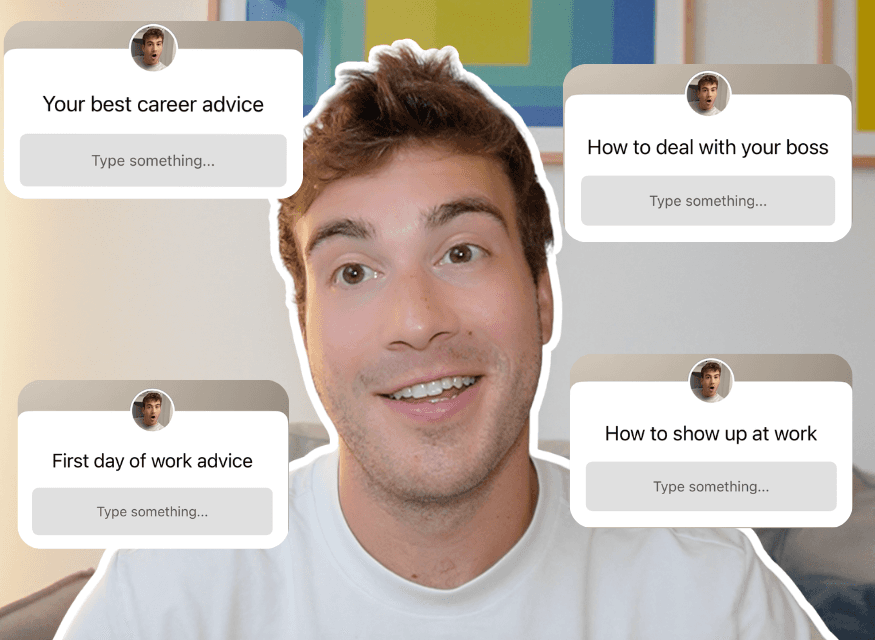
How To Build a Great Career in Your 20s with CEO Of Barstool Sports

TRANSCRIPT
Josh Felgoise (00:00.206)
Welcome to Guy's Set, the guy's guide to what you should be talking about. I'm Josh, I'm 23 years old, and I'm here to find all the tips, advice, and recommendations for guys in their 20s. Let's get into it.
Josh Felgoise (00:19.478)
to watch other people say things that no one else will say. Hi guys, welcome back to GuySet, the Guy's Guide to what should be talked about. Holy shit, do I have an amazing episode for you today. What is happening? If you're new here and just coming here for the first time, I want to introduce myself. I'm Josh Felgois and GuySet is a podcast resource guide and toolkit and the Guy's Guide to what should be talked about.
The reason I created Guyset is because I didn't see and rather couldn't find a place for guys in their 20s to get advice, tips, and recommendations specifically catered to them on all the topics they are wondering about, curious about, and just don't really talk about. So that's why I'm here today. I'm here to talk about everything that should be talked about for guys in their 20s. This episode is exactly what I pictured and honestly dreamed about when I thought of creating Guyset.
It gives you the most honest, real and genuine advice from one of the most seasoned executives of a brand we all know and love and have loved for now at least 10 years. If you told me six months ago that I would be sitting across from the CEO of Barstool fucking sports, what in her office, asking her all of her best career advice and having a real genuine conversation for like 55 minutes, I would say you are fucking nuts, but I'm so happy to tell you that you're not. And this actually happened. I can't believe it. And I'm so excited to this episode with you.
I thought this was some of the best advice I've heard on career and it's so real. It's so refreshing and it's so her and I'm so happy to share it with you and it's all because of you. You're listening and you wanting to come back to this podcast and hear me talk about all this stuff and be a part of this mission and believe similarly to what I believe that there wasn't a place for guys in their twenties to hear all of this stuff and get advice and recommendations that are specifically for them. In this case, it's all about career advice in this episode.
And thank you so much for being on this journey with me. I'm so excited that you're here to be fully honest with you. I blacked out for like half of this interview and could not believe where I was sitting. and then finally regained consciousness about halfway through, but I think it was the best I could have done. And I'm so proud of it. Subscribe wherever you get your podcasts and on YouTube, you can watch the full episode and follow guys set on all social media platforms at the guy set T H E G U Y S E T.
Josh Felgoise (02:28.332)
You can also email any topic you want to hear about, you want me to talk about, should be talked about for guys in their 20s to my email josh at guyset.com j-o-s-h at g-u-y-s-e-t.com. And without further ado, please welcome the CEO of Barstool Sports, Erika Ayers-Badan to GuySet.
Josh Felgoise (02:53.678)
I'm ready, are you ready? Yes, do I have to hold this thing? You do. I know, I'm sorry. okay. Thank you for doing this. You're welcome. I really appreciate it. Yeah. I wanted to just start by saying that most of the listeners of this podcast and of Barstool are in their 20s, right? Okay. So I want to start with the beginning of your career. Okay. What do you think about your first job? What's your mindset around where you started? Oh, I don't think it matters where you start.
My first job was as a lawyer, or well not as a lawyer, I worked as some type of legal assistant at Fidelity in Boston. Hated it. Basically went partied all night and then would write very long emails to my girlfriends about what we did the night before. And I write actually a lot about this in my book, which is that I was making a lot of money, or what I felt like was a lot of money, I was making $50,000, which I still think is a lot of money.
I had an office, I had like everything on the surface of what looked like a great beginning of my career. But I was bored and I was unhappy and I wasn't interested and I kept trying to like get more work to do. what I really felt was that now oddly I spend most of my time with lawyers, but what I felt was that at least at Fidelity, the legal department was about managing risk and no was the best answer. And it was all about
being conservative and I was like, I don't want to do any of that. So I took a big jump. I left to go work in the ad group. I took a pay cut from making $50,000 to $17,000. I racked up like so much debt. It was a disaster. But it was an awesome decision because I was in advertising. I was working in a very creative group. I was working in a group run by women.
It was not a highly esteemed group at Fidelity. In fact, it was kind of like the state school people.
Josh Felgoise (04:56.3)
Within that group, I also, because I was the lowest person on the totem pole, got to work in the internet. And at the time, this was like late 90s, the internet wasn't even really anything, but print was a big deal and television was a big deal. And so the lesson I took from that is like, look, it was an accident that I fell into the internet. I really fell into it because nobody else wanted it. But sometimes taking a job that nobody else wants or that everyone else thinks is like,
is really a great place to start and then taking, look, I think you're 20s, you should work your ass off. And I think you should make sure you're getting as much opportunity as possible and learning from as many people as possible. But if you're not learning and growing, like you have to get the fuck out. I wanna talk more about that. like when do you know when to get the fuck out? Like how do you know when to leave a job? You know inside of you when to leave a job.
I think everybody knows it's like, when do you leave a relationship? Like, you know how you feel about your stuff. It's not, that's not the hard part. The hard part is like getting from your gut of what you know to your mouth and your brain of actually like doing something about it. So, you know, for me, I think the right knowing when it's not about knowing when to leave. It's really about
Okay, now what? Now that you know that, how are you gonna deal with it? What are you gonna do about it? And so, you in my mind, that's really about, okay, you gotta make a network. You have to research jobs you'd wanna do. You have to put yourself out there. You've gotta go, you know, you've gotta put some effort in. It's kind of, looking for a job is a second job on top of your first job, I think. So you have to like wanna put the work in. And most people are too lazy to make a change. you know, so I think...
I think people who are like, ooh, I'm jumping around too much or there's something wrong with me that I want to leave. The difference, I think, between the winners and the status quo are the people who actually do something about it. And if you do something about it, you may not make the right choice. may not, like the next job may not be the best job ever, but it will be something new that you can do something with and learn something from. And I think that's the most important thing. Yeah, that's really great advice.
Josh Felgoise (07:17.496)
How do you have that conversation with a boss? How do you go into that meeting? And once you've made that decision mentally, how do you go into that conversation? I think you have to get your shit together. So I think one thing is you have to have your shit together. Two is you should not be scared of your boss. Hopefully, you've established a relationship with your boss. I think sometimes people miss this, which is the more you get in front of your boss, the more you spend time communicating with your boss, the more
work you do for your boss, the better you understand your boss. So when you're in your 20s and you're thinking about your work, don't be scared of the guy or the girl you work for. Work your ass off, get in front of them, deliver value. Don't be about yourself. Be about whatever your boss is trying to create or do. Be a proactive, reliable, consistent part of that.
And if you establish a rhythm like that, when it comes time to leave, you're more comfortable and it will be more obvious as to why. I think sometimes a lot of people just are like, I don't want to deal with my boss or I don't want to have the tough conversations. I might get yelled at. Yes, you might get yelled at and it's good to get yelled at. But I think the leaving conversation you have to treat with a lot of respect. You have to be like, hey, like.
I've made a decision, it was a tough decision for me. I want to thank you for everything you've given me here, every opportunity you've created for me. I want to share gratitude for the work we've done. And I also want you to understand why I'm leaving, which is I'm looking for blah, blah, blah, something new. I want to live in a different city. I want a different type of career.
I'm looking to experience as much as I can in my, whatever it may be. You don't wanna go in small. You don't wanna be like, my God, I hate you as a boss, or my coworkers are idiots, or I think this company's fucked. You don't wanna say stuff like that. But I do think you wanna be like, hey, you always show gratitude. You should show respect. You should be thankful. And then you gotta be like, hey, I'm interested in something new for me, and I'm going to go pursue that. Yeah, I think that's, go ahead, sorry. no, that's.
Josh Felgoise (09:37.422)
At your level, obviously, it's very different being the CEO of a company, CEO of Barstool. How did you make the decision to leave? You announced last week on Instagram. I saw your video. loved it, by the way. I it was really genuine. And I mean, loved the way you announced that, but how did you make that decision and how did you announce it to everybody? Super hard.
So leaving any, leaving a job sucks. You know what I mean? Like it's like, have you ever left your job? I left my first job. Okay. It's hard. A months ago, it was really hard. It's hard. You have to like take to your bed for like, I have to take to my bed for like good 72 hours after I leave a job. I think it's the same thing I just talked about, which is I knew after we, know, that 2023 was a crazy year for Barstool. We sold to Penn for $550 million. That pretty epic.
We had been working a long time for that. Working with Penn was hard, wasn't particularly fun. It was a grind. It just was, it was a grind. And then we had this miraculous opportunity to buy the company again for a dollar and buy it back for Dave, which was exhilarating and insane and basically my month of July and August this year. But when that happened, I was like, God, like.
We're in a new place. It's a new time. And what does this mean for me? And how do I feel? And what do I want to do next? And I could only ever get to the answer of what was right in front of me, which was, OK, we've got to get the company back to being profitable. We've got to get rid of all the stuff we put into place for Penn. We've got to get Barstool back to Barstool, all that kind of stuff.
But I could never answer the like, okay, after the next two months, what's gonna be next? And I couldn't answer it for myself. And then I started to feel like, gosh, maybe everything I've wanted to do here, I've done. And I think there's a moment when you're thinking about change is like, does this still excite you? Does it scare you? Do you have a vision for something you want to conquer here?
Josh Felgoise (11:47.092)
And the thing I had conquered was I wanted to get it back for Dave. And we did that. And I was like, gosh, I really, truly have done what I wanted to do. I've learned so much. It's been an insane ride.
But there's a time where you're like, okay, I gotta go build something else, or in my case, I want to go build something else. I want to go scare myself. I want to learn something I don't know. I want to face a different set of problems than I've faced before. And so that was boiling inside of me and I would shove it back down. I'm like, no, no, no, this is amazing. Take it easy. Enjoy. Sometimes I think I'm a crazy person where I'm like, I worked so hard for.
nine years here to get to this point. I was like, God, just shut up and enjoy it and go to the gym and leave it four o'clock and whatever. But it's just not how I'm wired. that was that. But I treated the conversation the same way we just talked about, is with gratitude and respect and care and honesty and humility and hopefulness and really a commitment.
Parcel's an amazing machine. It's like an amazing, amazing company. The people here are incredible. And I feel so grateful to have been here. Absolutely. Your affinity for Dave is so apparent when you talk about why you wanted to get the company back for him. And it feels so genuine. Where did that come from? And can you take me back to the start of your relationship with Dave? yeah. mean, Dave's amazing. Obviously, of course. Yeah, Dave's amazing. He's a genius. He's truly.
He's a genius. He is a genius. There are so many times where I will run into people and they show me pictures of Dave with their family. I was at Fox yesterday and they're like, some guy is like, I have a picture of Dave with my kids on my phone. Everybody shows me the picture of Dave with their kids on their phone. And I'm like, he's a genius. And the thing that's so amazing about Dave is he has this, he's comedically great, he's wickedly funny, he's fearless.
Josh Felgoise (13:57.614)
He's honest to a fault, but he also, you he was smart. He wanted to do pizza reviews. So we made pizza reviews every day. Like he's been doing pizza reviews for 10 years now. You know what I mean? He saw TikTok as a thing and he was like, all I'm gonna get into the TikTok game. he sees frontiers and he can go conquer them, which I think is very rare quality.
But I really, loved Dave from the minute I met him. I had read a lot about him before I took the job. Most of it wasn't great. I had talked to people about Dave, nobody really knew him. And then I met him and was like, I'm gonna just decide for myself. And I thought he was awesome. Yeah, really, he is. I mean, through online, it's, he's so fun to watch. It's so chaotic. Yeah, he's electric. It's electric. That's exactly the right word. One of my favorite things about Barstool is how there's
truly content for everybody and I feel like that's more true now than ever before with like BFFs and you have Plan Breon Cut and you have just like all these, you're going into so many different avenues. I discovered Anus, a new untold story last week. Like my friend was like, you have to It's hilarious. So I'm constantly, what'd say? Very weird. Very weird, but I'm constantly discovering something new from this brand. How do you keep up with all the content and what tips do you have for like time management and scheduling to do that?
I can't like, I have a secret weapon, which is this woman named Marina who watches the internet. The thing about Barstool is we have people who watch the internet just amazingly. Yeah. The well. And so I actually trademark this where Sunday nights I would text Marina and I would be like, hey, can I get a things you missed on Monday morning? Because there would be so much happening over the course of a weekend.
So much. So much. it would be impossible to keep up with who's fighting with who, who's doing what, who's in trouble with whom. So I have a secret weapon in Marina. And I think the idea of Things You Missed is a good internet idea. But the thing about Barstool is we never had a formal plan. I get frustrated by this, where you can't tell content creators.
Josh Felgoise (16:17.742)
If you need to say, shoot this this way, talk about this that way, cover this this way, you're kind of fucked. Like it's a media company, it's never gonna happen. And you see that in the demise of traditional media. And you see that in the demise of kind of internet media. We have really wildly talented people who in large part have been found by Dave who come into here, they have.
couple core things. They have our protection where if they step in it or say something wrong or they get in trouble, we will have their back. Two, they have like an iPhone, a computer.
that maybe that's it. Like they have very basic tools and they can make anything they want. And it's the people who are great here are the people who are like always making stuff. And it could be a new untold story. Like Nick is insanely talented. KB could be Brianna and Grace. It's very, I think part of the allure of Barstool is it's like, it's confusing. There's no one thing. There's no one way. Yeah. Speaking of like all this amazing talent.
How do you find the talent? You said Dave finds a lot of the talent. And how do you recommend for somebody who wants to be a creator and be that talent, stay above all this noise? Yeah, think, look, it's hard. When I got here, the internet wasn't as crowded as it is now. The internet multiplies itself daily. You know what I mean? So trying to be a creator in 2024 versus trying to be a creator in 2016 is a
incredibly different ballgame. I feel bad for creators now because I think it's just loud. You have to be a volume shooter. So you have to post. You have to be insanely prolific. You have to put your face very close to the camera. Like the closer your face is, the better off you are. You have to understand TikTok. You have to understand short video. You have to have a point of view and you need to tell a story that fits in a very short arc. It's still the same.
Josh Felgoise (18:22.528)
it's still the same truths of storytelling that have been in every medium, but now it's just happening in under two minutes and whatever seconds. And so I think people who do that and are consistent with it can be insanely successful. You also have to be, whenever, Dave used to say this and then we used to drive this hard, which is,
It could be Saturday night and you have a date or you have something better to do or you have a life. If you are the Red Sox guy and the Red Sox are playing, like you gotta be home covering the Red Sox. You lose your credibility on the internet instantly if you're not like on, whatever your thing is, you gotta be on it and you have to sacrifice your life to cover it. And it's the people who do that who...
will ultimately get the most credibility and have the most audience. I think that's an amazing piece of advice. It's kind of like, if somebody turns to you for this type of content and you're not there for it, then. Yeah, then you're not there. Right. And there's somebody else. Exactly. There's like always somebody else. Or 10 other people. Probably hundreds. Right, right. Exactly. You mentioned this kind of like bar stool protection. I've always been curious about like these creators become such personal brands in their own right.
How does that work for you guys? How do you deal with somebody who blows up and becomes this amazing creator on TikTok? Wow, that's awesome. Look at Alex Cooper. Alex Cooper, we found her, she and Sophia had called her daddy and it was like, I think 12,000 views on a single clip on TikTok. Or not even, it was on Twitter. So it was very small and now she's a megastar. So that's what you want.
That's what you want. think media organizations that don't want stars are not going to be in business very long. You have to want stars. You have to do everything to create stars. You have to have the right ingredients. You have to have the right people. You have to be willing to rip up the contracts. It's just like an athlete. You sign as a rookie, and you'll see how you play. And if you have an insane season, chances are your coach and your front office are going to be like,
Josh Felgoise (20:39.128)
we're gonna triple your contract. But you have to beat all the other rookies and then you also have to hold your own and be better than whoever else is established around you and I think that's very true of talent in general. That's such a cool way to look at it. I haven't thought about talent as an athlete where that's really cool. it's not just talent talent. I don't know, you're like the new FPNA guy at whatever accounting firm you work at.
are you gonna be the best FP &A guy or not? The best FP &A guy is going to get the new contract. And it doesn't matter if you're an internet personality or a finance geek or secretary or whatever it may be. If you have that mindset, that's how you move forward. Yeah, exactly. Speaking of Alex Cooper, you mentioned to call her daddy. And I think about this podcast, Guy Said, as...
similar to, like I would listen to Call Her Daddy for the same reason that girls, that guys would listen to Call Her Daddy. Does that make, no, I think I said it wrong. I listen to Call Her Daddy the same reason that girls would listen to this podcast, right? Why? Because I wanna hear how girls think about relationships and dating, and girls wanna hear how guys think about relationships and dating. Does that make sense? Yes, but Call Her Daddy was like raunch, this is where the protection Totally opposite, right. If you wanna have big podcasts, you need to be like,
you've got to be controversial. 100 % and I mean they did that like to the best of... They were genius at it. Genius. So I wanted to talk about the beginning of Call Her Daddy. You mentioned that like you found them at like 12K views. Were you involved in like the beginning of them and what do you think about where Alex and Call Her Daddy is now? Oh, I'm like, I love Alex. I think Alex is an amazing talent. Yeah, she is. And she's really, you know, she's kind of a triple threat. She's on camera.
She can produce, she can edit. The best people here, like Caleb is like this, Dave is like this, Big Cat is like this. They know exactly how they want their stuff to look exactly. And the best ones can do it themselves. And I think that's important. I think there's a lot of times talent comes in.
Josh Felgoise (22:58.998)
And they're like, well, somebody else is going to produce this or somebody else is going to edit it. And they don't really care what the end product looks like. And if you don't care about the end product looks like, like it's not, you know, it's not, not going to be great. So, yeah, people want to watch other people say things that no one else will say. Yeah. I think that's very cool. Speaking of like, of, that realm of conversation and the craziness of like call her daddy and that type of stuff.
What happens when somebody steps in shit and finds themselves in trouble here? I think Dave has been exceptional at this, and we were great partners at this, is when people make mistakes. think that's first and foremost, I think we kind of live in a culture where no one can make a mistake, or if you get a mistake, you're punished and canceled till the end of time. And I don't really believe in that. I think it's actually really sad, I think, to be your age, because
When I was in my 20s, I fucked up all the time. Thank God there wasn't social media when I was in my 20s. But it's hard because you have to be worried about always being caught. And then the consequence of getting caught is very damaging. It's very damning. So I think the thing that makes Barstool so special is that, I don't know, it's like wallowing gilly.
know, Wallow and Gilly want to have a podcast where they drop the N-word and smoke pot every episode. And it's like, you know what? Like, that's what Wallow and Gilly want to do. It may be offensive to some people. It may be abhorrent to some advertisers. It may be inappropriate. But they have a point of view. They have a voice. They have good intentions. They're good people. And they really care about their community and their audience. Yeah.
and the difference of working for a bar stool, let's say, or a Spotify, you you're Joe Rogan on Spotify and the Spotify employees hate you and they don't share your ideals and they don't like you talking about vaccinations and they're going to rebel against you. Like, it's not like that here. Here, it's like you can have a Joe Rogan type of character, you can have an Alex Cooper type of character, you can have a Dave type of character.
Josh Felgoise (25:19.682)
Barstool never professed to be perfect and it never positioned itself as a really truly as a company as like Spotify or the company or Apple or you know, there's no mantle beyond wild creativity and freedom. So I think that's part of the difference but look, I think it's hard. think you have to be able to, people have to be able to mess up. Everyone is human, everyone is flawed. So as the CEO, does that
kind of like from an advertiser's perspective and all this other stuff, does that come up to your level when something Definitely, my god, like all the time, like all the time. And how do you deal with that? know, somebody gets, an advertiser gets offended, an advertiser gets mad, you know, that was part of the reason that I wanted a very diverse business because I knew that with our set of talent, we were going to offend somebody at some point, for some reason, and it happened constantly, it happened all the time, but.
If I only had the ad business, which is how most media companies are built, if I only had the ad business, then I would be pressured more to change what we said to keep the advertisers happy. And by having a commerce business, when the advertisers were mad at us, I could just dial up the t-shirts. And when the t-shirts weren't selling so great, chances are we were doing pretty well for advertisers. And they actually are very opposites, because the more you can do to ignite a fan base,
probably means the less PC, less packaged, less perfect you are. So I always liked having those two businesses. Yeah. Did you feel that like restraint come on when Penn joined? Definitely. Yeah. And can you kind of talk about that and the relief after? Yeah, Penn was hard because look, you know.
Penn has two massive constituents that we had never dealt with. One was regulators and two was Wall Street. And those are like punishing, strict, competitive, fragile, sensitive environments that we were not used to and not familiar with, to be honest with you. we were dealing with
Josh Felgoise (27:38.126)
through an intermediary in this case Penn, we were dealing with a lot of those challenges. What do regulators like and not like? What do they think is appropriate or inappropriate? And it our opinion of you know, the perfect example we got in kind of a kerfuffle about Big Cat made a parlay.
which was the Big Cat's Can't Lose parlay. Yeah, yeah, I remember. Which is amazing. Big Cat loses all the time. It It's satire. This is satire brand. But the regulators were like, hey, you actually can't say it's a Can't Lose parlay because you're on face value telling your customer that you can't lose. But it's a joke. But they're like, but our job is to keep the public safe. And in this case, you're saying you can't lose, but you can lose. Of course.
That's kind of the perfect example, which is it wasn't Penn's fault. Penn just had constituents that we had never dealt with and we didn't have and who really weren't, you don't see great media companies being run by public officials. It's just gonna work that way. So that was a challenge for us because it created a level of sensitivity and a level of stress.
from forces that were far away and unfamiliar. Got it. And what's it like now? Is it back to where it was before? Yeah, now it's much more free. Now it's much more free, which is exactly how Barstool always was. look, I give Ben a lot of credit. They tried really hard to make it work with everyone, the regulators, with the street, with us.
And we had some incredible successes together. But it's also, in some ways, it's really freeing, which is when you're not in a publicly traded company, don't have to, we were spending so much time on what was the forecast for the next year and could Barstool get to a $500 million company. The answer is like, yes, Barstool could be a $500 million company, but to get there would require a lot of things to change. And what I feel so good about is actually it's like right back to what it is.
Josh Felgoise (29:55.63)
I feel like that's the best time for you to go. Everything's kind of back to normal. Yeah, it's like back to the pirate ship. It's great. We sailed around the globe a lot, a lot, a lot. We learned a lot. We fell off the boat. We crashed into things. We had success. We were on the high seas. And now it's where it should be. What is one or a few memories or things from your seven or nine years you've been here that
that you think about when you're reflecting on the entire career? it's impossible. No, I know it's an impossible question. So many things. It's just the people. It's the little things. And it's actually been the little things that have really like, it's just people. It's people who taught me things or when, or being there for someone when they were going through a hard time or puzzling through a problem together.
We went through so much, like this company really went through an amazing amount of shit in the last eight years because we were growing and pushing so hard. And it's hard to distill it down to like a memory. I know I'm not answering the question. No, no, it's a stupid question. I think the hardest part about leaving my first job was also the people. Yeah, definitely. It's always the people. It's always the people. I was like, I'm ready to take on something new, but like.
what held me back for a month or two, I was like, I'm going to miss spending every day with these people. Definitely. So I completely agree with you there. Yeah, I think it's always the people. Like, you want to feel good about your journey, and you want to feel fulfilled in what you've tried to create. And you want to feel like you were part of building something, I think, in a career. But the stuff you leave with, like, you're not going to remember all the conference calls. You're not going to remember all the marketing decks you did or the partnerships you struck or whatever. You're just going to remember the people. Yeah.
I love that. Switching gears a bit, you have a book coming out. It's called Nobody Cares About Your Career, Why Failure Is Good, The Great Ones Play Hurt, and Other Hard Truths. It's coming out in June. I'm very excited to read it. Thank you. And maybe we can talk again when it comes out. I'd love to. What is the essence of your book? And how the hell did you find time to write it with this busy career? Yeah. It took me a while. It took me a long time to write it. So the essence of the book is...
Josh Felgoise (32:19.34)
that you can be yourself and be successful. I don't believe in perfection. I think everyone is flawed. I companies are flawed. People are flawed. Processes are flawed. Businesses are flawed. And the difference in being just going to work and being great at work is what you bring to work, what you try to learn from work, the vision you set for yourself at work.
and the way you push yourself at work. Like, I really believe in that. think work is an apprenticeship. I've always felt that. I think a lot of people come into work expecting, especially, I think, younger people, like, I have an MBA or I have a degree from a great school. I'm going to have a great career. Like, you're actually not. You've got to, put yourself into the trench. You've got to get your head kicked in as many times as humanly possible. You have to put yourself out there and fail all the time.
I think if you do not fail and try so much in your 20s and 30s, you will become calcified by the time you're in your 40s. Like I'm in my 40s and the people around me who are afraid to fall, like they're dead because if you're afraid to try and you're afraid to change and you're afraid to take risk, you're stuck. You're just going to be stuck. So.
That's really the essence of the book. There's three parts of the book. The first part is how to get your head in the game, getting yourself ready to be great at work. I think all of us have so much insecurity of self-doubt and I'm not good enough or there's somebody better than me or I can't go for this. And it's really talking through how do you basically tell that voice in your head to shut the fuck up. And then part two is about work. What about when your coworkers are idiots?
What are all the types of bosses out there? What happens when you hate your boss? What about when your boss hates you? What about getting drunk at work? What if you're dating someone at work? And then the third part is, how do you know when it's time to go? And are you getting the most out of this experience? And can you get the most out of it, or is it time to bail? And I think it's rare to, most business books are not written by people who are actively
Josh Felgoise (34:43.168)
in business or actively and earnestly in the middle of their career. I was writing the end of the book as I'm trying to figure out what to do with my jobs. And it reads like that. It reads messy. It's like, here's all the thoughts in my head. Here's all the things I'm worried about. Maybe you're worried about them too. Because I think at the end of the day, it's the same shit for everybody. And then I think the tone of voice and the voice of it is very familial.
I don't like business books. generally don't read business books because I feel like they're talking down to me and they're trying to be something that they're not. This reads, you probably like this podcast. We're having a very random conversation. My brain is all over the place. I have thousand thoughts. So the book reads like that. I think it's fun. Yeah, I'm really excited to hear. Are you doing an audio book? I think so. Everybody keeps asking that. You really I think I'm doing an audio book. Because you mentioned tone of voice and I want to hear.
how you talk about I don't know if I'm gonna be good at the audiobook. Why, you're great on podcasts. I don't know. I think I stutter and then I don't like to read the script and then I feel like they're gonna yell at me because they're gonna be like, no, repeat that sentence again exactly as it's written. So we'll see. I hope to hear it. So I, wait, when did you find time to write it? so I wrote it in the pen years. So in the pen years I...
just a matte, like it had been this wild build to get this company sold. And we sold to Penn or took the investment from Penn, but we knew that they were buying us. And then it really, my job became way less creative. Like it became really about like, can we fit into the accounting report and going to Penn board meetings? And it was like, it was much more like a real job versus like this crazy whirlwind that
I had been in the foxhole I'd been in for seven years before that. And I was missing the creative part of it. I was really missing that. So I wrote it on the train, on my phone. I... Like, no tap? No, just in like, yeah, no tap. Okay. In email. Wow. I like to write on my phone. I find it soothing. Yeah. But so I wrote a lot of it on the train. I had this...
Josh Felgoise (37:07.982)
fantastic editor, writer person helped me. I wrote it on weekends. It was really like nights and weekends and on my phone on the train. Got it, cool. I also, you do a segment on your Instagram called One-on-Ones. Yeah. Which I love. Oh, that's nice, hearing your advice. Yeah, of course. So I wanted to do a couple of one-on-ones today. Oh, okay. If somebody's listening and doesn't know what that is, like people write in questions and ask for Erica's advice and you give them advice. Yeah.
So I wanted to do some one-on-ones. Yeah, I think it's good. think it's good. So the first one is, so Erica, we're doing one-on-ones. I feel like I'm not getting responses to my interviews or applications to companies I want to work for. And for the sake of transparency, I applied to Barstool my senior year of college. I never got a response. That's not to be petty or say anything like that. It's just like, if somebody is listening and going through that similar thing right now, it can be incredibly disheartening. What is your advice for that person in
So let's play it. How many times did you write Marshall? Once. Yeah. So that's your answer right there. I tell a story in my book about this where I wanted to work for Converse. I really, really, really, really wanted to work for Converse. Converse was in Boston. I lived in Boston. Super cool brand, very cool company. I sent my resume probably 45 times. Wow. But I never wrote a great cover letter. I never did anything creative. I did nothing.
that would have made my resume stand out over the thousands of people or hundreds of people who were looking for marketing jobs from Converse. In your case, applying to Barstool, had Dave needed a camera guy and we had 18,000 people apply. So it's like your one email, nobody gives a shit, nobody even sees your one email and your.
cover letter of that email would have had to be so extraordinary to even have a chance of standing. And I don't say that to criticize or I just say it for perspective. So I think if you really want a job, anybody, for us, people drive me nuts. They ask me this all the time. So someone will be like, my kids.
Josh Felgoise (39:24.77)
My kid really wants an internship at Barstool this summer. And I'm like, roll my eyes. I'm like, yeah, no shit. Everybody's kid wants an internship at Barstool. So I'm like, hey, where do they go to school? Wherever. And then I'll be like, well, are they part of the Viceroy program? And they'll be like, no. And the Viceroy program is like our college program. Got it. Which is an amazing college program. We hire out of the Viceroy program, which is really kids who have, Devon's part of the Viceroy program.
It's kids who have worked on the Barstool brand as interns for college credit for four years. So by the time Devon showed up here, she had been working for the company basically full time or almost full time for years. And the reason I share that story is like, if you really want something, writing the email and sending the resume once or DMing someone on LinkedIn is just not gonna cut it.
We have people who've sent their resumes on pizza boxes. We've had people send movie posters. We've had people show up at the office and sing it. We had someone make a book. We've had a lot of people who we've actually hired who made Instagram accounts, like fan accounts, covering Barstool. I think it doesn't matter working for Barstool, but if you really want a job, you got to go.
as far as, what do you care if you embarrass yourself with how much you want the job? Like you don't care, you're probably not gonna, you you weren't gonna get it anyway, so maybe now they think you're an idiot, like who cares? But you really have to push like all the, all the, all the way through. And you have to be as creative as possible and you have to be as impactful as possible and you have to be as persistent as possible. We had like,
I can't tell you the number of people in my inbox who are like, it's day 460 of writing you guys. it's like, now those people don't always get hired either, so it's not necessarily always good ROI. But you have to go further. That's, by the way, this is why I love 101. That was incredible advice. Oh, well that's good. I appreciate that. And you're exactly right. I applied once and I was like, I didn't get it. I didn't get it. It's like, of course you didn't get Obviously. Looking back now, of course I had it. in that moment, I was like,
Josh Felgoise (41:45.08)
my God, like I put my all out there. I wrote this big cover letter. Yeah. thank you. Okay. The next one is I'm coming up on one year at my job. How do I approach the promotion conversation? okay. I think the 20 somethings are like about to be like in a buckle up time because one is like the expectation that you get a raise every year. You get a bonus every year. You get promoted every year is
it kind of seems to me like a new phenomenon. Early in my career, it was like, you are going to make a pathetic little wage with a terrible little title and do insane amounts of work for years. And hopefully, someone will see you in the dungeon and recognize you and give you a $2,000 raise. So I think the reason I say the buckling up is like the economy is not great.
the world is on fire and we're looking at multiple world wars. so I think the heyday of like, the economy's great, everybody's making more money, all these businesses are being so successful, I should get a raise, I should get a promotion, I should get a better title, I should get more responsibility. It's going to take more work to get that. So.
I think, look, if you've been in a job for two years and you haven't gotten a raise and you haven't got any indication of a title change or a path to doing more or different, you should be having the self-talk on like, what am I doing and how is this going? And I talk a lot about this in the book. I think for you going into your first year performance review, I think you really have to ask yourself like,
Do I deserve a raise? And do I deserve a new promotion? I, have I excelled and exceeded at every single thing I do here? Look at your peer set and be like, stack rank yourself. Like, I had a conference call yesterday with someone and we're talking about their team and I was like, just give everybody a one byte score. Like, what's your one byte score as an employee? If you are like in the sixes or even in the sevens, like,
Josh Felgoise (44:02.442)
probably maybe you'll be lucky and you'll get a raise or you'll get a promotion, but you might not really deserve it. So I think you gotta be like real, real hard on yourself on like, where do I stand? How much have I accomplished? And I think also you have to be sensitive to like, what is the state of this company? If your company is murdering it and making a lot of money, then definitely be like, I'd like a raise, I'd like a promotion.
if you're crushing your work job and your function, definitely ask for it. But the expectation that every year you should get it, I think is kind of false. That said, when you go into a review, be prepared. It drives me nuts. I used to actually have this woman, Deirdre, who worked with me, who every time she had a review, she had a printed out sheet of paper. It was everything she had accomplished, everything she had learned, things she wanted to do next. She had put in the work for the review.
And as her boss, it made it really easy for me. We always had great reviews because Deirdre was into having the review and she worked hard at prepping the review. A lot of times I think people just show up for their review and they're like, what do you got for me? And that's not great initiative and that's not great use of the time with your boss. So I think you gotta show up with your notepad of what you've done. And then I think you have to have a vision for what you wanna do next.
Races and promotions are really indications of future work, not recognition for past work. So what is it you're going to do for your company in the future, which should also be something you want to do for yourself. Okay. Great. Thank you. Yeah, that's great. Okay. A couple more. Okay. I just had an interview and the salary conversation came up and the interviewer said, what do you want? What should I say to that person? I think if you're on the spot and you don't know, you should say, let me be thoughtful and come back to you about it.
The salary conversation is always so awkward and it's just a terrible dance. I think if you have a number in your head that you want to make, you should say the number. I think if you feel like that number may be high, you say, hey, this is the number I'd like to make. I'm obviously willing to be flexible, but this is the number I have in my head. If you're not prepared and you're like, fuck, I'm not ready to have the money conversation, then punt the money conversation to later.
Josh Felgoise (46:26.856)
have your piece of paper written down of like, what is the number you want? Why is that the number you want? And ideally, you have some context for like, I, you know, this job is posted for this amount of money and blah, blah. So that's how I would answer that. Great. Okay. And the last one is I'm starting my first job tomorrow or a new job tomorrow. Okay. What should I do?
Or what advice do The first day of work is the worst. You're so awkward. And then it's like, who do you have lunch with? And you can't get access to anything. And you feel stupid sitting there. And you're like, don't have access to Slack. Or they have some computer system which you don't know how to use. So it's just a humbling day. The first days of work suck. You should have a notebook, obviously. You should have a pen. You should bring a pack of gum in case you get bad breath. You should have an outfit that's comfortable.
Don't bring all your photos to work and decorate your cube on day one. Don't do that, slow your roll. Have a vision of, I would say, three plus things you wanna learn. I wanna do these three things at the job. Pin that somewhere in your drawer or in your cube or whatever. Have a vision for, really wanna do these three things here. Because what will happen is once you do get the slack and you are on the systems and you get into it, you're gonna forget what you wanted. So have...
before you get tainted by the company, have a little bit of a vision of like, ooh, I wanna do this. And that's it, have like a nice smile. Like make sure there's not, don't eat something that day at lunch that's gonna be in your teeth. Like go up and introduce yourself to people. Like it's like, it's middle school. Yeah, exactly. I actually have one more. Okay. I had a really bad conversation with my boss today and it just went terribly. feel like shit, what do I do? That happens a lot. I think try not to cry in front of your boss.
Like, I had a boss I fucking hated and she made me cry all the time, but I was like, I will be damned if I'm gonna cry in front of this lady. So just hold yourself together. Try to put your ego, just have your ego sit down for like five minutes and hear what your boss is saying. Try to hear what your boss is saying.
Josh Felgoise (48:46.826)
Maybe your boss, maybe you have a disagreement on your vision or maybe you have a difference of opinion on your work or maybe you aren't getting something you want or resources you need.
I think it's good to just take a beat and internalize the conversation. really, without your feelings, like I described this in the book, use that voice from your 10th grade math teacher. Monotone, super boring. Be like, what is this person saying to me? And what am I saying to this person? And also be honest with yourself of sometimes.
people can be really emotionally charged. Like I had a conversation yesterday, I actually really appreciated it, where we were interviewing a candidate for something. one of the people who interviewed this candidate was like, I'm just having a very emotional reaction. I'm feeling, I don't like this candidate. She's making me feel this way. I'm feeling very protective. And you know what, I loved that she said that.
I was like, God, that's amazing that you're so self-aware of like, I'm having this reaction and I don't know why I'm having it. When you have a shitty conversation with your boss, try to understand where you are too and why you are feeling. Maybe you're insecure or maybe you're nervous or maybe you're defensive or maybe you're afraid or maybe you feel ashamed or slighted or.
held back or discreet, I don't know, like, just try to figure out what's in your head and why are you feeling that way. And then the last, I would say two more things on it. One is, don't forget that when someone gives you feedback, it's putting their arrows are put into your quiver. So think about it that way. Like I had a conversation, I have this person who I know tangentially who's like the home of the backhanded compliment. So she was like, I hate your one-on-one.
Josh Felgoise (50:50.378)
your one-on-ones suck. And I was like, it actually bothered me. Like, I wrote Devin about it. I was like, God, that bothers me. But then I was like, why is this person saying that? Like, are they jealous? Are they, you know, is there a kernel of truth? Are these things bad? But it made me think about the one-on-ones. And then what I realized with myself is I was like, you know what? Like, she just put her arrow in my bag.
Because now I have that feedback and I can think about it and I can decide what I want to do with it. a bad conversation with your boss is the same way. Take the heat, take the arrow, pull it out of you, put it back into your bag, and then you have more information. You're more powerful for having that bad conversation. Because now you can decide what you want to do with it and you know what you're dealing with. So that's one thing. And then the last thing is always follow up.
Hey, I heard you. I think you're saying these three things. These were my three big takeaways from our shitty conversation. I really appreciate you giving me that feedback. I'd love the opportunity to sit down again, or here's two things I would give you to think about, and I'd love to continue the conversation. Don't go be battered in the corner. Go back, head in, and say, here's what I'm hearing you say, which you have to use.
the math teacher voice, you can't be emotional, you can't be like, why are you criticizing me? You have to be like, you're displeased with this or blah blah blah. And then you gotta go back and be like, and here's what I think we can do about it. And that makes you the leader and that puts you in control. That's epic advice. What did you do with that feedback from that woman who said that you didn't like the one on ones? You said like, you have a choice to now decide what you wanna do with that I pushed back, I was like, why would you say that? Why would you say that?
And what was that conversation? of like backtracked where she was like, like, you know, well, they're not for me. you know, she was like, that should be the last video you ever make, which was the walk to work video. And I was like, yeah, they're not for you. Like, yeah, I just wrote a book for 20 somethings. Like, you're not going to like it because you're in your 40s. Like, it's not for you. right. So it was so that's what I said. And then I was like, all right, great. Thanks for the feedback.
Josh Felgoise (53:15.03)
Like feedback is a gift. Yeah, totally. So wait, what's next for you? I don't know. So many things. I just finished this book this week, so that's good. Congrats. Thank you. Thank you. I'm going to find the next thing to build. So I'm on a bunch of boards. I'm actively involved in a few of them. I'm going to take a vacation. Where you going to go? I'm going to go to Africa.
Sick. Yeah. Wow. never been to Africa. Me either. That sounds amazing. I know. I think so. Yeah. So I'm going to do that. And then I'm going to come back and jump into something. I love that. Yeah. And will we ever see the Token CEO podcast again? Oh, I don't know. OK. Probably not named that. But I think you'll see one-on-ones and something forever. Cool. Awesome. Thank This was really great. Thank you so Oh, I'm so appreciative. Yeah, this was so Anything you think we missed? Yeah, seriously. Anything? OK.
Anything you want to know for your 20s or wherever you are.
Totally, by the way. Thank you so much. This was so my god, thank you so much. That was fun. Thanks. What did you think of my interview style? It was great. What feedback do you have?
Josh Felgoise (54:30.094)
Okay, thanks so much. Yeah, I will. You gotta be an animal. Yeah. If you wanna play the content game, you gotta be an animal. Thank you so much for listening to this episode. I really hope you liked it. I absolutely loved it and I thought this was some of the best career advice I've heard and I'm so happy I can share it with you. If you liked this episode, I really hope you did. Please like, subscribe, follow the podcast, wherever you get your podcasts. Follow on all social media platforms at the guyset, T-H-E-G-U-I-S-E-T. Send in any topics, advice, things you wanna talk about or things that should be talked about for guys in their 20s to my email.
Josh J. O. S. H. at the no fuck send it any topics things you want to talk about things that should be talked about to my email Josh at guys that dot com J. O. S. H. at G. U. I. S. E. T. dot com and I'll be sure to talk about it thank you so much for listening and I will see you guys next Tuesday see you guys