How To Be More Confident When You Speak with Megan Grano
TRANSCRIPT
Josh Felgoise (00:00.204)
Welcome to Guy's Set, a guy's guide to what should be talked about. I'm Josh, I'm 24 years old, and I'm here to find all the tips, advice, and recommendations for everything you're wondering about. Let's get into it.
Josh Felgoise (00:17.945)
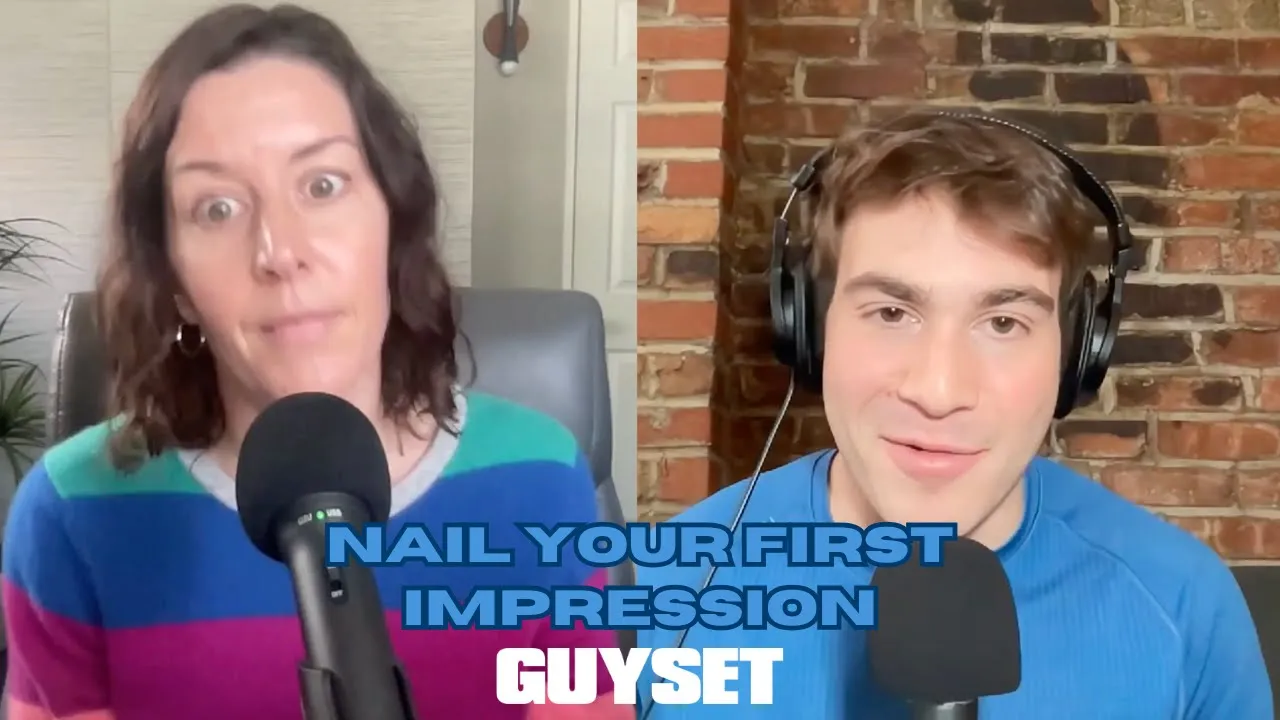
Hi guys, welcome back to guys set a guy's guide to what should be talked about. Today's guest is an actor, writer, comedian and public speaking coach. She's been in Veep and Curb Your Enthusiasm written for Jimmy Kimmel and now has been a public speaking coach for 12 years, getting her start teaching the COO of Facebook, Sheryl Sandberg. She works with executives, pro athletes, comedians, actors.
and regulars, just like you and me, working with them on media appearances, interviews, preparing for job interviews, pitches, presentations, using her comedy tools and set of skills she's learned along the way. If you want to learn how to introduce yourself better, be more confident in job interviews, in speaking up in meetings or presenting, learn how to calm your anxiety and nerves, overcome imposter syndrome, learn how to deal with rejection and failure, answer the question, tell me about yourself, and so much more, this episode is for you.
If there's an area in your life where you don't feel confident, I guarantee you'll leave with some sort of tool to make you feel more confident in that area. I think you're gonna love this episode. There is so much value in here and so many tools. This is such a good one and I'm so excited about it. Without further ado, please welcome Megan Grano.
Josh Felgoise (01:37.08)
So some of the big topics I have talked a lot about on Guy Set recently have been starting new jobs, career changes, interviews, confidence in general. Confidence is one of the biggest topics I talk about on here. I think it's like an underlying theme of Guy Set in general and getting more confident, not just feeling it, like, not just saying you're more confident, but also feeling more confident. And...
I talk about wanting to improve in all of these areas a lot and that people want to improve and I don't always provide so many amazing tips on how to improve and how to get better. But I talk about the fact that I want to and I know people want to like we know we want to get better at interviews but we don't know how to. We know we want to feel more confident in meetings but we still don't know how to. We know we want to be more confident in office settings with our managers with our coworkers that have a little bit more authority than us.
in talking to girls at a bar, in feeling more confident in general, like all those things we know we want to do it, but we don't know how. So that is why I've brought you here. I'm so thrilled you're here. I'm so excited for the value that you're going to bring in to fill in that gap, to provide the tips and the tools. So thank you so much for being here first and foremost. Tell us who you are, your credentials, what you do, and we'll go from there.
Well, thank you, Josh, first of all, for having me on the podcast. I'm absolutely so happy to be here, hopefully sharing useful advice with everybody a little bit about me. I started out in comedy at Second City in Chicago for the your listeners who may not know Second City. It's a big comedy theater that does sketch and improv comedy. I saw my first show there when I was 12 years old. And at the time and I'm
really going into the history here, but Stephen Colbert was on stage. He was 23 years old, maybe just out of Northwestern. And he was doing a sketch with Amy Sedaris, another one of my comedy heroes and Paul D'Amelio. I loved it. And at that time, just this young 12 year old realized I wanted to move to Chicago to pursue this and work there one day.
Josh Felgoise (03:50.201)
And long story short, after college, I did move to Chicago. I did go through the second city conservatory. I auditioned and got hired and I did end up working on that very stage when I was 26, I think. And that was my, that was my, I've done just a ton of improv, a ton of sketch and I moved to Los Angeles and that's where I currently live. I've done a lot of acting on shows, writing for different shows, both online and TV and.
I got into this world of coaching 12 years ago now, totally by accident, but coaching people and executives for things like media interviews. I've done tons of helping people prepare for job interviews. I've worked with people who are giving presentations, who are giving pitches. That's a big one. Pitching yourself, pitching your company, pitching an idea at a meeting that you want buy-in for.
I've worked with all sorts of individuals and teams, helping them use these tools of essentially comedy that I learned when I got my start at Second City. So that's my background in a semi-short nutshell. And who are some of the executives, if you can share, like who you've worked with previously, those type of people?
I got my start in the coaching world with Sheryl Sandberg, who was the COO of Facebook for 14 years. And I got that start thanks to my mentor in the writers guild. So again, for people who don't know the writers guild is this organization in Hollywood that you get to join. People say it's harder to get into than major league baseball. It's really tough to get into the writers guild, but I got into the guild by writing for Jimmy Kimmel. I was one of the staff writers there.
And when you're in the guild, you are assigned a mentor. And my mentor is this woman who wrote for the Simpsons. She wrote for David Letterman. She created the show Sabrina, the teenage witch, which is one of my favorite shows from growing up. name's Nell Scovell. And she actually co-wrote Lean In with Sheryl Sandberg. When they were starting their book tour many years ago for Lean In, they reached out to me and Nell got me involved with doing some coaching for them as they prepared for all these interviews and
Josh Felgoise (06:07.542)
It, it was a huge opportunity. didn't know that executives did coaching at that point in my life. So I said, yes. When Nell said, Hey, do want to help Cheryl for these opportunities? I said, sure. Very much feeling imposter syndrome. Like, what am I going to help her with? Here I am a writer and actor in Hollywood and she's this huge executive at Facebook, but I just did what I knew how to do, which was give feedback on, Hey,
It some, this answer doesn't feel very real, sort of like acting notes. And that was very natural to me. And we really hit it off and Cheryl started bringing me in for all sorts of coaching work for herself and for other people at Facebook. And that was the beginning of my business. have such an incredible story and your work speaks for itself. Your credentials speak for themselves. You really have a very cool story. met, about a year ago now.
at my job, we had an offsite and you were brought in to kind of speak to our team about public speaking and pitching yourself and all the things you're talking about right now. And I could tell that like I was I was enthralled by what you were saying. think everybody in the room loved what you were saying and wanted to impress you, which I thought was great. And I'd love to hear more about your experiences with Sheryl Sandberg, with some of those executives.
and that like imposter syndrome that you just talked about, like how did you navigate that? Because we're to talk a lot about confidence and how to create that, how to build that. So for you specifically, like how did you get into a place where you felt better, more confident? I always, I keep one thing in mind from all my performance career, which always is what's the worst that could happen? And I've...
I, one, one of the greatest lessons comedy taught me is that when you fail, it's not as big of a deal as your head makes it up to be. And I have failed on stage in front of hundreds of people so many times that I've developed this really thick skin about failing in general. And that is what I lean on. And so I, a big tip that I give to everybody is what do you do in your life? Like, have you taken a dance class and you're not a dancer and you're bad at it?
Josh Felgoise (08:31.406)
I've done that so many times. I can't tell you how many times I've done that because I'm interested in dancing. I'm not good at it, but it doesn't bother me to fail. So when I was doing this first opportunity with Cheryl, where I very much felt imposter syndrome, what goes through my head is, all right, what's the worst that could happen? She doesn't like me and I'll never do this again. Okay. It's not the end of the world. Something else will come along because I know from failing so often when your joke bombs, when your scene dies, when it, you're
dead in front of 500 people and it's just crickets. You move on and you do a show the next night and it goes better. So I learned that it's, you'll get up. It's, we make these things to be too big in our heads. That's such great advice. And I that's comparing it to the comedian failing on stage is such a good way to say that. When you at first did fail as that comedian on stage, how did that feel? How did you overcome it? Because you're now at a place where
You've done it so many times, right? Like that failure doesn't mean as much or really anything to you now, but before it was probably the biggest thing in the world, right? Like, and the audience I'm speaking to here is a lot of young guys, a lot of guys in their early twenties who are experiencing failures for the first, second, now third, fourth, fifth, hundredth time, but still in that, that bombing on stage moment. So how did you work through that? How did you overcome that? And I'm talking specifically about like you on stage as a comedian. Yeah.
I will speak to that on stage sensation. It's crushing the first few times. It's crushing because, especially with improv, you keep replaying it in your head. why did I say that? Why couldn't I have done something else instead? Why couldn't I have thought of a better idea right there? It's very self-deprecating and it's crushing. For me, and this might come down to the person that I am at my core.
When I feel crushed like that, I don't give up. I want to have another chance. Now that might be just a difference in who I am at my core. I think of this when I look at my own kids, because one of my sons seems to naturally be more like me, where if he's having trouble with something, it frustrates him. And the frustration leads to him wanting to do it again. My other son seems, and I don't know, he's only eight, seems like when it doesn't go his way, he'd
Josh Felgoise (10:56.698)
doesn't have that fire to do it again. He'll just say, OK, that's not for me. And I'm encouraging him because I believe and know from my life that when you fail, if you give it another shot, it gets better. And it's not like it only took me two failures to realize that I failed multiple times over the years doing shows, multiple times. I can remember certain ones where it was so painfully embarrassing. But like I said, that wasn't enough to shut me down. That was it made me want to go do it again.
Yeah, I feel like I'm similar to you, but I wasn't always that way. think especially like maybe junior, senior year of college, when I started kind of shooting my shot with internships, jobs, those first couple rejections, especially after an interview when you're in that. I had an interview experience that it was my end of senior year of college and I...
took the day off, were all at senior week, we were all at the beach and I didn't go to the beach because everyone was like, I just couldn't. I spent the whole day at the library and it was a third round interview and I found out on graduation day that I didn't get the job. And it was like, it was the job I wanted and I was crushed and I felt like I overreacted and I was annoyed at how much it hit me and how much it hurt me. And that like kind of was like a feedback loop I was working through because I was like,
so annoyed at how much time I put into it, so annoyed at how much I put my value into that position and that response. And then I just over and over again was annoyed and upset with myself about it. And I think that moment for me was like, okay, I don't want to feel that way again. And I don't put so much value in another person's opinion of me and their kind of acceptance of me like,
doesn't determine my acceptance of me. And I think that was something I had to work through around that time. And it probably took me into my next, into the first job I had to realize like that it wasn't meant for me, right? Like that door shut, but another one opened and that was a big thing for me. But that rejection was monumental for me and really hit.
Josh Felgoise (13:13.813)
So what is your advice to the person? And I sound like I've worked through it because I have. Yes. But the person that's in that period that hasn't yet, what's your advice to them? Fail more. In a different setting. I'm not saying with your jobs, keep applying for jobs that are, I'm saying find a different way to fail. Like I said, I've taken what's coming to mind right now, examples are dance classes I've taken, but I've certainly failed in
way more settings than this, but I signed up for a ballet class, a tap class. I've done hip hop and I just want to give you, please trust me. I'm a horrendous dancer and I've done all this as a 30 plus year old woman. And I'm usually, if not always the absolute worst dancer in the class. And the teacher has to slow things down to talk to me. Cause I never can remember the steps and it's humiliating, but I, I.
value being humiliated because it teaches you how to deal with like, OK, I'm doing terrible in this class. Does this mean I'm a terrible person? No. I'm just not good at this one thing. Like you said about the job, you put a ton of time into it, but that particular job just wasn't meant for you. It doesn't have anything to do with who you are as a person. And it doesn't have anything to do with will you succeed in the future. It has nothing to do with it. You just have to let it go.
And I don't think people, if you don't fail enough, you don't have that skill of letting it go. I think that's, that's really, that's like hitting it on the head is that if you don't fail enough, you don't have the skills of letting it go. And I was, I got to a place where I failed enough and I tried so many times and I just kept failing and I was like, okay, there's, there's nowhere it's okay. Like it doesn't hurt. Right? Like it, just, you can keep trying.
And that rejection won't mean as much because I've seen that before. I've gotten through it before. It's the same with dating. It's the same with not getting a response, getting ghosted. Like the first one and the second one and the third one, they all feel so intense and monumental. And then it doesn't feel as terrible after the next one, you know? Because you've gotten over it. Yeah. And I would add on to that that some people listening may be like, well,
Josh Felgoise (15:30.855)
You don't care enough about these things, but I have, I have put myself out for you, like you mentioned for jobs that I deeply care about. I can give the example of auditioning for Saturday Night Live that couldn't have had more of a dream as a kid growing up. That's what I wanted to do. I did second city. Many of my friends got hired. I did not get hired. It was devastating to not get hired, but again, it didn't take me four months to get over it. It took me a couple of days because I fail enough.
So I'm not saying that I don't feel, I just want to be really clear on that. I've also come really close to getting writing jobs here in LA, been to the final three and didn't get it. It hurts. I'm not saying it doesn't hurt. I'm just saying that my recovery time is not so long. Yeah. I think that's a really good example because Saturday Night Live is a dream for so many people and everyone knows it, right? Like, I think that's an amazing example. Yeah, like that type of thing and
not getting your dream job or getting the thing that you thought was the dream, I think always leads to the next thing that's probably even more meant for you and probably even better, right? Yes. And I think it takes a while to realize that in that couple day period. So it's all part of it. Yes, I else to say on all of that before? Yeah, anything else you want to add to that before we go into the next situation? No, that's such a deep conversation. There's so much to unpack there. I hope people...
can resonate with that because it's really true. It's a life, a major life lesson. Yeah. And I didn't even intentionally get into all of that so early. was, but I didn't think we were going to talk about that at all. But I think that's one of the biggest pieces that really knocks your confidence down is rejection and is failure. So I think it's important that we get into that before we get into how to improve, how to feel more confident, how to get better.
100%. Yeah. And I will, I want to add, I realized I want to add one more thing to that, which is actors. I've worked with so many actors over the years and I believe we experienced, I forget the stats, but far more rejection than a normal individual because you audition constantly for shows, for example, and you're doing amazing if you get one out of 300 jobs. So that's doing well.
Josh Felgoise (17:51.393)
So you're just constantly. Which is crazy. You're constantly rejected. And then there's this turning point for the famous actors where they don't get rejected at that rate. But for most actors out there, that's your rate. It's really, you're mainly rejected. So I feel like I have a lifetime of things I've been rejected from that helped me feel confident. Yeah, absolutely. What are the biggest mistakes you see?
people make in terms of speaking, when speaking to audiences in meetings in general? I'm completely shifting to my next line of questioning, but what are the mistakes you're seeing people make? The first mistake I would say is reading, and that's the most prevalent I would see, which is reading your notes or reading your presentation.
everyone would rather you speak to them and interact with them and see them. So that's the first one. And then the second, I hate calling it a mistake. It's yeah, you can change the word. Sorry. No, no. I, I, I'm going to put it in that category, which is just letting yourself get too nervous. It's, it's, say huge, huge issue and finding a way to conquer those nerves and deal with the nerves ahead of time. It, to me, I'm going to call that a mistake because there are tools you can use to calm yourself down.
And if you haven't practiced those tools, I, that's why I would say it's a, it's a mistake to let yourself lose control like that. So what are some of those tools? What are those things that you would tell somebody who gets super nervous before they have to present in a meeting, share their thoughts in a, in the workplace, in a meeting setting, in any of those, those areas? The tools I recommend are getting yourself physically moving. don't let, cause fear and nervousness.
take over your body and you'll find that people exhibit similar things. Everyone, when they go into fight or flight mode, a rapid heart rate, sometimes tingling or shaking hands and limbs. Sometimes they get dry mouth. So their mouth goes totally dry and you can hear like a clicking. I'm trying to do it when they talk so we can hear it. Their eyes might dilate more. They might be sweating or red. So the whole body is experiencing this response to the nervousness.
Josh Felgoise (20:16.239)
Not everybody does this, but for those who do, I'm saying first and foremost, combat that by doing some sort of physical activity to come back and control of your body. Physical activity. mean, do some jumping jacks, pushups, jump up and down, dance. You're really dealer's choice, but do something for a minute or two just to free the tension. And then I tell people to super focus, like spend two to three minutes focus on listening, listening to.
a podcast like this one, okay? Listen to a podcast for 10 seconds, pause it and see if you can remember exactly what you just listened to. Because when people are really nervous, they stop listening. It becomes really, really hard to hear what's going on. A lot of people I've worked with who are nervous will also tell me not only do they not hear what people are saying, they don't even know what they're saying. So they'll say like, I went out there,
I did my presentation. I have no idea what I said. And I'm like, what? You don't know what you said? Whoa, you are in the throes of nervousness. So I'm asking you to really focus and listen. You can play brain games to get yourself listening. you can do, I sometimes tell people to do word association where I'll say like, Josh, I'm going to say a word, Kat, you say a word it makes you think of. Dog.
Right. And there's people when I'm doing this with nervous people, I'll say cat and they'll stare for a minute. And I'm like, did you hear the word I said? No. Okay. Listen. I said cat. Just listen. No. I mean, I think if you have any others before I respond to those. and then the third thing I tell people is box breathing because that one controls your heart rate. Let's get into that after I want you to explain that. I liked that a lot. Okay.
To the moving dancing one, I had a presentation at my last job. I was presenting to the entire New York company, which was 500 people. I don't know why I was presenting, but I was. And I was so nervous. the day before the presentation, it was a Wednesday. It was supposed to be on Thursday. I got to the office at Thursday and it got moved to the week after. And I was so, I didn't sleep the night before. I get like really, really bad test anxiety.
Josh Felgoise (22:34.903)
If you can it that. it got moved to move to the next week. So I was nervous for the whole week and the moments leading up to it. Like I was like, I just feel so nervous. I don't know what to do. So I went to the bathroom and I put on music and I danced around in the stall and it helped me so much. I've actually shared that tip on here before and I felt so embarrassed to share it I was like, I don't know why I did that. I don't know where it came from. It just felt good to get myself moving and hearing you say that now I feel like affirmed in it. Yes.
Finding like a song that makes you more confident getting outside walking around for like two minutes really helped me as well getting some fresh air I get like the sweaty palms I get all of it before I have to do something big so putting and I do that before I record some podcasts sometimes too like I'll put a song dance around for like a minute and Then sit back down and do it and it it Cures me of all that anxiety and nervousness. Yes. So it's it's a love that tip. It's a huge deal.
Another analogy I give to people is imagine if like, let's say you're going in for a surgery, a big surgery, a heart surgery. And in the last minutes before the surgeon comes in, he's studying how to do the surgery. Wouldn't that terrify you if it's like, wait, that's what you're doing before the surgery. You don't remember how to do the surgery. Like that's a nightmare. I'm going to die.
If instead what they do, because they know how to do it, they trust that they went to med school, they've done the surgery before, they trust that they've done the work, in those last minutes you will hear cardiovascular surgeons telling you what they're doing is getting their playlist ready, because they listen to music to calm themselves down. They'll stretch. They will make sure instruments are in order. But there's no reviewing the content. And I'm telling people, if the last thing you're doing before
your presentation or an interview is worrying about you're in the wrong place. It's trust that you've done the work and do those things like dance, get yourself free, get yourself focused. Push-ups, right? No, yeah. I mean, think a lot of the time before presentation, somebody will quickly scroll through their slides, be like, what am I saying? And you're talking about exactly that. I see it all the time. I've seen it so many times. Me too. Before a test, people cramming to like check their final things before.
Josh Felgoise (24:57.655)
So, yeah. And then you said something else. was one more tip I wanted to respond to. The box breathing. It was the physical activity, some sort of... to yourself? Listening to yourself. And then included in that is visual listening, I tell people. that when you... What's that? Visual listening would be when you walk into whatever room, you pay attention to what people are wearing or what the room looks like. Because again, when you're nervous, you don't see details. And what I hear from a lot of people...
doing an interview or giving a speech is I'll say something like, so you just did this interview. Who were you talking to? They might know the name, but if I say, Hey, what color shirt were they wearing? And I'm looking at you right now. You're wearing a blue shirt. Imagine if I was with you this whole hour. And then someone said, you know, we hang up and someone's like, what color shirt was Josh wearing? And I'm like, I don't know. What? How could I not know? I was looking at you for an hour. Like that's weird. so I think, yes. And the other thing I remembered was you said,
blacking out during when you speak. I do that too. And I think people do that all the time, especially in interviews. It's like, what were you just asked? And they're like, I don't know. I blacked out the entire time. I don't even know what I said. How does somebody, before we get into the box breathing, how do you remain more present? And when you're in it, are there any things you can do while you're talking to somebody in an interview, in a meeting, in a presentation to remain present in the moment? In an interview, you're going to repeat the question or rephrase the question.
So instead of just diving in like what I did there, I just dove right in. I would say, so great question, Josh, in order to stay calm within the interview or within the presentation, I'm going to repeat part of the question so that I can remember and clearly stay on track with what was just asked. Smart. Okay. And then the box breathing. The box breathing is a technique used by surgeons. Actually, it's used by first responders.
and it's used by Navy SEALs. It's a technique to keep your heart rate low. And how it works is you breathe, think of a box, that's why they call it box breathing, and you're gonna breathe in to a four count on one side of the box. The top of the box, you're gonna hold your breath to a four count. You're gonna exhale down the other side of the box to a four count. And at the bottom of the box, you hold your breath again. So it's in for four.
Josh Felgoise (27:26.378)
Hold for four, out for four, hold for four. It's just in, hold, out, hold. And it slows your heart rate. It's super calming. PTSD survivors use it all the time. It just slows your heart rate. And no one can ever see you doing it, which is a bonus. You could be sitting right across from someone doing it if you're nervous within a presentation. And the benefit is when your heart rate stays slow, your body doesn't cascade into all those other physical responses.
I loved that. I'm going to do that. I feel like there's all those, you hear that like you're supposed to breathe when you're nervous and having something like that, like an actual technique to do is really beneficial. yeah, that's a, it's a great one to see. Chris Hemsworth did a special for Nat Geo. I believe it might've been Disney. It was called Limitless. It's six episodes. Chris Hemsworth, who played Thor in all those Marvel movies. He, it's just him as him.
And what they're testing on his body in each episode is different forms of stress. And if you only have the chance to watch one of them, the very first one, he uses box breathing to handle these unbelievably stressful situations, but they monitor his heart. And it really proves if you have any shadow of a doubt that box breathing 100 % lowers your heart rate. And that's what you need to stay calm. I am going to watch that. That sounds incredibly interesting. Yeah. Like that's, that's great. I want to ask you about specific scenarios.
Cause we've been all, I've been a little over the place in the beginning. So sorry about that. But I want to ask you specifically about like, finding new jobs, that interview process, cold calling people, pitching yourself, all of that category. Then I want to go into like in a current job, talking to your boss, leaving and also leaving a job. And then I want to talk a little bit more about confidence in general, how to carry yourself. and just how to feel, feel more confident.
So we'll start with the interviews and I know we've talked a little bit about it already, but in the interview process in cold calling, a of people are nervous to cold call and just pitch yourself. So what do you think is the best way to get better at that? Practice, practice. That's going to be my answer for everything is practice. A lot of people I've learned over the years think about what they're going to say or they sometimes write out.
Josh Felgoise (29:49.408)
about what they're going to say. So here, I'm going to cold call and I think I'm going to say this, this, And they don't do multiple possibilities. But like, if I say this, this might happen or this might happen. And the interesting thing about doing years of improv is you learn there are so many possibilities for what the other person might say, including saying nothing. And that took me a long time to learn to respond to.
The technique I developed and this might not be right for everybody is to say, I noticed you're not speaking right now. And I'm wondering if it's something I said or what thoughts do you have? But I'm, I'm going to say what's going on, but that took me a long time to develop that. And anyways, I'm on a tangent here. What I would say is practice, practice, practice, and write out what you think the alternative responses are that might come into the things that you say. think that's super helpful. I mean, in, in my scenario or my
case so far, it's only been the things I'm gonna say and I've never actually considered what the other person might reply. And having those two branches of like, if they say this, I'll kind of say this. And if they say this, I'll go into this direction. I love what you said about the silent thing, because I think that does happen a lot. And I think it takes a lot of confidence and balls to be like, I notice you're not speaking. Is it something I said? Because if so, like I'll be happy to rephrase or re-explain. I think that is...
really, really well said. And it's not accusatory, because I would say my first forays with it, going back to failure, I was accusatory, being like, why aren't you talking? That's how I would do it. Why aren't you talking right now? It's accusatory as opposed to a little calmer as I notice you're not saying anything right now. Do you need an explanation? Did I say something? Just giving a beat and saying what you notice as opposed to an accusation. Yeah, I think that's great.
And then in terms of pitching yourself and calling somebody and telling somebody who you are, why you're valuable to them, even in it, I think this applies to emails too. Like when you reach out to somebody and you just say like, hi, I'm Josh. I work here and I'm interested in this. You're not providing anything that you actually do or any of your value. And it took me a while to get to learn that too. So I guess, should we run through a, like a pitch scenario where I pitch myself and you.
Josh Felgoise (32:16.032)
kind of critique it or analyze it a bit and we'll talk through it. Yes. Okay. So, um, let's say that I'm calling you and just to, just to tell you about me and, kind of see if you want to come on my podcast. How about that? Great. I love that. Okay. Um, hi, Megan. I'm Josh. I am 24 years old and I have a podcast called Guy Set. It's a guy's guide to what should be talked about for being in your twenties.
I talk about everything from mental health and style to confidence and dating. I would love to have you on because I think you would bring a lot of value to the audience and I love your previous work so far. That was perfect. That was so perfect. Yeah, I'm noticing a couple things. You're completely smooth.
in your delivery, you didn't use a single you know your content so well and you're phrasing it to me that you start with an introduction of who you are exactly, your age, then you give me context on the podcast. Clear. The other thing that has to be highlighted is you had the exact right amount of information. It was concise, but you told me exactly what I needed to hear.
When I hear introductions where there's a lot of filler words, that's the ums, us, you knows, it tells me the person doesn't know what they're saying. They're not clear. If all of you were to listen back to what Josh just said, you're not going to hear a filler word. You're not going to hear any extraneous information. You're just going to hear every relevant piece of information, even ending on why he wants me to be involved. And it was perfect.
Thank you, that's so nice. Okay, that is great. I didn't honestly practice that. You must have said it enough over the years. I didn't practice it for you, I mean. I've done that now a lot of times. And I've written that email a lot to a lot of different people. So I know that I have a kind of a script and I think that is really what you said about practice. Like I have that script in my head. So even if I forgot a line in it, I'd be able to come back to it because I have those...
Josh Felgoise (34:32.934)
four or five lines that I know so well. So yes, I absolutely have practiced that before, just not in terms of to you or in this in this scenario. Yeah, it's huge. And most people don't practice that one piece. I will tell you from pro athletes I've worked with to CEOs, they're not used to orally saying 30 seconds of information about themselves.
And a lot of people will have this dilemma of, I don't know what to include. I've done a lot of things. I don't know what to say. Then you should be practicing it and try it out on your friends, your family. Find out what you, what resonates most with people. Let's build that. What should somebody include in their pitch to somebody if they're calling somebody or somebody says in an interview, like, tell me about, tell me, this is that, tell me about yourself. I think that's the hardest thing for people. And I think everyone's like,
I'm Josh, I like to watch movies. I, and I just panic. So the tell me about yourself. Let's build that for somebody that has no idea where to start or even if they are doing that all the time and they still don't feel so confident in it. What's your advice? My advice is to write first by yourself, brainstorm 10 bullet points of things that you could say, then run those bullet points by five people. This is my rule of fives. If
This, if you hear like five, all five people say, my gosh, I love when you said this, that is something that should always be in there. If one person, only one person says, I don't know about this one, or I like this one, that's not, that's not good enough data. It means it might be that person's opinion. But when you hear from the majority or all five people, I love that one fact, then that should be in your intro every time.
And you know these things and you do try them on your friends all the time. I just worked with someone the other day who said, I've lived in 70 countries and I don't know if I should include that when people say, tell me about yourself because it sounds like I'm bragging. And I said, well, it doesn't sound like you're bragging. you include the why, if you just leave it open to interpretation, I've lived in 70 countries. Well, someone on the other end might be like, okay, good for you.
Josh Felgoise (36:49.758)
But if he said the rest of it, which is I've lived in 70 countries, I've seen all sorts of cultures, I've seen all sorts of ways of life, and it's really informed me as to who I am and how I look at the world. That's a totally, that's amazing. mean, 70 countries is amazing. So I'm like, I would always include it. I would just include the why with it. And he was telling me about his friend who's dating and trying to meet women and he'll tell women about
himself and at the very end, he'll also, he'll add in, yeah. And I, I grew up in Japan. And he said that resoundingly women are like, you grew up in Japan. What? And I'm like, wait a minute. Are you hearing that that should be first? Like that's a really interesting thing. People want it. Everyone's you're getting that rule of five. Everyone's always like, wait, what Japan? You what? Tell me more. You know? So these are the things I'd be workshopping, so to speak on your
on your friends, make that list of 10, find out what really hits. You're not gonna include all 10 things, you're probably gonna include three or four, but find out the ones that people are like, ooh, tell me more. So for somebody that sits down to make that list and they can't come up with as many as we hope, right? So they come up with their job and people usually start with, I do this, like I would say, like, I am Josh and I'm in marketing and I work on this and this. They'll come up with what they do, where they work, where they live.
And I think that's where the block comes in. And then they're like, I don't know what else to include. So what else to pull more information out of somebody? Like what other information do you think is interesting to share to a potential employer, a connection, somebody you're just trying to network with, a mentor, all those people? You're in the right categories there to start. I use the categories of work, play, home. so work, I might look for...
different work experiences and don't write anything off. I call that the judgment side of your brain coming in too soon. It's not up to you to judge. So just make a list at first. If you've had more than one job, even going back to an internship you had same guy with 70 countries decided to include in his intro that he used to sell popcorn on the boardwalk when he was 14, it was his first job. And that's interesting because it taught him about selling and it does relate to where he is in his career today.
Josh Felgoise (39:14.344)
So don't rule anything out. would have work things, just make a list. Then I would have play things. These are your hobbies, your things that again, you might think, who cares? Nobody cares that I am a avid bike rider, but maybe someone does that might be super relevant to the person you're interviewing with or meeting. Don't write it off. So make a list of the play things that you like to do. And then home who knows again, I've worked with a woman who's like, I am a triplet.
And I think that's really interesting. most people responded, that's interesting. You're a triplet. That's obviously a big, that must have had a big impact on your life. But it's the home things that everyone has some sort of home life, where you grew up, the family you come from, maybe particular things that you've done in your life with your family. But I look at those three categories.
I love what you said about the write-off thing because I think people really do write off a lot of the interesting facets of themselves so quickly. I think like I could do the same for myself. Like I would say, well, I live in New York, but like so does everybody. But like if I said, I live in New York because I know there's so many opportunities here and I could just feel the energy of this place. And every day when I wake up, I love it. Like that's so much better. And I would have, and honestly, right before you just said that I would have written off the fact that I live in New York. Like I probably wouldn't share that.
But think it's an interesting thing to add. I think people struggle with that write-off thing a lot. I absolutely agree. Coming back to Sheryl Sandberg, that's something she told me when I started working with her. I told her, I said, I have this imposter thing. I don't even know what I'm doing helping you. And she said, you completely take your acting skills for granted. And I said, yeah, because I've been doing acting classes since I was in fourth grade.
And she said, but you don't understand when you come into a place like Facebook, nobody here did acting classes and they need what you're teaching. So I think we all have a tendency to be like, who cares? I live in New York. No, it's not true. You don't write it off. Yeah. I think that's another, another great example. What do you think makes a bad intro? Like, what do you think when somebody's introducing themselves will not stand out, will be kind of bland.
Josh Felgoise (41:34.589)
to somebody else. I'm going to pick on filler words again, first, first filler words. The thing I hear the most often is, hi, I'm Megan. and I'm a comedian and a public speaking coach. And I put three filler words in my first sentence and I sound like I don't know who I am and I'm nervous.
So right away, would say filler words. Please, if nothing else, practice your one-liner, just saying who you are and what you do with no filler words, smoothly, calmly, with a smile. And second is just not having put in the time to figure out what resonates with other people. And that is something you can do with your friends. always say, your friends don't even have to know that you're doing this. But when you're out with friends and you're, think about when you are telling,
a story, a really good story, something juicy happened in your life. You don't just tell it one time. You will find that you tell it to this friend and that friend. And the more you tell it, the more you're refining the story. You're essentially doing stand-up. You're refining the story. But people don't do that with their own introduction for some reason. Again, I don't know. Maybe they feel, I don't need to do that, or I feel egotistical, something. But I would be sincere about working on your own introduction so you feel comfortable.
saying what you know resonates. Right. And I think that having that one liner, can you get in, can you give them a couple of examples of one liners? Cause I think having that one liner or those two quick lines that you're confident in will help everybody feel better. I am going to give my own because I had been in actress, a writer, and then I got into this coaching world and I've always been a combination of all three things. I have worked, as I mentioned as a writer,
for TV and online. I've written all sorts of things from advertising to greeting cards to speeches. I also have worked as an actor. I've been on TV. I've been in movies. I mean, I'm not lying about any of these things that I do, I'll say. But I went through many, many years of I would meet people and not know what to say. So when they would say, they would very clearly say something like, hi, I'm Barbara. I'm a nurse. And I'd be like, hi.
Josh Felgoise (43:52.675)
I'm, there's the filler word. I'm, I'm Megan. I'm, I do, I'm, like I, I do some acting and I don't know. I've also, I've done, I've written on a couple things and I, and by then they're like staring at me like, do you not know anything about? So I literally, I literally just worked on saying I'm a comedian writer and I'm a public speaking coach. Period. Done. Done.
That's it. And we did, we did that at the offsite where I first met you and it humbled everybody around the table. You, you had us all go around and say, hi. I was like, hi, I'm Josh. I'm 24 years old and I'm a marketer or something. don't even know what I said. And everybody said their own thing and everyone got red. Everyone got nervous and no one knew their line. And I was like, these are really accomplished people who have.
who are not that early in their career and nobody had their line together. So I think if you can have this now early, you're ahead of the game. You are ahead of 90 % of people. I would go that high because I'm telling you, even this athlete I worked with, a tremendous athlete was not able to produce that line. It's just not something people think about. They're like, it's in my head. I know who I am. But then when you have to articulate it, you can't say it. Yeah. And I think when you hear the words
tell me about yourself or like, tell me who you are, give me an introduction. Like it all just flies out the window and you forget everything. So having that practiced is going to be really, really helpful. The other thing I want to say here is a big rule for me is know your audience. So I have slightly introduction, different introductions I do depending on who my audience is. When I do work with actors, I will lean more into my acting background when I'm talking about.
who I am and what I do. And I will mention more things like who I currently tour with, who I've done shows with. When I'm working with corporate clients, I will much more lean into my corporate background. But just making sure that you've practiced enough that you might, it would be weird when you're hanging out with friends and going on a date to drop your corporate bio on your corporate elevator pitch, right?
Josh Felgoise (46:15.229)
So just know your audience. Totally. it's kind of like how you should have more than one cover letter. So you don't have one cover letter for every job you're applying for. You have three different ones for the three different versions. It wouldn't make sense to have the same one. Yes. And then are there any other tips you have as I go? Are there any other tips you have for? I do that a lot on my podcast. I want to ask you at the end of this what your tips are for me. But I do want to tell you, and I am obsessed with language, and I hope I said this in the workshop too.
When we're talking to people and we use ums, it is not a big deal. Let me hammer that point home right now. It's not a big deal at all. Ever. People use filler words. Sometimes when people don't use them, it's really weird. So no problem in conversation. The place where I want to hammer that I don't want to hear them is when you're introducing yourself. Cause in theory you should know that cold. It's only stuff people say in linguistic experts.
say who study language. Again, I'm a secret nerd. was almost a linguistics major. They say when you're supposed to know something, you're a subject matter expert, and then you do a ton of filler words. That's where people question you. When you're talking to people, just casual conversation, it doesn't matter at all. If you're going for a job interview and you're putting like in all the time or, or, know, that's not professional. You should know better than to do that.
and practice speaking without it. But again, you're with your friends, you're with your family. It doesn't matter. What about speed in terms of talking? When we met, we did a speed test and I highly exceeded what I was supposed to in terms of speed, which was hysterical. And I was like, I know I'm going to, because I talk fast. And I think you told us that that was a sign of like not confidence. It means you're not that confident in what you're saying.
and you're just speaking fast to get your word out. So what about speed? Again, the same rule applies as filler words that when it's conversation with friends, no big deal. Don't worry about it. If you are doing an interview or you're doing a presentation, you want to consciously slow down. OK, got it. Yeah, that's helpful. Are there any other tips for interviews for and that you can say them separately to in terms of like interviews, meetings, co-work, like talking to your boss that you have for the audience?
Josh Felgoise (48:41.009)
I would say my biggest tip is please just practice and even role play with people because it's amazing to me. And hopefully this will resonate with some people who are listening that when you, here's the example I hear from people at work a lot. They'll have a meeting in the morning with some people in their office who are on one time zone. And then later in the day, they might have the same.
They might go over the same points with a different time zone. And people will tell me I was so much better the second time. And I always want to take that and say, isn't that amazing that just one time of doing it out loud with other people changed your delivery? So I would say when you're practicing, don't just practice alone. If you're practicing for a job interview and you're just doing it in your mirror, that's not quality practice. And
for all of those scenarios. say like sports practice how you're going to play. So if you're going to do a job interview and you're going to do it on a computer, practice with a friend who's on the computer. Find someone to do a zoom with you and practice that way. Or if you're going to give a pitch in a meeting with people, get your family or friends and sit at a table exactly like how you're going to do it for real.
If you're going to give a speech, put on the shoes you're going to wear. That was a huge thing I learned in comedy. Put on it. You don't have to do the whole outfit, but at least do the shoes that you're going to wear and stand. That's interesting. And do it in those shoes. Because the shoes really, the shoes change how you walk and how you hold yourself. If you think of the difference between wearing dress shoes and sneakers, it changes how you walk.
That puts a whole new meaning on like, you know, like walk the walk. I like that a lot. That's interesting. Yeah. Okay. And then in terms of how you carry yourself at work and not just in terms of speaking in meetings or actually let's go back to the person who's, who's kind of afraid to speak in meetings. May not be confident speaking up because there's other people around them that have more experience have.
Josh Felgoise (50:57.297)
I hear this a lot and I say this all the time, like the people who have years above me, like they, it just, you feel that imposter syndrome. So what's your advice to the person that has something to say, but like, is just like, it doesn't mean enough. Like it's not as important as everyone else's. First, your voice is valuable and everybody needs to hear it. There's so much research that the best teams have a wide variety of age and experience level. Sometimes you're, you're attributing too much importance to the senior people in the room.
Your voice needs to be heard. So first of all, yes, we need to hear you. Second, something you mentioned earlier is this feedback loop where it's an internal feedback loop. If you can get yourself to start talking with volume, with making eye contact with the people in the room, with gestures, which I noticed you use so well, your brain will catch up and think,
Megan is confident right now. She must be. Look how she's making eye contact. Look at her gesturing. My brain will catch up, which is why often you'll see in meetings, maybe the first minute someone is talking, they look a little nervous, but then it seems like their brain catches up and they become comfortable. So it's just forcing yourself to speak and doing it with the techniques that tell your brain you're feeling confident. And so I mean by that eye contact, gesturing.
smiling. The other thing I've worked with people on who are more junior in a room is go early. And let me explain what I mean by that. Do not wait. The longer time goes by until you speak up in the meeting, the more the pressure will build. And I'm going to give a weird example about this learned from being on stage. And I'll tell you about this one specific show with this.
guy who people probably don't know his name, but John Lutzes, his name, he's a great comedic actor. He wrote on the show 30 rock. was on the show 30 rock. He's done a ton. And he was someone who was my coach, my director. And I was in a show where what happened was again, this is improv. Someone was saying to me, I can't wait to see you do that hilarious dance.
Josh Felgoise (53:15.469)
And my gosh, I'm talking about dance so much, but this was true. It was like, I can't wait to see you do that hilarious dance. And I was like, okay. and I put it off and put it off and it kept building and building. And 20 minutes later, it had been talked about probably six times. And when I actually was forced to do this quote unquote hilarious dance, remember, this is all improv made up on the spot. It got no laughs. It was a big failure. And I remember John saying to me afterwards, he's like, listen,
when you get some, are you a dancer? said, no. And he said, you're never gonna do a hilarious dance. So the first time that is said, you do it immediately. You don't let the pressure build. Because once the pressure builds, it's really hard to deliver. That's the takeaway. When the pressure builds, it's hard to deliver. And that's a long winded story, but telling, I always tell people if you let the pressure build, it's gonna be really hard to get your voice in there. So speak early.
get it done with early, break into the conversation early. And even if what you say is irrelevant and it's not the most important thing, it doesn't matter. You already got your voice into the conversation. I love that tip. I think that is really, really helpful. And I think that combined with the eye contact, because when you're nervous, you look down and you slouch. And you're just kind of like looking around. You're just not present. And when you force yourself to be present and when you're
making eye contact. And I love that speak early tip. I have never heard that before. I think that's really awesome. What other advice have you heard from you? Sounds like you have like incredible mentors and people you've worked with in your life. I'm curious to make your brain about other advice you've gotten that you've applied to your speaking, your everyday life personally, all of that. That's a great question. That go early one is always at the tip of my mind as a great thing to get out of your shell.
I would say the other one that was hammered in by a director was to take up space. I know I talked about that in the workshop, but I, again, when you're nervous, your inclination is to hunch over and go small. And the exact opposite will help you break out of that. So this one director had me work on just taking up space when I walked into a room, when I was feeling nervous, instead of.
Josh Felgoise (55:40.455)
Going small like this, sitting with my arms on the armchair or putting my hands on the table. Like not even in my lap, but like taking up space on a conference table and signifying that I'm there. I'm present. I love that. And it really, again, with the feedback loop does make, I notice it changes my internal dialogue within a couple of minutes. Like I'll feel like, yeah, I am a part of this. I am here. I'm not an imposter. I belong. All these things are happening in your head just by where you.
where your arms are. Yeah. And I think that's the same thing with your shoulders back too, right? Like when you're, you're sitting up taller and I've talked about this before on here, but when you look confident and you'll feel confident, like depending on what you wear and what, and the way you're standing, like if your shoulders are back, like you're telling everyone else first and foremost that like you're there and you want to be there, but you're also telling yourself that too. I think it's, it's the two way street.
Yeah, there's been studies and I don't have them for you, but you can look it up on measuring the distance between the bottom of your ear and the top of your shoulder. And people are viewed as confident who are sitting back with their shoulders back like that, but you could see the difference. That's so interesting. So you should find that maximum space for yourself. But if I were to hunch over like this, like I'm cold, you can see that the distance between my ear and shoulder gets really small and people who have more distance are viewed as maximum.
confident. So just exactly what you said. It's really where are your shoulders. Thank you for providing something actual to what I was saying because that that's really helpful. And I think what even like considering that I'm looking at it now in my camera, like I know exactly what you mean. That's a great tip. Yeah. For somebody that's asked a question. And I think you said something about this earlier, like repeating the question. But I think in a work setting on a date,
from your boss, all these different things when you're asked a question from somebody and you don't know the answer to it, what's the best way to reply? I will actually tell people to practice saying, don't know, and then pivoting onto something they do know. So it takes practice to say, I don't know. But what we don't want to do is leave it at this, I don't know, which feels naked. And I think that's what people are afraid of. So just saying, I don't know.
Josh Felgoise (58:03.825)
But that's my pivot. Here's what I can tell you. This other thing. And ideally, it's somewhat related to the conversation. But it's not a direct answer to that question. How do you like the I'll circle back to this or like, let's get back to this another time? Yeah. You do. And I've been in, again, meetings with a lot of executives where they'll practice saying something like, I don't have an answer for that right now.
but I can circle back after the meeting or by tomorrow and get you the answer you need. Much rather that than just, don't know. Yeah, next. I think that's a great tip. From executives specifically, what have you learned from them and what have you seen? What are the improvements they've made from when you started with them to where they are now? I have seen that I had this
incorrect notion that executives were just good, that, you've gotten to that point in your career. You're in your 50s, 60s. You're just amazing. You don't have to work at it. Wrong. never ever. What's hard about all these scenarios we've talked about, job interviewing, giving a presentation, you don't ever graduate out of needing to prepare. You never graduate. It's not like a skill that you just finish with.
I think what I would say to give a comparison is with something like music, if anyone plays a musical instrument and you're learning a new song, you still have to learn the song. You probably can learn it faster when you're a pro. So I think these seasoned people, they can learn faster because they've done more of it. But that big learning for me with all these people was they have to practice just as much as anyone else. that's interesting. They start out.
just as crappy as everybody else. then they over time, they know things. They'll be like, yeah, I've heard I need to slow down. Yep, I've been told I'm not gesturing. Yep. And then they can apply it faster. But I see them putting in the time. And I don't know if everybody knows how much time people put in. I would say I don't. I'll speak personally. Like when I see somebody give a
Josh Felgoise (01:00:26.567)
TED talk or you see like a CEO speaking to something like I don't even think about the preparation that they've put in it. It's just it's you just think as you said, they've got it like they've been doing it. They can go from the bathroom to that and be ready. And like that's what I mean. I would speak for everybody. I think that people don't think about it at all. like how much practice or how many reps are you recommending that people put in to?
I'll take interviewing. We don't have to say like even presenting because I'm not so presenting so I actually feel like I am presenting maybe every week in my job. But like, how often, yeah, yeah. But how often should somebody be practicing that? I don't want to give an answer because it's absolutely particular to each person. I can give you a range because there's people who, if they practice three times, they can really get it done. Well, my
My personal number is about 10. And I can give you a story that I did an audition just two weeks ago, where I've been auditioning for things for 25 years now. And it doesn't change. Like I say, I have to get it. First, I sit down and read it. I read it out loud seated probably three times. Then I moved to standing, because I know eventually I'm going to be standing for the audition. And then I practice standing. And then I start the memorization process.
And the whole thing takes me about 10 times of either reading or memorized repetition. And then I'm good to go. That's me. I have friends who, for some reason, seem to have a photographic memory who can memorize within one reading. It's insane. So they might only need two practices. I don't know, but I do tell people part of your work is finding out how much practice you need to come across as genuine. I think that's great.
And I think I'm happy you didn't provide an answer because it it has to be specific, right? Yes. I don't think the the person who takes three practices is the same as the 10. You know, like it's it's very, very personal. Yes. Are there any other tips you have? Have you ever, by the way, have you ever worked with anybody on like dating or anything like that? Or is it all career coach like that type? Not the career coach. Yeah. I have not done dating. It has all been either.
Josh Felgoise (01:02:47.161)
something related to work or job interviewing, but no, never, never any dating, a ton of acting coaching, comedy coaching, but no, not dating. I was just curious about that. What other tips do you have that I missed that I didn't ask you about? Do you have for somebody in terms of interviews, confidence, speaking, all of that? I have one other tip and this applies to the question you asked earlier and I just didn't couldn't think of it at the time of great advice I've had from mentors, which is
It's only as weird as you make it. So I'll repeat that again. It's only as weird as you make it. Sometimes in your head, you'll begin this whole like, this is so weird. I shouldn't have said that. I, that was a dumb thing to include. you, you start panicking and you make it really weird and it changes your behavior. And I, the answer to that is it's only as weird as you make it.
So you can instead change that internal dialogue to, okay, whatever. I said that. Who cares? Sometimes people say something weird. Move on. Drop it. It's like drop it. Goldfish brain, I think sometimes like move past it. It's only as weird as you make it. Ted Lasso goldfish brain. Like I love that. I think that's, that is something that we all need to remember more. Like it is only as weird as you make it. And if you make it really weird, it will become very weird.
you will be in that feedback loop we've talked about. We've all done it. But it is only as weird as you make it. Yeah. Is there anything else you want to say before we go? This has been so, I really think so valuable and has given a lot of the tools that I've been looking for. Oh, good. And which is why I wanted to bring you on and provide some actual like filler of what I've been saying and provide some real value. So thank you. Well, I just want to say you are
really good at what you do. And you are really, truly just such a great communicator and fun and engaging and a great listener. It's just so, it's been so fun to be on this and thank you so much. Is there any advice you have for me specifically? Like I would love to hear if there's anything I could do a little bit better or a little differently that you think would make this even better? No, my advice would be just keep doing this, do more.
Josh Felgoise (01:05:09.139)
Everybody needs to hear what you're doing. You are absolutely great at it. Thank you. I really appreciate that. That means a lot. mean, it took, by the way, a lot of practice. Your, your, this episode is to be like 92. The first 10, 20 are not this good. Like when I listened back to my interviews, the first ones I did, they, I was so nervous. I had no idea what I was doing and it was such a mess. And I think what you said about the practice thing is that like, it just takes time.
putting it in again and again. And I can hardly, I can hardly listen back to those episodes because like, I know how many cuts I made and I know how many likes I said, ums that I was like, ugh, like that. So it, it, taken me a long time to get here. That is so interesting. And it ties back to what we talked about with failure. It's not like, I wouldn't call those failures, but you allowed yourself room to grow. And even with shows that were
Even if nobody's ever watched Seinfeld, that sitcom, I'm sure people have heard of it. And when you, there's interesting data out there that the first season, their shows were not that good. Maybe the first 10, I don't know how many in that first season were not that good. They didn't find their way yet. And they kept trying and trying. And then it became this massive show that was incredibly successful financially. Even to this day, there's reruns of it.
You gave yourself time and space to find how to do it better. And it might take 20 times. Like you're saying, give yourself the space. Please don't give up on something because it didn't work three or four times. And I think the, the, the analysis paralysis that you can get into so much is like, I don't want to put that out because like, it's not going to be good enough or like, what if somebody hears it it's not good. And I think it applies to everything we're talking about, right? Like interviewing, presenting, speaking up.
talking to your boss, having those conversations that you're nervous about are tough. Like people avoid them. avoid, everybody avoids them because you just, you don't want to have to face it or you don't want to have to fail or be rejected. And as you just said really beautifully, like giving yourself the space to fail and the space to try is so incredibly important. So, you know, and I thought of one final nugget. I can't believe I didn't mention this whole time is
Josh Felgoise (01:07:33.038)
Record yourself and watch it back or listen back like you were saying you would listen back and you learned from listening and I will give one quick story that I I can't remember when I started doing this, but I decided to give myself a challenge of making a Once-a-week video related to the news. I don't know that I even aired them but I would record myself and I would watch it and just to improve my writing and I Hated watching myself at first hated it
as each week went by, I did it for 60 weeks in a row. And I will tell you that by week 10, I was no longer cringing, watching myself. I had learned so much about what I was doing on camera. like you said with this podcast, just put in the repetition, record yourself, watch yourself, see what you're doing. Get that feedback, because it is so critical to getting better. I love that. I'm happy you shared that. That was great.
Megan, thank you so much for coming on. Thank you for doing this. I think people are really going to take a lot of value from what you said and to be able to apply it to their day and work and life and all the things that we are not confident enough in and are looking for ways to get better at and improve at. So thank you so much. Thank you so much for having me. Again, it's such a huge pleasure. That is the episode. Thank you so much. Listen to Guy's set, a guy's guide to what should be talked about.
If you like this episode, really hope you did. Please like, subscribe and give this podcast five stars and leave a review. That's one, two, three, four, five stars, not four, not three, not two, not one, five stars and leave a review. Check out my website, guyset.com for the next edition of guyset magazine that comes out on Thursday and the last edition that's out now. There's so much other content, blog posts, other stuff for you to send the website. I'm so excited about it. You can follow me on Instagram at the guyset T H E G U Y S E T and can watch this episode on YouTube. Same name, the guyset.
If there is something you want me to talk about that should be talked about for guys in their 20s, send it to my email. It's josh at guyset.com, j-o-s-h at g-u-y-s-e-t.com or dear guyset at gmail.com to be included in the next Dear Guyset episode. Thank you so much listening to Guyset, a guy's guide to what should be talked about, and I will see you guys next Tuesday. See you guys.