Where To Start With Your Money in Your 20s with Brian Matthews
TRANSCRIPT
Josh Felgoise (00:00.206)
Welcome to Guy's Set, the guy's guide to what you should be talking about. I'm Josh, I'm 23 years old, and I'm here to find all the tips, advice, and recommendations for guys in their 20s. Let's get into it.
Josh Felgoise (00:18.104)
Hi guys, welcome back to Guy's Set, the guy's guide to what should be talked about. On today's episode, I have certified financial planner, Brian Matthews, to answer all of your questions about money and investing. I've wanted to do an episode like this for so long, and I think Brian is the perfect guy to do it. We go back to the basics, so you can leave this episode knowing exactly where to start with all this, since it can be incredibly intimidating, and honestly, that's how I've been feeling for so long about it.
We talk about where to start with investing, how much money to have in your bank account, the stock market, 401k versus Roth IRA, what percentage of your paycheck you should be saving every month, how much risk to take, budgeting, the cost of dating, overspending, and so much more. I thought Brian's advice during this episode was so great that he's actually gonna come back on to answer any more questions that come up for you guys. So if anything inspires you from this episode or you think of anything throughout the episode or after.
you can write in to my email, advice at guyset.com, A-D-V-I-C-E at guyset.com, G-U-I-S-E-T, or to my DMs at the guyset, T-H-E-G-U-I-S-E-T, and he'll come back on to answer any more questions you guys have, which is so awesome to have that resource. And without further ado, please welcome Brian Matthews to guyset.
Josh Felgoise (01:36.302)
All right, Brian, welcome to Guy's Set. How you doing? Good, man. Good. I'm excited. excited. is obviously I live and breathe our topic today. So it's kind of my bread and butter. love talking about this stuff. This is a topic near and dear to my heart, obviously, given my career. So yeah, no, it's been a topic that I've wanted to discuss for literally since I started this. And I've been looking for somebody exactly like you.
like an expert in their field that is able to talk to guys in their 20s starting out early about what to do with their money, like what to do if they have no idea where to start. Similar to me, like I feel like I have no idea where I should start. So I'm thrilled to have you on today and just like get all the answers to every question about money. So let's jump right into it. I want to hear about like how you got started and became a CFP, which is the term Certified Financial Planner.
and me like a quick rundown of you and why the people should like trust you. Yeah. So I've been in finance in general, like the broad industry of finance for like 12 years now. But, you my dad was a financial planner. Both my parents were accounting majors, by the way, too. So money, guess, in my household and and thoughts about money can be hereditary at times like you eat nature versus nurture. You really learn from the people around you. So.
Thankfully, me and my siblings got a good introduction to it, but I liked math. was an econ major, so I went into finance. I worked on Wall Street for a while. And then after a while, I wasn't really passionate about what I was doing. I worked at Goldman Sachs. I worked at Newberger Berman, which was Lehman Brothers. And what I wanted to do really was help people more around my age figure out this money thing, figure out investing, make heads or tails of it. And so went out and got my certified financial planner.
designation. I've been licensed and able to give advice for literally 10, 11 years now. it's just an added getting a CFP is almost like getting a master's in financial planning. But I've been giving conversation having conversations like this with bartenders, friends, you name it since I was in my mid 20s. perfect. That's like it's a you're exactly who I was looking forward to talk about all this stuff. And I finally felt like it was time to like dive into it. I just started reading the book The Psychology of Money.
Josh Felgoise (03:57.484)
It's actually the podcast, like I said, Book of the Month this month. So I want to, I want people to leave this episode feeling like they, if they have no idea where to start, they are leaving this episode feeling like they know where to go. They have like a plan for what to do with their money and just know what to do right now. Like your best tips and tricks, the apps, where to start everything.
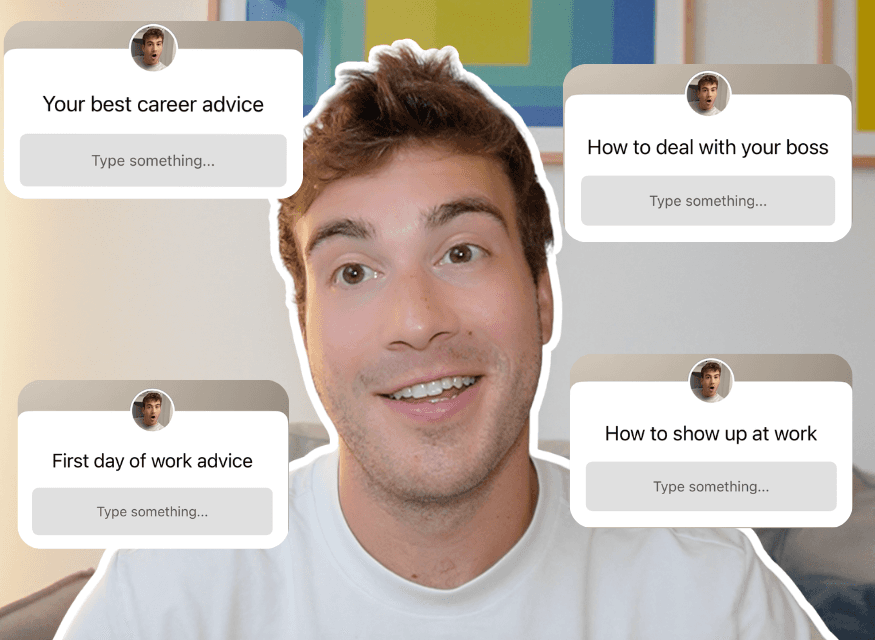
So like give advice, like you're giving advice to someone exactly like me, someone early twenties, maybe first job, first few years in the job market out of college pretty early on. Um, and most of the questions I'm going to ask you right now actually came from the audience of guyset. Um, I put it something on my Instagram story and a lot of people responded like it's the most responses I ever got to an interim story like ever. So most of these questions are from them. So let's start with that first question. So personally, I feel like I'm no expert.
whatsoever with money and I just feel like I'm sitting with a lot of money in my bank account and I know there are things I could do but just don't know what to do. So how much money should I have in my bank account to just like sit there and where should I put the rest of it? Yeah, I mean that's a great question and it obviously varies by person so I'm not going to give you some blanket answer that you need know, X amount but what we typically want and we being the financial advisors or certified financial planners is you want to have
what we say three to six months worth of expenses. And you want that sitting not in your checking account or not in a Chase savings account, but in a high yield savings account. Now that can be annoying and obnoxious to like calculate because you don't want to go through, how much do I spend each month? You don't want it to sign up for one of those apps. A quicker way to do stoop back the napkin math is if you have two months worth of income. So if you get paid,
$3,000 of paycheck, I'm gonna make it up. So $6,000 a month, because you probably get paid twice a month. If you had $12,000 in your savings account, you probably have enough for your emergency fund, given that income. Now, if you make 10 grand a month, you want 20 grand, right? Or 15 grand, 30 grand. But to answer your earlier question, where do you start? You start with cash savings and what I was talking about. I'll give you little anecdote. When I was 23, okay,
Josh Felgoise (06:22.312)
I was working for an insurance firm in Cincinnati and I wasn't tracking my money. didn't care. I was just, was under the assumption like most of us are like, I'm going to make more money. Like, why do I need to track? Like when I'm making 200 grand, I'll care about investing then. I don't care about this. And I was paying off student loans. was living in a fairly expensive apartment for how much I made. And after one rent check,
I had $33 in my bank account and I freaked out. And I was like, well, what do I do? I didn't eat that whole weekend. I literally ate like string cheese and Wheat Thins. And it just happened so the next week we had like an outside sponsor come into the office and they brought in like lunch for everybody, but no one ate. So I literally took home like a thing of pulled pork and I ate on it for a whole week until I got paid again. And I like didn't eat anything else. And it like
It was like one of these like catalysts that like changes the way I think about money. And so now I'm obsessed. I'll never have less than two grand in my checking account. I'm like crazy about it. But it takes first a lot of us like something like that to kick you into gear to care about savings, care about investing, care about all that. Cause we're all of the assumption like I'll just make more money and I'll be fine. But if you don't start these habits earlier, you never will. And it's just the nature of who we are.
Six in 10 of people I see right now, I don't care how much money they make. I have clients who make 800 grand, 500 grand, a million. Six in 10 of the people I see are living paycheck to paycheck. And that's because they've never learned how to save. So you start by having that savings account. And it sounds annoying and it sounds boring. Like, dude, you're really talking to me about having a savings account. But having that cushion of those two months of income or three to six months worth of expenses,
is going to save you if you ever have a big tax bill, which I've had before. You blow out the tires in your car, which you already got to get new ones. That's too grand. I had to fix the AC in my car this year. It 2,400. You get in an accident or some type of medical expense that health insurance doesn't cover, and you got to eat a $3,000 check. That thing will save you, honestly. And so that's where to start. Now, what you're probably asking is where should you start investing?
Josh Felgoise (08:45.792)
If you want to pivot to that, like, okay, great. I can figure that out. Where you should first start investing is if you have one, a 401k. And there's a couple reasons for it. One, it's the easiest place to invest and save into. Cause you don't even think about it. You don't click move money. It just literally comes out for you. You don't have to think about it. Two, there's tax advantages to it that you don't get in like a Robinhood account.
or a brokerage account if you're gonna open anywhere, trade stocks. So you get tax advantages and benefits for it. And then, three, again, it's going to start setting you up and putting you in motion towards saving for retirement, which we all need to do and we all need to do earlier. But with that, your employer is probably gonna give you some type of match more often than not.
unless you work at a startup, but typically you'll get some type of matching benefit like three to six. And that's basically free money your employer's giving you. So your 401k is the first place you want to start investing. And I'm happy to talk more about that too. That's the first and it's, I know this advice is boring, but it's, it's still no, it's not. Now we can talk about how much of your paychecks you should be saving into that. If you want to go into more detail. So let's go into like,
contributing money and putting it exactly into like 401k Roth IRA account. first of all, what is a Roth IRA? And where do I start with that? What are the pros and cons of those two things? And like, what's the split? Let's get into like the nitty gritty. Like I know, like a lot of the people on here don't know where to start at all. I don't know where to start at all. So like, and I know it's boring, but it's like really informative and helpful stuff. So let's like do the boring shit. Yeah. So basically a Roth account.
is in a more traditional 401k. First of all, step back. An IRA is an individual retirement account. It's an account you open that you open yourself to save money for retirement. A 401k is a retirement account through your employer. That's the primary difference is one you can only get through the company you work for. IRA you have to open yourself. Now there's a maximum
Josh Felgoise (11:11.662)
and how much you can put in each year. And IRA, you can only put in seven grand for 2024. And for a 401k yourself, you can put in 23 grand. Now there's a delineation that we've all heard between Roth and traditional. Okay. And you can have a Roth 401k too, but let's talk about what's the difference between the two. So a Roth account, you put money in, say your Roth.
401k or Roth IRA. When before that money goes in, just like all the money that hits your paycheck, it's taxed. State and federal municipal taxes come out of it. Once it gets in there and is invested, assuming you hold it to retirement, you will never be taxed again. Now, a of us don't know this, but if you put money into a Robinhood account, okay.
As that grows, there's going to be dividends or as you change stocks or it starts to appreciate, you're going to have to pay taxes on those dividends and on those gains. Those are called capital gains tax and ordinary income or ordinary dividends. Inside a Roth account, you never pay any of those taxes. It just keeps deferring. And then when you're 60 or when you're retiring, you take the money out, there's no taxes. You're done paying taxes. So that's the benefit.
Now a traditional. Yeah, ahead. Yeah, no, it's an amazing benefit. Yeah, yeah, yeah. Go ahead. Well, so the traditional is kind of the opposite is you don't pay taxes now. It grows tax free. And then when you take it out in retirement, you pay taxes. So it's basically you're weighing the options. Do I want to pay taxes now or do I want to pay taxes later? For most of us who are younger, by younger, I mean like 20 years from retirement. Roth.
is always better or 99 % of the time Roth is better. Here's why. If you're 25, the chances you're going to make more money throughout your career are pretty good. You're probably not, unless you're like playing in the NBA, the chances of you hitting your peak earnings at 25 or you're an NFL running back are probably not at 25. As you go up in income, you're going to increase your tax rate.
Josh Felgoise (13:36.406)
I would rather you pay taxes now when your tax rates are relatively low. And then when you're like retiring, getting close to retirement, you pull the money out, your tax rates are way higher, but you're avoiding those. So it makes way more sense for us to do Roth. There's two other big reasons why you want to do Roth, by the way. The other reason is, hear it. Say Josh, you're 60 years old, you got $4 million in your Roth account. You know you have $4 million to live off of. The government
Uncle Sam's not taking a dime at that. If you have $4 million in a brokerage account, you're probably going to lose a good amount of that to capital gains tax, depending on what your cost basis is and other variables. If you have $4 million in a pre-tax 401k or traditional IRA, you might have $3 million to live off of. But again, it depends on how fast you take it out, what your tax rates are, what your income bracket is. But it's really the peace of mind knowing, like, hey, I can...
I can plan out the rest of my life based on this asset pool knowing there's no more taxes is huge. More importantly, because I don't like talking about when we're all 60 because it's not a fun conversation to think about, to be honest with you, but you can take money out of a Roth account and you can't do that out of a pre-tax or traditional 401k. In an IRA, if you hold it for five years, if you've opened the account for five years,
Say Josh, put in $7,000 this year and in, you know, whatever, five years, it's grown to 40,000. I'm to make it up. It's not going grow that much. In five years, it's grown to 20,000. Okay. If you want to take that $7,000 out five years from now, you could completely tax and penalty free. Now, if you wanted to take out the 20 or whatever it's grown to above what you put in, you're going to pay penalties and fees. But
For some people, if you want to use some Roth dollars for a down payment on a house or for whatever other reasons, you certainly can. So it gives you the flexibility. now that really comes into play, like if you want to retire at 55 or 50, if you have all your money in a 401k, a traditional one, you're kind of screwed. You can't do anything. But in a Roth account, you can still take the money you contributed, the money you put in physically. You can take that out tax and penalty free. OK, that's great to know.
Josh Felgoise (15:58.51)
Thank you for like the differentiation. That's very helpful. We talked for a second about investing. What is like the best setup app website portfolios? Like where can I turn for advice? What resources give me like everything you've got about investing? Yeah. Love investing. Big question, but yeah, I go. Yeah, it's fair though. So here's how you should think about investing. There's first of all, I want you, I want everybody to delineate between one or two things. There's gambling.
and then there's investing. Okay. And I have no problem with gambling. You picking stocks in Robinhood or buying crypto is gambling. I have a better understanding if the Giants are going to beat the Eagles or the Warriors beat the Lakers than you do if Johnson and Johnson is going to appreciate the next three months. You have no idea. And in fact, I've worked with portfolio managers. They have no idea, to be honest with you. They're more often wrong than right. Now, what you should do is, and it is really important,
to not have all of the money you're investing to be in like IRAs and 401ks. It's important from a habitual perspective. You get my age, you get in your mid and early 30s and you wanna buy a house. If you're putting only money in bank accounts and 401ks, where are you gonna get the money to put it down paying for your house? And there's validity to living for the now too. So what I would tell everybody to do is go to one of the robo advisors. I know this is...
know, it's not super sexy, but it works. So wealth front, Charles Schwab, Fidelity, Betterment. You go in, you open an account, and it's going to typically have just a smattering of ETFs, which are basically pools of stocks for lack of a better term. And they're super cheap. And you're going to put it to the most aggressive allocation if you want it to be an all-in-stock account. And basically, Betterment or Schwab or whoever will just pick your
mix of ETFs for you and all you have to do is put money into the account. You don't have to worry about picking anything. If you're an engineer or if you're in media or you're in marketing or you're in HR or whatever, you don't have time to sit here and delineate between good ETFs and bad ones and international stocks versus US stocks or large cap or small cap. By the way, even the people who do that 24-7, 365 have no idea what they're doing most of time.
Josh Felgoise (18:24.782)
pick one of these super easy portfolios and just literally start with $50 paycheck or 50 bucks a month or a hundred bucks a month, get in the habit of doing it and just open the account is 80 % of the battle. As you make more money or as you save more money, increase to $200 a month, $500 a month or $1,000 a month. When you have the account open, it's so much easier to save into it. Now, if you want to pick stocks and that's fun, that's your thing, or you just want to
put money in Nvidia and Bitcoin, put the money on Black and let it ride. Great. Just make sure it's less than 10%, 20 % of your overall investments. Let's just not go crazy with it. There's nothing wrong with having a Robinhood account and doing that. But when I see people who have 80 % of their assets in Bitcoin, I fear for them, to honest with you, because that thing can turn around and has right away.
open up one of those accounts, just get in the habit of doing it. When your money gets big enough, they'll start to harvest taxes for you and it actually doesn't save you money. But again, it's all habitual. Get going right away. Even if it's $50 a month, seriously, you'll be so shocked how quickly that money compounds. So on that similar topic of risk and diversification, those are my next two questions for you. So you're flowing perfectly into the exact questions I have for you.
But like how much risk should people our age like the people want to know about risk. Seriously like how much risk should people our age have in their 20s like how much should they be exposing themselves to in the market besides like a rainy day fund like should be would be investing 50 percent in the market. Let's start with sort of retirement accounts first and then we'll go into non retirement accounts and risk. So in your retirement accounts you don't care if the like this is all honestly you should not care if the market goes up or down in your retirement accounts.
I honestly tell people to barely even look at them. Dumb it down even more. Retirement accounts means 401k, IRA, yeah? Yeah. Okay. So if we start with your retirement accounts, 401k is IRAs. You really shouldn't care about risk. And I know it's a weird thing for an advisor to say, but if you're in your 20s, have 40 years before you're probably going to touch this money, at least 35 if you're 25 years old. Okay.
Josh Felgoise (20:51.39)
Average market cycle typically is about seven years. And so that's recession to Pete de Troph. But honestly, if the market goes down, if you're saving consistently, that's a good thing for you. You're buying shares on sale. You should not care about that volatility. Your goal should be to invest within the major asset classes as risky or as aggressive as possible is that you're comfortable with. But I honestly tell them
don't want any of my clients, seriously, who are under 40, 45 to own a single bond in their 401k or IRA. You don't need it. You have so much time. Time is on your side. Now, outside of that, like in your Schwab account that I just talked about or your Robinhood account, whether or not you should take on risk or be risk adverse is based on a couple things. Number one is, yes, your risk tolerance, but everybody's like, what is my risk tolerance? I don't even know. I don't know anything about investing.
That's a stupid term. What really matters is when are you going to use the money? So if I'm saving for just whatever, I'm 25, just saving for whatever, I just have extra money and I want it to invest the market and grow and work for me. Put it in all stocks. Again, you have no need for the money. Why not try to grow it as aggressively as possible? Now, if you are planning on buying a house the next couple of years, you want to...
be risk-averse in case the market takes a dive and then I got to wait and I'm not going to able to afford my down payment and miss that in the third. So then you want to dial back and probably put half of it in maybe a bond yielding account, half of it in a high yield savings and diversify more. But my magic number and the magic number we use is three years. If you're not three to five, if you're not going to use this money, I have no plans on it next three to five years, then put it all into the market. Get your exposure.
Markets up 10 % this year. It was up 24 % last year. Like, you let that sit in the account, you're just gonna look and be like, oh my God, I left thousands of dollars on the table. So it's predicated on when you're gonna use it. For most of us, having a diversified bond portfolio is not really, you don't really need it at this stage in your career. Now, if you're 52, we're having a different conversation. Right, right, right.
Josh Felgoise (23:18.028)
What about like the rest of your portfolio, not just bonds, like in terms of 401k stocks, crypto, real estate, art, like all these other things that people invest in. How should you diversify in terms of all of that? Let's let's talk about crypto again for a second. I have no problem with crypto. I have a small crypto position, small probably relative to some of the jokers we see on TikTok and whatever. But you know, 10 million in it. But look, crypto is gambling.
It is what it is. there's a reason. There's no rhyme or reason. A lot of times why it goes up and down. I know there's a billion podcasts that say there is, and then they all say that, oh, it's a good diversification versus stocks. it has a very high correlation with R squared to the market. So if the market goes up, it goes up. Mark goes down, it goes down. So that's not really true. Crypto is, again, it falls in that for me and for what I say to my clients, into that gambling pocket. Like go ahead and invest in it.
You know, pick, try pick your winners and just don't let it be, you know, more than 20, 25 % of your overall investments. Real estate is the number one thing I hear people wanting. Okay. And I love to talk about this because real estate investing in all the garbage you see on Instagram reels and TikTok is four years ago. Maybe it was a good decision, but now it's not real estate prices in the U S home prices are up 50 % in the last four years.
And depending on your credit rating, your mortgage rate is at least two and a half times higher, maybe three. So if you wanted to buy a rental property or even buy a house, and you've got to make sure you got really strong cashflow and at least 20 % upfront to put down. So if you want to buy a rental property, And A,
you got to make sure you have 20 % down. So that's probably going to be 100, 150 grand. You got to make sure the rent that you're charging the constituents is going to cover your mortgage, which is going to be really high. And by the way, way higher than it was four years ago. You have to make sure it covers taxes. If the oven breaks, you got to eat that three grand. If the HVAC goes out and it's not covered by homeowner insurance, you got to pay for it. You got to fix the deck, right? Plumbing.
Josh Felgoise (25:46.126)
What happens if you can't rent it out for a month? Do you have the cashflow to cover that extra mortgage on top of your rent or your current mortgage? Like again, real estate was great when interest rates were, mortgage rates were two and a half percent. You could buy a home for the cheap and you can rent it out and you can have good cashflow. But a real estate investment now is you're waiting for that home to appreciate. In order for you to wait for that home to appreciate, you got to have a ton of cashflow in order to fund that thing. And so,
Unless you're in such a good position, and people are, but you got to be able to afford your cost of living, save thousands and thousands of dollars a month on top of that, and have a big pool of assets to put down towards that property before it makes any sense. And by the way, investing in like real estate investment trusts or REITs, people have heard of those before, the returns on average are not much better than...
what you're going to get in like an S &P ETF and oftentimes the worst. Some of them have really high exposure to like, you know, corporate real estate. No one's working in these high rises in, in downtowns anymore. So they're losing, they're losing their, their ass in a lot of stuff. So, uh, I mean, that's, that's just a general thought. Like, the better, yeah, absolutely. Okay. Uh, thank you. I appreciate all of that. Um, let's go into like investing. We talked a little bit about stock market.
Is there a specific way people should invest in stock market like dollar cost averaging like lump sum? Once a year twice a year different times like when when should people do that? It gets back to like when you need the money, but for most people just the the act of saving is hard enough so The best way to do it in my opinion is it is dollar-cost averaging but truly this concept that's been around forever It's called pay yourself first
Every time you get a paycheck and you have, say you're put $200 or $500 into your investment account, do it right when you get your paycheck or have it auto deposit and just do it consistently. You'll never be able to time the market. No one ever has been able to do it successfully. Just do it consistently, honestly, and it'll work out over time. The market only goes up and to the right for the most part. just it's simpler the better. Great.
Josh Felgoise (28:08.078)
Okay. And then on like the stock market front, you talked a little bit about like S and P like index funds. Do you stick with the lower risks, the trying to find your individual like attractive stocks? Is there a balance? Like what, should we do for that type of stuff? Unless you want to be a professional investor in honestly, even most of them who are don't. okay. S and P 500 QQQ, which is like a tech ETF.
maybe basic small cap ETFs. Some of the ones we have recommended have been like VB, which is the ticker for Vanguard small cap index. But honestly, just a general mix of broad stock market ETFs, like getting in the weeds of, you know, this stock versus that stock. Seriously, even real quick, what portfolio managers do at these asset managers? Okay. Okay. What a portfolio manager and his team do.
let's say at Goldman or BlackRock or one of these, they will literally go out and meet with the CEOs and boards and sales directors of all of these companies. They will pay for research. have valedictorians from Harvard and Yale and wherever else spending their entire lives combing through their balance sheets. They will pay for machine learning algorithms to read their stock readouts. Even they have no idea.
the most part, which stocks are going go up and down. And most of the time, with all of that research and manpower and capability, they drag the market. Most of them do. So me trying to replicate that in my garage is almost impossible. So my thought process is give me exposure to the market as cheaply as possible and just it's my job to save into this thing and the market will take care of the rest. Yeah, that's super helpful. And then let's go back to like
saving and like budgeting and all the stuff we're talking about in the beginning, unless you have anything else on the investing side you wanted to just add in. No, no, that's good. Okay, sweet. So what percentage of my paycheck and my salary should I be saving? Like something that's realistic for somebody my age, early twenties. what, yeah, what should we be doing? So the goal that you need to hit, and I was having the back of your mind is, and there's, there's math behind it. It's actually, can Google, it's called a Monte Carlo simulation.
Josh Felgoise (30:36.142)
But basically what it is is how much do I need to save if I'm going to retire and maintain the same standard of living? So how much do you need to save into your IRAs and 401ks? That's 15 % at least, 15 to 20 % of your paycheck needs to go towards retirement. Now from that, how much afterwards should I be able to save? Again, it varies based on, you know, if you live in New York City or Tulsa, Oklahoma, right? It's going to be different.
It's gonna be different based on your income. I like, hey, you need to be cashflow positive. But if you can start saving 1,000, 1,500, 2,000 a month, I mean, you're getting into a place where you can start to save consistently and you'll be able to achieve some of these financial goals more often than not. So the goal is to start, you can use like a Monarch Money or one of those apps that's gonna help you track and.
I say it's like counting carbs. You don't have to track your finances every day for the rest of your life. No one wants to do that. But do it for like a month or two and you're going to realize pretty quickly where you overspend. You'd be like, okay, I need to dial that back. And it's like when I count carbs, I figure out which foods have a lot of carbs in them. And then I know what to avoid. And then I'm fine dieting from then on. It's the same thing with expenses. So like you do it for a month, do it for a month or two.
Sign up for the two week trial or month long trials of these apps. Figure out where you spend your money, cut back on that and you'll be surprised like, my God, have $700 more in my bank account than I did last month. It's weird, but it's true. Go ahead, keep going, keep going, keep going. I was just saying, I've had clients who spend like three, four grand on coffee a year and have no idea, no idea.
Right. So like on that same, on that same like wavelength, what should you do if you want to start your own budget? Like personally, I've been wanting to start a budget and just like haven't done it. and I, cause I think it's really hard to do on your own. Like, do you have a website like subscription? Like what are your best tips to like start a budget early, early twenties, early tw- use one of the apps, honestly doing it like pen and paper in a XL is too tedious. You got to do all the math yourself. You got to average it out. Like if you
Josh Felgoise (32:51.534)
sign up for Monarch or it used to be Mint, one of those, they'll literally, they'll just like plaid, kind of like what you would with Venmo, they'll link your accounts and then they'll organize your expenses for you. And then you track it for a month and then you'll be able to figure out your budget. But there's, there's three areas I see everybody overspend. Assuming it's not like you're paying too much in rent or a mortgage. People spend too much money going out and on food and who breeds. Okay. People spend too much money shopping.
more towards the females but Amazon, online shopping, that's a huge area. And then three, it's travel. So it's honestly, you're gonna watch is gonna be one of those three things. And when you narrow down which one it is for you, like for me, it's going out. I don't shop on Amazon that much and I don't travel that much, right? But I'll know where it is and how quickly I can dial it back is pretty effective.
How much should somebody my age spend going out? I mean, it depends on how much someone your age is making, right? What did you do at my age? 23, 24, 25 early? Like what? Like, you know what the lifestyle is like? I've like wanted to go out every weekend. Beers, expensive drinks are expensive. And like, it just adds up so fast. And at the end of the weekend, I'm like, holy shit, I just spent $250 at
two different bars, like what the fuck am I doing? And how do get that under control? Like what should somebody who's in that position exactly like me do? Well, be a fan of the pregame helps. That does help. Honestly, like, what would help me in New York, when I I live there, like you is I did start to meal prep a little bit. And so I was like, okay, the weekends are kind of a blur, right? And it is what it is.
to degree, like, you know, I obviously don't go spending a thousand dollars, a PhD or whatever, like, how do we, how do we navigate Monday through Friday first? And so I was like, okay, I'm spending too much. I'm going out to eat every day and doing seamless or Uber eats or whatever. Start there. And then, okay, on the weekends, just be a little bit, honestly, you'll, you'll, you'll catch on how quickly it is. Just be a little bit more mindful of like, Hey, do I need this fifth shot?
Josh Felgoise (35:11.598)
Or do I need this third drink? Or like, hey, what I did for a while too is I would close my tab every time I'd pay for your drinks. I'd pay for drinks for me and my buddies, close it so it doesn't float. Because then you're getting more likely to just circle them up again. So like little things like that. Maybe going to the bar a little bit later or doing one more at home and then close your tabs or paying cash, which I hate doing.
annoying for bars, but it does help seeing that transaction does help. think that's great. That's really all great advice. What about dating? Like dating is probably the most one of the most expensive things for a young guy in their twenties. Like specifically for me, I feel like I've gone on like a bunch of dates. I now that sounds makes me sound bad, but I've gone on like some dates and they've added up and it's like you, pay for your drink and the girls drink and you're expected to pay on the first date. If you're going on bunch of first dates, like
It adds up pretty quickly. So do you budget that? Like, what do you do? It could be crazy expensive. I mean, I tried not to because I matched kind of a turn off for a girl if some guys like super frugal. Do you put that in like your personal budget? I don't there's only like part of budgeting is life comes at you right? Like maybe one month do you got to go to your brother's wedding and you got to pay 500 bucks for a tox or whatever. Right?
There's only so much you can budget for and I'm not here to map out anybody's life. And I don't think anybody should want to map out their life either. Like we're not robots. So again, the hope is, that you're, you're not overextending yourself so much on day to day expenses, rent, which I know is a problem in New York. part of it's part for the course, part of it's not right. Like if you're not overextending yourself so much in all the other areas,
You should have some money left over and some like buffer. Not like, should you take your first date on Tinder to Carbone? No. But like, right, there's reasonable things we can do to try and like inhibit that, right? So no, don't budget on it. I'm going to say this. Don't budget everything in your life. Like I want everybody to have a fun and live for the now and whatever, but there's reasonable levels to it, right?
Josh Felgoise (37:34.702)
You don't have to try and impress some girl. She's not gonna know the difference between 1942 tequila and Casamigos, right? It just is what it is. Okay, yeah, I like that. think that's true. mean, one of the things that somebody wrote in was about, there's two schools of thought when it comes to being in your early 20s. One is spend, have so much fun, go on trips, live the best life, go drink a lot, whatever.
And then the other thought is like, should be saving, I should be putting money into my accounts and all that stuff. Like, what do you think the right balance is? We're talking about a little bit, but like, what's your final kind of take on that? My final takes do both. Like, in hindsight, I wish I would have saved more. Like, I do. It's tougher in your early 20s and your late 20s, honestly, but by the time you're 26 or so, you typically get like a pay bump and you're going to be making a little bit more just depends on your industry and whatever. But, you know,
starting early with retirement and 15 % going into your 401k seems like a lot and it is, but maybe just at least do 10 to start. Okay. Get used to living off of 10 % going into your 401k. And then again, I think if you just started small with your investments, don't go crazy. Don't save every dollar you have. I don't subscribe to that life personally and I don't want any of my clients to be one of these people who...
squirrels all their money away and never did anything in your 20s because you're going to live a life of just horrendous regret. So to me, it's just find a way to consistently save. And the nature of that or the size and quantity of that will increase. If you have consistent habits, it'll increase as your income increases and it'll work in lockstep with your life. I wish I would have
save more in non-retirement money when I was younger. I really do. I really wish I had a brokerage account. Like one of those Schwab ones I was talking about, a Fidelity or Betterment. And I really wish I'd been smarter for it because if you start now, when you're ready to do these big life events that are like people my age do, where you're to buy a ring or you're going to buy a house or you want a better car, it's tough to do if all your money's in your 401k or you blew it all. Right. Yeah, no, totally. I think that's really good advice.
Josh Felgoise (39:52.462)
what do you say to somebody who's like comparing themselves a ton to their friends, financial situations, if somebody's making a lot more money than them and being paid more at their job, or they just kind of feel like they're behind, then behind a lot of their friends in life and jobs and finances. What do you say to that person? I saw Steph Curry say this on Draymond Green's podcast a while back. Cause there was a time where he was like the four ties play player on the Warriors and
He was like, dude, how did you get through that time? And he's like, don't count on other people's pockets. And it's so, it's so much easier said than done, with Instagram and whatever, but we're all running our own race. And I think the only way towards happiness is to not, you know, not focus on, you know, exterior people's ideas and our movements and purchases and all that. mean,
More often than not, and I think Josh had talked you about the fancy car fallacy, you go out and you buy this really awesome car, BMW, Mercedes, whatever, the dude lives a couple apartments down, is driving like a Maserati, but he's living in a one bedroom apartment. And the idea you buy this car and you feel like you're gonna get validation, you're gonna get respect, you're gonna get people be like, wow, Josh has an awesome car.
Reality is people see Josh driving that car, they're only gonna look at the car and compare it to their own car. They never look at the guy driving. And so you're not gonna get the validity you will A, by purchasing these things, but B, there's typically more to that story. And I just think if you, the only way you'll ever be satisfied and satiated in your own life is to just handle what you can handle. Like take care of what you can take care of.
Money is one of these things that the minute you make a million dollars, then you're going to be looking at guys who make three million, then guys who make nine million, and then guys who make 50 million. And there is literally no end until you're Jeff Bezos. And then, OK, great. But we're not all trying to be that, should you. I have a ton of anecdotes. I can talk on that if you want it. honestly, if you count other people's money, you'll never be happy.
Josh Felgoise (42:12.95)
I think that's a really good school of thought. think it's like, it's a very important thing to know and think when we're in this kind of place in our lives, when comparison is inevitable, but like, we're all trying to figure it out and make it work. And on that same line, like, what do you say to the person similar to me? Like right now I'm in the position right now, like I've, I could have done a lot more and still currently as we're speaking, like could have still done more with my money. Like I still haven't done all the accounts we're talking about and all the things like, it's
It's kind of really bothering me. So what do you say to the person who's like pissed at themselves for not doing it sooner? I mean, if you're in your 20s, you got all the time in the world. Like, like, I know we feel like we're behind the eight ball, but you're not. You're not. And there's there's no time like the present. Now, you know, I had a when I was doing some consulting for these 401k plans a while back, I had a 60 year old guy come to me.
and he's this big burly construction guy and I was going to give him some financial advice and help him financial plan and he just immediately started breaking down and crying and he's like I know I should have been saving I know I should have been doing this everybody told me to life came at me I got married bought a house had kids I thought I did everything right I'm sitting here I'm 63 and I have no money I'll never be able to retire and I wish I could have
you know, not recorded it, like packaged that emotion from this, this man who says blue collar worker family man extensively did everything right, but now he's 63 and he'll literally have to work until his, his hands fall off. And so if you're 20 years old, 25, 30 years old, just start now. That's all you can think. Kind of gets back to what I was just saying. Only take care of what you can take care of. Start now. Get in a habit.
Honestly, you'll catch up so much quicker if you just stick with it Yeah, it is all about consistency. I think you're totally right. First of all, like thank you so much for this episode I'm like thrilled that we're doing this and I personally feel better like it's great. It really is if somebody Didn't hear anything. We just said what is the one thing that you'd want them to leave this episode with and to go do like what's the one thing they need to do right now
Josh Felgoise (44:33.836)
when the music plays and the episode ends, they should go do right now. What I'd like everybody to do is two things in terms of investing. One is make sure you're at least hitting your match on your 401k. So if your employer gives you a 6 % hit 6%, what I'd really like every person in their twenties to do is at least do 10%. The goal is to get to 15 eventually. And then to go open. And I know it's boring, but a Schwab robo or better mid
brokerage account and start saving $50 a month. You'll be surprised. 50, 100, 200, whatever you can afford. Just open the account and get in the habit of doing it. If you open the account, you're more likely to save into the thing. So just start now and just, I know it's boring, but just it's going to work. You wake up one day with 50 grand in this account, like, don't even know how this happened. And it's going to be awesome. I love that. Thank you so much.
And I want, I want to do like one thing I'd love. mean, I'm sure this episode going to bring up like questions for people and people are going to start thinking and like wheels are spinning as they're listening. So I would love if anybody listening to this episode, if you have a follow-up question for Brian, Brian, if you'll be willing to come back on for like a shorter form time and answer any more questions that people have, I'm sure more are going to come in. Cause like, I'm telling you the excitement that people had when I said I was doing this episode was so overwhelming and exciting for me. like,
I'm hitting on a topic that people really want to hear about. I want to do like, if anybody has questions from this episode in the show notes below, there'll be a Google form. can go listen, you can go write your question. You can also email advice, a D V I C E at guyset.com any questions and I will send them to Brian. I'll bring back. I'll bring Brian back on in like a week, two weeks whenever, and we'll do it again. just to follow up, cause I, I'm assuming more are going to come up and I want to have that resource. So
If you're willing to do that, that would be amazing. Yeah, absolutely. I think one thing I would have said too is, hey, Ben, if you guys got crypto accounts, and know a lot of dudes in their 20s do, and they're up 300%, think about selling some of it and taking the gains. Think about it like you're up at the roulette table, take some of it, put it in your pocket. Honestly, you'll thank me for it. Even if it keeps going to the moon, that's great, but...
Josh Felgoise (47:00.366)
you're going to feel a lot better that you took that off and if it goes down. So, um, just that's another thing I, I, everybody loved GameStop, but no one ever talked about the, the, the kids who lost 300 grand and, and went into bankruptcy. I just, just trying to help everybody out. No, it's, it's, it's smart advice. And it's talking about that, that risk averse side to all of this is, is important to, um, Brian, pimp yourself out. Where can anybody find you and
come follow you and like if they want more from you outside of this, cause I'll bring you back on, but anything else they want, like where can they find you? So part of being in finance services is unfortunately we can't just like have a Twitter account or we can't have Instagram accounts. There's a little bit of compliance, but you hit me up on LinkedIn. Just Brian Matthews. I work at Domain Money. I'm the head of investment strategy. You know, send me a message on there. Find me on Facebook. Find me on Instagram, bmat012.
And look, just send me a DM and I'll help you out. I'll get you oriented in the right direction. I love that. Thank you so much. This was real. I'm sorry for all the lag and stuff, but this is a really good episode and I'm really excited for everybody here. I think it's gonna be great. No, thank you, man. I love doing this stuff. We want to talk about anything else you ever want to talk about. I'll hop on here. I'll cut the recording here, but this was really, really great. Thank you. Yep. Thanks, Josh. You're a good one, See you, buddy.
If you liked this episode, really hope you did. Please like, subscribe, leave review, give this episode five stars on Spotify or Apple podcasts. Give it, give the podcast five stars. I really appreciate that. Send anything you want me to talk about and that should be talked about to my email advice at guyset.com, a D V I C E at guyset.com or to my personal email, josh at guyset.com, J O S H at guyset.com. Follow guyset on Instagram, Tik TOK, all the social medias at the guyset T H E G U Y S E T and watch the full episode on YouTube at guyset.
Thank you so much for listening and I will see you guys next Tuesday. See you guys.