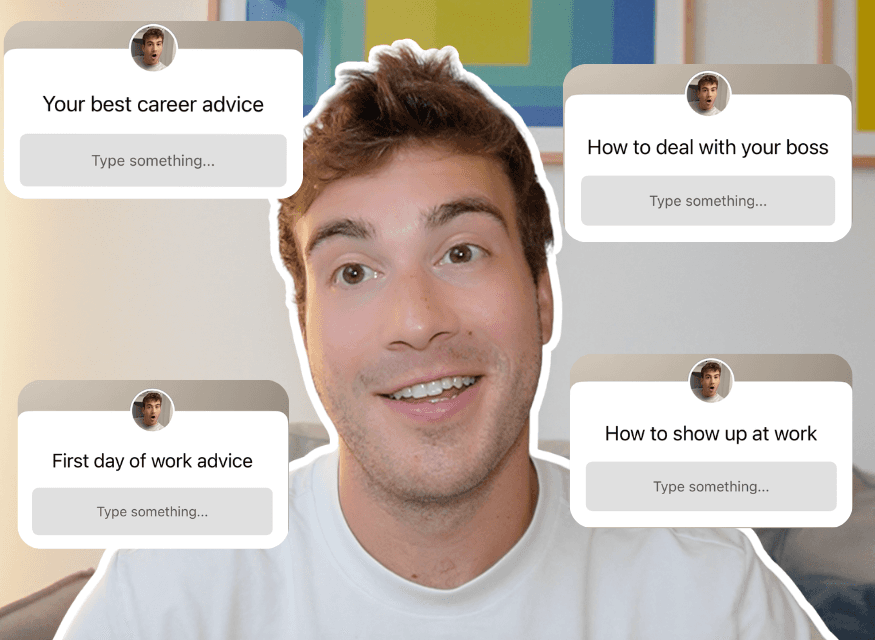
Post-Summer Work Reset
TRANSCRIPT
It is the day after Labor Day, which officially means that summer has unfortunately come to an end. Summer has come. It is the sad, unfortunate day where we get back to work, where like the week.
Trips and the summer Fridays, and a lot of the I don't know, like a lot of the times throughout the summer, like we kind of forget and put aside all of our responsibilities, and we're like, summer, summer, summer, summer. And we finally get that like reprieve from the intense amount of work. And now that we are back to September, whatever it is.
It is officially the time where like work kind of kicks back into gear. We're in the Q3, Q4 parts of the year, and everything just kind of ramps up. And I thought it would be a good time to give a refresher about some of the things that I think matter at work or in a corporate, corporate environment.
That I think can like help set you back up for success in your career and at your job. This is the time of year, it's kind of like the back to school for work, where everybody's like, all right, like we we had summer break. Nobody really feels refreshed at all, which is really funny. Like everybody just feels kind of like more tired now that summer is over. Where we like all like kind of like look up look toward this like break in this time where we have all these fun plans and we have all this stuff going on.
And then it's like, okay, and we're back. In five, four, three, two, one. I know you see. Like we're just we're back at it. And I feel like we can look at it as like a ug, or we can look at it as a time to kind of like revamp, kind of restart, refresh everything we have going for us. A moment where we can kind of like hit the hit the button to start again.
Josh Felgoise (02:33.736)
And I don't know what button it is, but we can like start over and give ourselves a little bit of that energy back. Like I think that is actively a choice you can make when you have had a lot of time off or you haven't been as focused or as productive. And I think it's good to kind of like reset into a productive mindset. And like, regardless of if you're ready for that or not, it is here. And I feel like an episode like this is a good one to kind of put us back.
in the place of focus or like in that seat that no one's really ready for, but it's here regardless of if you're ready or not. And work is kind of back in full swing. So I think that with a few reminders or things you can start or restart doing today.
You will feel less overwhelmed with the weight of work kind of coming back into full gear, and you will feel a little bit more ready or a little more refreshed. This episode is for when you're coming back to work or you're back into the full swing of things, whether it's been the summertime or it's been a little bit of time off, you've taken time off.
Where we lose the momentum, where we drop things off, where we put things down, where we get a little more lazy, a little bit more like, like whatever, and we kind of like push our priorities to the side. And I wanted to kind of like recenter around this time and give you the things that I think will set you back up on the path that you might have slipped off of or intentionally stepped off of. Like whatever it is, I think this episode will be a good
Kind of like recentering, whether you are starting a job, restarting a job, taking on a new position, joining a new team in a job that you've been in for a while, whatever it is, I think this episode will be applicable to you and for you in whatever you're doing and in whatever career you're in, in whatever job you're in. These are some of the things that have helped me get back on track when I've kind of lost.
Josh Felgoise (04:39.5)
That center of gravity or that focus, or I have kind of fallen off the path or stepped off the path that I think will help you and have helped me actually and mentally kind of get back on. So let's get into it. The first one I want to talk about is setting your priorities for the week. This is not something somebody will ever tell you to do. This is something that I think will be helpful for anybody.
I use this thing called the Ivy Lee method where I write out at the start of every single day, I try to do it at the start of every single day. I write out the seven things that I want to do throughout the day and everything I want to get done. And whatever I don't get done, let's say I get one through five done, the bottom two, six and seven, become one and two of the next day. This has been a way that I learned to prioritize the things that are most important to least important.
And most of the time you wanna do the things that are the easiest to get done. We save the hardest things for the last. And that's just kind of how we're wired. And that's how humans work, that we like don't want to do the hard things, so we push them off to later. And in this method, if you're doing it correctly, which I don't always do, and to be honest with you, a lot of time I don't do, you wanna put the hardest things at the top, the things that are the most important to get done, the things you have to get done at the top.
And then the rest at the bottom. And of course, you can sprinkle in a few things that are like easier to get done. So you have things that are checked off and you feel like you've actually done something today. But I think this is a really good way to prioritize what you need to do at work. And I think this is one of the best things that any of us can do in any job is to start figuring out our kind of like prioritization hierarchy. Like
Figuring out what we actually have to get done in order to make the biggest impact, in order to help out the most, in order to kind of like stand out the most to our teams and to our boss. And I think that this is something that, like, especially early in your job, if you can get a handle on what is most important to do, what is most valuable to the team, to the company, to your boss, that is the best way to stand out. That is the best way to succeed. That's the best way to like find your path forward.
Josh Felgoise (06:48.298)
If you figure out what matters most to everybody around you and you start kind of taking that into account really early on, you start prioritize prioritizing that, that will help in in anything. I think, especially early on in your career, if you can figure that out, you are kind of golden. Like you are really setting yourself up to make a big impact wherever you are. Prioritization, getting the shit done that you actually have to get done is one of the hardest things. Like,
Sitting down, staying really disciplined, and like staying in the lane of like, I need to get this done. I'm gonna get this done. I'm gonna keep my head down and I'm not going to distract myself and not go on my phone. I'm not gonna do all these other things that I still have to get done. But I figure, like I know what I need to do most, and I'm gonna get that done first. That will make you stand out because a lot of the time people get sidetracked into something they were asked to do by this person or they were.
Pulled this direction or that direction. If you can get good at knowing what is most important to do and getting that done, boom. Like that is that is how to stand out. That is how to be successful in in work, in life, honestly. And it's one of the hardest things to do because there's a million things pulling you in a million different directions. Like I remember at one of my last jobs, I had like a few specific tasks I had to do every single day. But this person needed this for me, and the CEO needed this for me, and this person needed this for me, and I had to get this thing done.
And it would get to five PM and I'd be like, fuck, I didn't do the three things I had to do. Like how did I how did this even happen? Like how did this take away get away from me so much? And I feel like that happens a lot of the time, especially when you're trying to please everybody around you, especially early on in a job or when you're trying to kind of make everybody happy and and f have everybody feel like you've been good at what you're doing. Like you get pulled into a lot of different things. And learning how to say no because you need to do other things is important.
Learning how to be like, yeah, I will get to that when I accomplish this. And I need to do this first because this is the priority. This is top priority. And being able to share that, being able to explicitly state that is something it takes a really long time to get good at. I will be honest with you. I'm not good at that yet. Like I'm I'm getting there, but I'm not there enough to be like, yeah, no, I can't get to this. I'm so sorry. But like sl circle back with me later, like w once I've accomplished this, or I'll I'll come back to you once I'm done this and
Josh Felgoise (09:05.75)
see if I can still help out, but I I have to do this first. A lot of the time I'll be like, sure, I can take this on, of course. Like absolutely. I have nothing going on. And I feel like so many times people will come to you at work and be like, hey, like can you help out with this? And just kind of expect you to, especially when you're the lower man on the totem pole. Like especially when you're starting out and they feel like they can just kind of put a lot of shit on you because you're the junior on the team and they're much more senior and juniors can't really say shit to seniors and like they you know what I mean? Like
You can't really say no to people. learning how to say no through prioritization of what you have to get done is the best way to say no. Like being able to be like, yeah, I will absolutely help out with that once I'm done with this and this. Or I'd be like, I I I need to get this done by then. And once that's done, I'll I'll come back to you. Like that, that is a really good skill to learn and it takes a long time to get there. a part two to this one is alongside your priorities for the week.
Keep track of everything you accomplish. This looks like a running document with your projects, your roles, your responsibilities, everything you're doing throughout the week, every project you've worked on, everything you've touched, everything you've helped with. Like keep a running list of all of that. It doesn't have to be organized, it doesn't have to be clear, it just has to be legible to you so that you know what you've done and you can.
kind of like link out other documents in this. This can be like your master doc. Like you could literally call it like Josh's master doc. Your name, of course, not mine. And like have this be a running place where you have everything you worked on so that you can go back and find everything that when someone asks for, hey, can you send me the link to this thing or hey, you you have everything. Like this is a a great idea to keep at any job. If you haven't done this up until now, it's something you can retroactively create. You can start today and like
Look back at everything you've done and start creating this document. This will be helpful for you. Actually, it will be great for you in weekly reviews with your boss, in performance reviews. When it comes time to be like, Hey, like, do you deserve a raise? You can be like, absolutely, I do. Here's everything I've done that has increased this value, has done this, has been here, has been that. Like, here is everything I've done and here is the impact I've made. And it it's all here waiting for you. Like, thank you. You're welcome.
Josh Felgoise (11:26.306)
Having this running document will be incredibly helpful for you in everything you do at work. And I think at the same time, it also is helpful for you personally when you go to update your resume, when you go to start thinking about your next career move, your next thing, when you go to ask for a raise or a promotion and and point to everything you've done. This is something that I wish I had done at my first job.
That I implemented in my second job and I will implement moving forward in everything I do. That I I couldn't recommend more to anybody in a workplace, in a corporate setting, in a job. So everybody. This is something I recommend to everybody. And I recommend you start today if you've never done it. And if you're in something new, this is a great time to start it. But realistically, it's always a good time to start this type of thing because it's never gonna go out of style. It's always gonna be something that's helpful and beneficial to you. And you can start now. There there's never a bad time to start doing this.
The next one I want to say is also kind of building off of that one is understanding the business's goals. I think that is something that is completely overlooked by so many employees and so many people when they're starting out a job or what even when they're in a job. Like you can ask somebody, you can ask so many different people in their job, like, how does your business make money? Or
What matters most to your company or who are the customers? And I guarantee a lot of people would not be able to give you those answers, which is concerning, but at the same time understandable because a lot of the time you feel like you don't really have that massive of an impact on a job or in a company. And I think that's the wrong way to think. I think that if you start to understand your business's goals, what they value,
What matters most to the company, how the company makes money, who the customers are, the problems the company is solving. And you figure out how you fit into that structure and how you directly add value to the company, that is how to be good at your job. Like that is that is how to stand out. That is how to be successful. That is also something that you can bring forward into everything you do.
Josh Felgoise (13:42.72)
And the more you understand out the more you understand about how your business and your company works, the better off you will be, the more valuable you will be. Because you will be the the one in ten that understands all of this. And it's not that hard to figure all of this out. It just takes a little bit of time and effort and energy into like researching and and understanding the structures and the company and asking questions and meeting different people, but it it really does.
benefit you in the long run in the company structure. And I do really get that it doesn't always feel like you are that important to the company. And it may feel like that a lot of the time. But realistically, if you start to figure out your value to the company, that is how you become more important. That is how you kind of make a name for yourself within that company. And I think this is a big one that a lot of people miss. So
The quicker you figure out how you fit into the big picture, the faster you matter to the company and the more important you become. Like the more important your role becomes. Because everything you're doing is going to reflect how you're increasing the value for the company and how you're impacting the company. And you may not care that much about where you work, and that's totally fine too.
But this is something that, and I'm being honest with you, like that is, you don't have to, the company you work for doesn't have to be the end-all be-all. You don't have to like eat, sleep, and breathe the company you work for. You really don't. But you do have to understand how the company works, what the values are, who the customers are, what you're doing, what value you're doing, what value your kind of role has directly on the company. All of that will benefit you. So take the time to understand that.
Whether you're new to a role or whether you've been in a role for a while. And this is something that you need to kind of like refresh every once in a while, every few quarters or so, every year or so, and understand the new business goals and understand the new things that matter to the business and how you directly fit into those goals. And this is also how you protect your job. This is also how you protect your role too. Because when
Josh Felgoise (15:59.756)
Company goals and values change, that also reflects what matters in terms of hiring and who they're hiring and the roles they're keeping and everything. So if you can figure out how you consistently kind of how your value consistently can kind of shift with the company and how what you do can shift with it as well, like alongside it, that is how you remain. That is how you remain valuable.
And like at the end of the day, we're all kind of one piece of this machine. And most of the time, if not all of the time, every single one of us is replaceable. If you can figure out how to become replaceable in your it's irreplaceable, not replaceable. If you can figure out how to become irreplaceable in your role, this is one of the best things you can do. And how to become irreplaceable is is understanding what matters most to the company and how what you do impacts that directly. So I think
Figure this out as soon as possible. That will help you in any company in any setting that you are in. The next one is learn your boss's communication style and what would be best for how to work with them. Like every single boss I have had so far has a very different communication style. They have different requirements, they have different needs, they have different kinds of wants for how you report to them or how you share what you're doing with them.
Learn that as early as possible and start kind of like deciphering how to work with them, how you can be most helpful to them and set up. And if they don't set up, make sure you have like a cadence of a weekly meeting with them where you figure out how to run that meeting. Cause a lot of the time you're gonna get there and they'll be like, they're gonna be like, So, like, what's going on? Or like, what's how's it going with you? And it is completely up to you to.
Figure out the best way to relay what you're working on to them. Like it's it's it's up to you to figure out how to present the work you're doing and present it in the best way possible. A lot of the time there's no structure for these things, and a lot of the time there is. If you're one of the lucky ones, like you will have a structure in these meetings and your boss will ask questions directly, but
Josh Felgoise (18:12.736)
If you can get good at this, you can also anticipate the questions they have for you and what they're looking for. And that's how you can present your work to them. So you can come into the meeting being like, hey, like this week I'm working on this and this and this. I'm talking to this person and this person about this. this I see being the kind of biggest roadblock. This I see being the biggest thing here. This is where I'd like your advice or your assistance, or I'd love your opinion here. And you can kind of come with all of this.
That it that will make you look so good. Like if you can anticipate the questions they have, the things they're looking for, what they value most, that will make you look fucking awesome. Like it if you can structure your meetings and the way you talk to them, like the way I just explained to you, you will be golden. Like it it will be night and day from where you were before. So start figuring out like what
They ask you, pay attention to the questions they're asking you, the things they want from you, the things they're looking for. And over time you can start, as I said, anticipating those questions and what they're looking for, what they need from you. And that will and like and you'll be able to figure out how to run those meetings and how to kind of run that relationship better. But every single person you work with and you will work with has a very different communication style and a different kind of
Cadence of conversation or what they need from you or how to work together. So figure that out as soon as possible. And if you don't don't know how to figure that out, just ask them. Be like, how can I best present my work to you? Or what would be the best way for me to present what I'm working on to you? Or how how do you want to do this? How do you want to structure this? And and ask them. obviously respectfully and and with intention, but like
Make sure you're figuring that out because that will set you up for success in the role and in your job and in every job as well. Like you can bring that forth into anything, but it changes from job to job, from position to position, from role to role. Like it it does not ever really remain the same. so learn your boss's communication style and figure out the best way to present your work to them and continually ask them questions and you their opinion on things and
Josh Felgoise (20:25.364)
Ask them like, how can I be helpful to you or what can I do to help you out today? that'll make you stand out. The next one is get in the habit of asking for feedback. And then do not take that feedback personally. This is a two-parter, and I think it's an important two-parter because we
Tend to forget to ask for feedback until we get to a point where we're in a spot for feedback, like a performance review or a meeting with a boss who is telling us the things we're fucking up on and doing wrong. Like get in the habit of asking for feedback throughout the week and every week.
So that when you get to that point, you know exactly what to expect. Like you should never find yourself in a performance review setting where you don't know what they're gonna say about you. If you find yourself in that setting, you're not asking for feedback frequently enough. If you don't, if you get into the room for a performance review and you don't know what they're gonna say, that is a sign to you that you need to be asking for feedback more frequently and more regularly. And I think this is something that like nobody tells you, nobody teaches you. So that's why I'm here and I'm like honestly thrilled to be here to kind of help you out with this.
Because I wish somebody told me this earlier. I wish there was somebody that was like, you need to ask for feedback regularly. Like you need to be every week making sure you know how your boss is feeling about what you're working on, or or how like how they're feeling about what you're doing and and how you're impacting the team and the value you're bringing. Like that needs to be a habit, and maybe not every single week, but every other week. Like it it should be a regular habit. And then the the second part of that is do not take that.
Feedback personally. Like this is not a hit at your ego or a judgment of your ability. It is more so information about what you're doing and how to get better and how to succeed here. So really try as hard as you can not to take feedback personally. I know from first-hand experience that it is nearly impossible not to take feedback seriously.
Josh Felgoise (22:30.946)
Be personally, not seriously. Take it seriously, not personally. I know firsthand it is impossible not to take feedback personally because it feels personal. It feels like it is an attack at you. And sometimes it is, honestly. Like sometimes it can be. But regardless of if it is or it isn't, like you need to not take it personally because this is this is a job at the end of the day. This is a thing you are getting paid to do. This is not your friend. This is not something that you have like.
Actually, you know, always it's not something you always pick to do. it's not something you always want to do, but like at the end of the day, this is something that you are there to do. You're getting paid for something that you're giving or something you're doing, and not giving, whoa, something you're doing. you're getting paid for this. And that is why feedback matters, because you want to make sure you're doing the job to the best of your ability and the way they want it, and the way they're most happy with it, or the way that you can be most valuable.
So ask for feedback regularly, but don't take it too personally. And I want to say that thing again about the personally, like, treat feedback as information about how to get better and succeed, not as judgment of your ability and a hit at your ego. Boom. The next one I want to say is speak up in meetings. You're in the room for a reason, and a lot of the times we have to remind ourselves that. Like we are there for a reason. A lot of the times we
Can it can be very easy to convince yourself that your opinion does not matter and that you're too green or you're too junior to be speaking up or to share what you think or what you feel. You are there to do that. So speak up in meetings. Share how you're feeling, share your opinion. That is another way to present your value and show your worth to people. And if you're somebody who is nervous to speak up, this is advice I got, and I I had a speaking coach on here before, her name was Megan Granow.
She said to go early. In a meeting, if you are somebody that is nervous or anxious about speaking up or sharing your opinion or just talking at all, go early. Say something in the meeting, like I agree, or I think that makes sense because of this, as early as possible so that you can actually continue to participate in the meeting throughout the rest of it. If you wait for too long, that kind of anxiety continues to build and build and build and get bigger and bigger and bigger, and you'll never speak up and you'll never say anything until the end of the meeting, and then you'll be like,
Josh Felgoise (24:52.512)
Why didn't I say anything and I wish I fucking said something? So if you say something early, you're much more likely to actually continue speaking throughout the meeting than you are if you wait for too long and never actually go. So go early. Speak up in meetings, share your opinion, and you are there for a reason. Remember that when you're in the room and you're anxious and you feel like your opinion is not worth enough or you feel like you shouldn't be talking, you were there for a reason. Remember that. The last one I want to say is something that I think everybody forgets when they're in a job for a long time.
And as you get more and more work and as you feel bombarded by the immense amount of things you have to do by the end of the day, we kind of forget to like have that coffee chat mentality that we had at the beginning or that we had
When we were interns, going out to people and like saying hi, saying, How's your day? Especially if you're remote or you're completely online or you're not in a position where you're seeing people every single day and you're just like on your computer, you're logging on, you're doing your things, you're in the meetings, and you're just like moving from place to place. Actually, I have two more, not one more. Say hi to people. And this is kind of a funny one because it's self explanatory and it's like, Are you fucking kidding Josh? Like, of course, say hi to people, but like.
I think this one goes a really long way. Like it goes a long way for you and for the other person. Continuing to kind of have like personable and like personal interactions with people is a way to kind of keep this job feeling not always like a job and also like part of your life and something that you're looking forward to, and it keeps you kind of fresh and energized and excited.
Having conversations with people, even if you're somebody that's fully remote, and almost even more so if you're somebody that's remote a lot of the time, reaching out to somebody over Slack and being like, Hey, how's it going? Or just like starting up conversation with people, having like a Zoom meeting where you spend the first five to ten minutes just like kind of shooting the shit with somebody and like knowing the people at your job that you can do that with keeps you from going crazy. Like keeps you kind of sane and
Josh Felgoise (27:00.992)
In a good headspace, in a good mindset. Like we don't need to lose the effort of reaching out to people and saying hi and asking people how their day is going. And I think this is a good habit to to get into early in a job. And I think it's a good habit to remember late in a job or anytime in a job, is that being a friendly face and being somebody that people know as a good person and a friendly person will never not be a good thing. Like
It will never not be a good thing to be somebody that people know as a good person. Seriously, like that is it's so simple and it's so real at the same time. Like being somebody that says hi, makes that extra effort, reaches out, asks how it's going or how this project's going, asking people about what they're working on or what they're doing or how you can help out or what you could like talk to. Like just just having normal human conversations.
Especially once you're in a job for a long time, like goes a long way for you and for the other people, but really for you too. And it's kind of like the antidote to burnout and losing your mind at work. And it's also how you build relationships. That's probably the more like career-centered, more career-focused part of this one is that if you are that person, like this is how you build relationships. This is how
That when later you need something or you want something or you go to somebody for something, like that, this is the groundwork for that. And that is how somebody would then be like, Yeah, of course I would do that. Like, of course I'll help you out, or of course I'll do this, or of course I'll because you've already built that relationship with them on a very personal and real level, that it's not just like coming out of nowhere and they're not gonna want to do something for you because they don't even know who you are. Like if you build the groundwork of being a friendly person throughout the office or
Throughout the online workplace. Like if you just build that rep re rapport, I was gonna say repertoire, rapport of being a friendly face, a smile, like a a person around the office that's like a a personality or somebody that people can go to and say hi to. They like you. Like if people like you, that goes a long way. And it's not only for building relationships, but also just for your own mentality and your own kind of
Josh Felgoise (29:20.16)
like mindset around the office and in this job and at work. So say hi to people. That's a a big one that we forget a lot of the time. And then one more that I wanted to say is be present in meetings. This means not checking your phone, not checking Slack, not responding to an email. And I know it's like im it's nearly impossible. Another one of these that's like nearly impossible, especially
With how digital all of our lives are at this point and how remote some of us are completely. Like it's almost impossible not to be checking that little notification in the top right corner that is that quick little message that you can respond to very quickly and like get that out of the way and get that thing done. Because we just want to get shit done and we we wanna keep it keep it moving. But like not being present in a meeting, like I I was in a meeting recently when I was with somebody else that I could see that they were responding to slacks and they were responding to emails and that they were not focused and they were not attentive, and I was just kind of like,
What am I doing here? Like what why am I spending my time with this person that doesn't want to spend the time with me? Or why am I giving my present full attention to this person that's not giving that same thing back? It's such a shitty feeling for the person on the other side of the call. And I know that that can be like, whatever, like it's a quick little thing. Like it is the quick little quick little thing, but like it's also the feeling that you give the people you're working with. And I think that's important. That like when you're working with people who feel that you are not present or attentive or
care, that is a bad feeling to give someone. That's a that's a shitty feeling to be kind of giving off. And that is kind of what checking your shit can do. Like checking their notifications throughout the meeting can do. And I think it's something that like we can very easily solve by putting on like do not disturb thro when we're in a meeting or making sure that we're present and like making our thing full screen. Like I think this is also another one of these ways to like
Be an antidote to burnout and feeling bad about work and feeling bad about life. Like, is staying present, staying focused, like being where you are when you're at work is something that everybody can work on and something we lose very quickly and something we forget about very quickly because it's it's so easy to check a slack or send an email or do all this stuff throughout and multitask. But when we are multitasking, we are never we're not like the I believe there's science behind the fact that when you're multitasking, you're not actually present in any of the things. Like
Josh Felgoise (31:43.916)
When you're multitasking, when you're trying to do two things at once, you're not actually doing anything to your fullest ability. And I think that that really goes to show in meetings and in on Zoom and all of these places where you're talking to other people, like it's just a bad feeling to the people on the other side of the call when you're like not focused, not attentive, not there. So really try to remain present in meetings and not check your phone and your Slack and your emails and all the other bullshit. Just like try and and give it a shot today or tomorrow. Just like
Do 30 minutes of not doing it and see how it affects you, how it affects your mood and your mindset and the way you feel toward that meeting or toward those people or toward the rest of your day. Like see how it affects the rest of your day because I guarantee it will have a positive effect on all of those things that I just said. So these are the seven quick little tips or habits or things that I think will kind of restart you or set you back on a good path.
Back on a trajectory of positive impact or standing out or creating value or doing all of these things that work that we all try to do every day that it can feel really hard to do. But I think with these few things in the back of our mind and take one or two and try them today, I I always like to present a bunch of things and then always be like, just try the one that resonated with you most and then come back to this and try another one or try two at but like just just really try one of them.
And see how it affects you and see what it does to your mood, your mindset, the rest of your day, and how it affects the people around you, the work you're doing, the impact you're having, the value you are kind of giving off. and then go from there. But but really take whatever resonated with you most and and try it today or tomorrow. I think it will help you set I think it'll help set you back on a a positive path or on a path forward.
The place that you are trying to get to and and the place that we want to be. So take one today, take one, pass it around, and and see how it affects you. That is the episode. And good luck, by the way, with whatever you're doing. Cause the transition back from summer into work and the transition like that mindset back into like full focus fucking sucks. So and no, it doesn't. No, it it it does, but it doesn't. So like I I don't know. We can believe that it sucks, or we can believe that it does.
Josh Felgoise (34:05.516)
So I know that. And I'm not I'm not saying that like I'm not coming here and be like, let's go, let's take on the day. Like, brah. At the same time, I'm trying to, but I'm trying to give you a couple ways to get back to that mentality. but I also know that this is like this is like the this is the day. This is the day that it hits. so take it easy on yourself. Watch a TV show or a movie that like you've been wanting to watch later tonight. Have a drink, take the edge off. and yeah.
That is the episode. I started watching the show adults. I recommend that if you're looking for like a hangout, fun TV show. and like you got this. You, my friend, you got this. That is the episode. Thank you so much for listening to Guys said, a guy's guide to what should be talked about. I'm Josh, I'm 26 years old, and I'm here every single week, every single Tuesday, to talk about what should be talked about for guys. If you like this episode, I really hope you did. Please like, subscribe to this podcast. Five stars.
Not four, not three, not two, not one, it's five stars. Thank you so much for that. I really really appreciate that. If you need questions, we talked about for guys over my website, guyset.com, g-u-i-s-e-t.com. There isn't ask me anything right there. You ask me anything, I'll be sure to talk about it, included next week's Dear Guy Set episode. If you are looking for more career advice, more tips, more recommendations, you can check out guyset.com. There is a an entire career page dedicated to
The specific questions that guys have asked, that guys are asking right now about their career, about how to navigate their career, I think you'll find so much advice on there. You can basically search any question and there should be something that will come up to give you advice on that. So check out guyset.com/slash career. I'll include that in the show notes below as well. I don't even know if it's slash career, but I hope it is. I'll I'll try and make it that if it's not. you can watch the full of this on YouTube, you can follow me on Instagram at guysetpodcast.
Thank you so much. Listen to Guys said a guy's guide to what should be talked about. And I will see you guys next Tuesday. See you guys.