What If I Like Someone But I'm Scared To Commit?
Liking someone doesn't always make commitment feel easy. Here's why fear, uncertainty, and vulnerability can show up even when the relationship is right.
By
Josh Felgoise

Off Campus
One of the most confusing experiences in dating is liking someone while simultaneously feeling scared to take the next step.
You enjoy spending time with them.
You look forward to seeing them.
You can picture them becoming a bigger part of your life.
And yet, every time the relationship starts getting more serious, something inside you hesitates.
That hesitation can be frustrating because it creates a difficult question:
If I really like this person, why am I so scared to commit?
A lot of people assume the answer is simple. They assume that if you're scared, it must mean the relationship is wrong.
The reality is usually more complicated than that.
Liking Someone And Feeling Scared Can Exist At The Same Time
One of the biggest misconceptions about relationships is that the right person automatically eliminates fear.
People imagine they'll meet someone and suddenly feel completely calm, confident, and certain about everything.
That's not how it works for most people.
In fact, the more someone matters to you, the more vulnerable you become. Suddenly there is something to lose. Suddenly another person's opinion matters. Suddenly your decisions carry more emotional weight.
That's why fear and genuine feelings often show up together.
The presence of fear doesn't automatically cancel out the presence of connection.
What Are You Actually Scared Of?
When people say they're scared to commit, they're often describing several different fears at once.
Some people are scared of making the wrong decision.
Some people are scared of getting hurt.
Some people are scared of losing their independence.
Some people are scared of closing the door on other possibilities.
And some people are scared because they've been hurt before and don't want to experience that pain again.
Those fears are very different from each other.
That's why it's important to understand what you're actually afraid of instead of simply labeling it as commitment issues.
The more specific you can get, the easier it becomes to address.
The Fear Of Making The Wrong Choice
For a lot of people, commitment feels permanent.
They treat it like they're making a decision that can never be changed.
That creates an enormous amount of pressure.
Instead of asking, "Do I want to keep building something with this person?" they start asking, "What if this is the wrong decision?"
The problem is that no relationship comes with guarantees.
You can't know exactly what the future looks like.
You can't eliminate every risk.
You can't answer every question before moving forward.
That's one reason Why Do I Get Scared to Commit? resonates with so many people. Waiting for complete certainty often means waiting forever.
Sometimes You're Looking For Certainty, Not Connection
One thing I've noticed is that many people stop evaluating the relationship and start evaluating their feelings.
They become obsessed with finding certainty.
Do I feel ready?
Do I feel sure enough?
Do I feel confident enough?
The problem is that certainty isn't always the best measurement.
A better question is often:
Do I enjoy being with this person?
Do I trust them?
Do I respect them?
Do I want to keep building something together?
Those questions focus on the relationship instead of your anxiety.
And most of the time, they're much more useful.
Fear Doesn't Automatically Mean Something Is Wrong
A lot of people assume fear is a warning sign.
Sometimes it is.
But sometimes fear is simply the cost of vulnerability.
You're letting someone matter.
You're allowing another person to affect your life.
You're opening yourself up to disappointment, rejection, and uncertainty.
Of course that's scary.
Research from the American Psychological Association has consistently shown that vulnerability and emotional openness play important roles in healthy relationships. Those things don't feel comfortable all the time.
In fact, some discomfort is often part of the process.
That's one reason Why You Need To Stop Treating Uncertainty Like Failure is such an important idea. Not every uncomfortable feeling is a sign you should leave.
The Difference Between Fear And A Red Flag
It's important to acknowledge that not all hesitation is the same.
Sometimes fear comes from vulnerability.
Other times it comes from legitimate concerns.
If you're questioning trust, respect, communication, or compatibility, those concerns deserve attention.
But if your primary concern is that the relationship is becoming meaningful and that feels scary, that's a different conversation.
The key is understanding whether you're reacting to the person or reacting to the vulnerability that comes with caring about them.
Those are not the same thing.
Most People Don't Feel Ready
One thing that surprised me as I got older was realizing how many people felt uncertain before major relationship milestones.
People feel uncertain before becoming exclusive.
People feel uncertain before moving in together.
People feel uncertain before getting engaged.
People feel uncertain before getting married.
Research from the Gottman Institute has shown that healthy relationships are built through trust, communication, and shared experiences over time. Those things create confidence gradually. They don't usually appear all at once.
Most people aren't completely sure before they move forward.
They become more confident because they move forward.
You Might Need To Stop Thinking And Start Experiencing
Overthinking has a way of creating the illusion that one more week of analysis will finally provide the answer.
Usually it doesn't.
At some point, there are questions that can only be answered through experience.
That's why How Do You Know If You're Ready For A Relationship? is often less about finding certainty and more about deciding whether you're willing to keep exploring the connection.
You don't learn everything by thinking.
Some things have to be lived.
And Here's The Thing
If you like someone but you're scared to commit, that doesn't automatically mean the relationship is wrong.
It doesn't automatically mean you've found the wrong person.
And it definitely doesn't mean you're the only one who feels that way.
Sometimes fear is simply what vulnerability feels like.
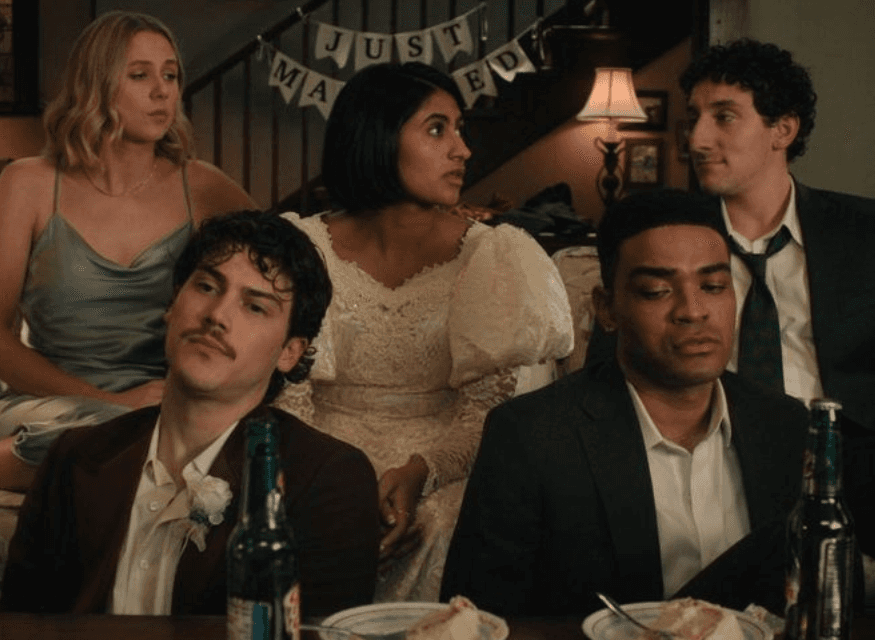
This quote from the episode captures it perfectly:
"There's only one way to find out."
At some point, every meaningful relationship requires a choice.
Not because all the questions have been answered.
Not because all the fear has disappeared.
But because you've decided the connection is worth exploring despite the uncertainty.
Research highlighted by Harvard Health has shown that strong relationships contribute significantly to long-term happiness and well-being. Those relationships aren't built by people who never feel afraid.
They're built by people who learn how to move forward anyway.
FAQ
Is it normal to be scared of commitment?
Yes. Many people feel nervous when a relationship becomes more serious because commitment involves vulnerability and uncertainty.
Can I like someone and still be afraid to commit?
Absolutely. Those feelings often exist at the same time. Liking someone doesn't automatically eliminate fear.
How do I know if it's fear or a red flag?
Ask yourself whether your concerns are about the person or about vulnerability itself. Concerns about trust, respect, or compatibility deserve attention. Fear of getting hurt is often a different issue.
Should I wait until I feel completely ready?
Most people never feel completely ready. It's often more helpful to focus on the quality of the relationship than the absence of fear.
Why do I pull away when I start liking someone?
For some people, increased emotional investment creates anxiety. Pulling away can be an attempt to avoid vulnerability or potential disappointment.
What should I do if I'm scared to commit?
Try identifying the specific fear underneath the hesitation. Understanding what you're actually afraid of is often the first step toward moving forward.
Guyset may earn a commission when you purchase through links on this page.
Read More

The Unwritten Rules of Planning the Second Date
If the first date went well, don’t overthink who should make the next move.
What's The Right Time to Meet Each Other’s Friends
There’s no exact timeline, but meeting each other’s friends is usually a sign that early dating is starting to become something more.

What To Do When Someone Keeps Canceling Dates
Repeated cancellations can tell you a lot about how interested someone actually is.

The Best Time to Ask Someone Out After Talking On Hinge
How to know when you should cancel a date and when you should give it a chance.