Finding Balance at the Highest Level with Zach Svajda
TRANSCRIPT
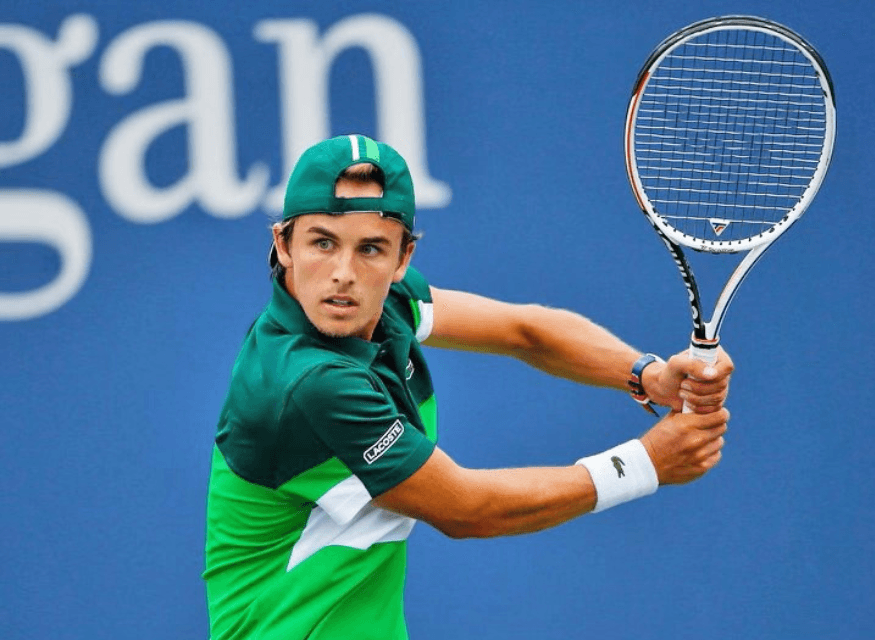
I'm thrilled to welcome professional tennis player Zach's Vida to guy said at just 22 years old, Zach has already made waves in the tennis world. He made his us open debut at 16 years old and recently faced off against tennis legend and one of the greatest of all time Novak Djokovic winning his first set against him in a tie break at this year's us open.
Zach started playing tennis at the incredibly early age of two years old, guided by his father who was both a player and a coach. Homeschooled since elementary school, he's dedicated his entire life to this sport, traveling 30 to 35 weeks per year to compete around the world. He literally did his interview in China while I'm in New York, so we're a 12 hour difference in this conversation. In our conversation, we'll dive into his journey as a professional athlete, the mental and physical demands of competing at the highest level,
how he manages life on the road, and what it's like facing one of the greatest tennis players of all time on tennis' biggest stage. Get ready for an incredibly interesting and insightful discussion about discipline, sacrifice, and finding balance while pursuing your dreams at the highest level. Without further ado, please welcome Zach Sveta to God Center.
Speaker 2 (01:45.23)
Also, how do you say your last name before I forget to ask you? Svide, I was not gonna guess that. I'm happy. I'm happy. So as a professional tennis player, can you share a bit of your journey into the sport? Like I'd love to hear your background, some significant like achievements so far, which we'll get into because I want to talk about the US Open. Your current training location because we're 12 hours apart right now. And yeah, just start with all of that.
pronounced spider.
Speaker 1 (02:15.404)
Yeah. So originally, I'm from San Diego. That's where I grew up my whole life. And I started tennis when I was two years old, which I don't know how I was so young. I don't remember, but, my dad got me into it. played throughout, his whole life and he played in college, a few pro tournaments, not a lot. And then he went into coaching. And so that's how he got me into it at two years old.
And I played that and baseball growing up and then around, I would say 11 years old, I had to make a decision. Do I choose baseball or tennis? I didn't really know. And I'm like, I like the individual sport a bit more, so I'm going to do the tennis route. And from then on, like I was homeschooled since third or fourth grade. So I never really had the public school really a lot. And
Yeah, it kind of became my life. day I would play with my dad or we had a college guy live with us for a few years or my younger brother, Trevor. He also plays. He's just starting on the Pro Tour as well. He goes to SMU. So I had good practice and yeah, that's kind how it all started.
That's kind of a wild experience, like playing tennis every single day, like homeschool, all of that. What was all of that like? Like, did you like growing up that way? Did you feel like it was super intense? Like tennis was kind of everything and how has that kind of shaped you now?
When I was younger, didn't really, you know, as I'm 22 now and I was like much younger, a little kid, I didn't really understand like how the world works. So like, thought playing tennis every day, something I loved and enjoyed going out there with my dad or brother or whoever. I'm like, okay, I'll play this every day. Like, cool. I don't have to go to school. And I could just be on the tennis court and you know, have fun. And I never really felt burnt out.
Speaker 1 (04:22.222)
in a way. also from like 11 through 14, 15, I didn't play any tournaments. I just wanted to train. My dad wanted to take that route and just so we don't get burnt out and just be at home, train, practice. And then once I'm 15, 16, I could start, ease my way into it. But yeah, when I was younger, was just tennis was my life.
And where are you right now?
Currently, right now, I'm in China.
For tennis, right? Like you're playing a, you played a tournament or?
Yeah, for tennis. I travel about now. I mean, it's a full-time job now. I travel about 30 to 35 weeks out of the year and all of that's for tournaments all around the world.
Speaker 2 (05:07.192)
Shit, no, we will get all into that. I'm really curious about the traveling and all of that. You played your first kind of big debut at 16 years old, as you said, right at the US Open. What was it like playing at 16 years old at the US Open? Like what was going through your head walking onto the court and how do you even prepare for something like that at such a young age?
Yeah.
Speaker 1 (05:31.544)
You know, I was so young and that was actually, I'll explain how I got into it. I, played one of my first tournaments back after like four or five years off and it was called Kalamazoo. It's like the biggest, junior tournament in America or in the one, I guess in the world too, for like under 18, 18 or under. And my dad asked, like, do you want to play this? It's for a US open wild card. If you win it, it'll be automatically into the main draw. And I was like,
I don't know if I want to play it, but I guess I'll play. so, yeah, I went there when I was 16 and I won that. And that's how I got into US Open. And I'm like, oh my gosh, like this is a crazy experience. You know, I was not expecting this to be here. So that was definitely a really cool experience.
So wild.
Speaker 2 (06:23.635)
What was it like playing in the US Open at 16?
Yeah, playing there, was my first time in New York, my first kind of like pro tournament, I would say, especially like a big one. And, you know, it was such a cool experience. was, think I was the youngest kid in the draw and I ended up playing a guy who was just about to retire. He was like 38, I think years old or 39. And, you know, I felt super excited to be there and I actually won the first two sets.
playing really well and I'm like, wow. But in Grand Slams, it's three out of five sets. You have to play a little bit longer. Yeah. And my body, my body didn't, you know, I was 16, so I wasn't super strong and physically not there. So I started cramping a bit in the third set and then throughout the whole match, like a full body cramp. So I ended up losing that in five sets, but it was a really close match, really cool experience. And it was, yeah.
I'm a big fan of tennis and every time I watch a match I am in awe of how long you guys can play. Like playing five sets of tennis is so insane. Like I'll play one with like a friend and I'm cooked. Like how do you maintain that stamina? Like how do you maintain for five sets?
Normally, I mean, I do a lot of fitness off the court and in the gym. It's a full body like workout, but a lot of it's the track work. I do a lot of track with my trainer. It's a lot of conditioning, cardio, footwork things. Like it's a full, I don't just like practice for an hour two and that's it for the day. Like my day is like, you know, it's all about the recovery or like training. I'm trying to get better with eating.
Speaker 1 (08:13.214)
and a lot of fitness, stretching. So it's a full thing. You know, they have to be prepared, especially for the Grand Slams, because it's three out of five sets. So the time before, I'd really try to prepare for that.
What does that fitness routine look like? And when you say getting better at eating, what does that mean?
With the fitness, I'll start with the eating. The eating, I'm fine like, I could kind of eat whatever because I burned so many calories throughout the day and I need like at least three, 4,000 calories per day just to like maintain my weight. But with the eating, just trying to eat little bit more vegetables, a little bit cleaner. I say eat pretty healthy, but just, you know, I'm trying to get a little bit better with my vegetables. Fruit I'm good with, but.
So yeah, just that and then with, what was the other part?
the training, fitness, work out stuff.
Speaker 1 (09:08.472)
yeah, the training and the workouts. Every day is different. I have a good, I've like, I love my trainer and we have a good program. Like we coordinate throughout the year, like what tournaments I'll play and how many like weeks I'll have off so I could like, you know, we know what we're doing in between. And we obviously try to peak for the majors for the four Grand Slams. So yeah, a lot of it's full body though. A lot of specific things, what I'm working on with my serve.
or with the forehand staying lower. it's lot of work.
Is it a lot of leg or is it upper body? What do you focus on for tennis specifically?
I would say everyone with tennis, it's about like 60, 40 legs or 70, 30. Like you want to work more on your legs, not so much the upper body. We still do a lot of shoulder rehab or exercises, but most of it's the legs.
So flash forward to this year in the US Open, you just played Novak Djokovic at this year's US Open in the second round and you won your first set against one of the greatest of all time. What was that experience like? Tell me all about that and what did you take away from competing at that level? I'm so excited to talk to you about
Speaker 1 (10:25.454)
Playing Novak has always been a dream of mine since I was a little kid. I remember always watching him in a finals of a Grand Slam and playing against Roger or Rafa, you know, the big three. And I was telling myself, I remember like sitting on the floor in the living room, being like, I want to play Novak so bad one day before he retires. then I see the draw after I qualify.
And I'm like, if I win my first round, I'm going to most likely play Novak if he wins. Yeah, that was like really, you know, I was thinking about it a lot, especially in my first round match too. I was pretty nervous just because of that. I'd been in first round of majors and second round two and I played center before, before he was number one. I think he was like seated at 11 or 12, but there was something different about playing Novak.
So crazy.
Speaker 1 (11:20.603)
It was just a really cool experience.
Tell me more about it. How do you even prepare for that? How do you sleep the night before? What is your mindset like going on to the court throughout the match? I'm so curious about all of that.
Yeah, I mean, it was definitely out of all the matches and tennis I played, it was like the most exciting but stressful two days before playing him because when I won my first round, I had two days off. And so I just really tried to I try not to overthink it too much. So I had my friends back home in L.A. fly into New York with me and I had my team, my coaches and my two brothers came to.
And so I really tried to just like enjoy my time with them. We actually, I ended up doing some TikToks that a couple actually went viral, which was funny, but just really try to get my mind off of it a bit. Try not to overthink it and just, you know, have fun and still believing in my game. Like if I play well, you know, I feel like, you know, tennis, you know, anyone could win on any given day. So yeah, the two days before just, you know,
the same routine dinner, spending time with my friends. I didn't try to do too much different. And then on match day or the night before, I slept pretty good. I think I woke up once. I'm feeling like, my gosh, I'm playing Novak today on the main stadium. yeah, so it was all pretty like, it happened so quick. I felt like I woke up and went over to the site and
Speaker 1 (13:03.04)
You know, was a good, like, lead up. I did everything the same and then the match happened.
What is your pre-match routine? Like, what does it look like actually leading up to the match for you? Like, I'm kind of curious to the day in the life of a professional tennis player going from like literally your bed to the court. What does all of that look like?
I could give you the breakdown. It was scheduled for 1130 a.m. first on on Ash. So I woke up around, I would say six or 630 and I got breakfast at the hotel with my coach and then our driver came.
What'd have for breakfast? I want to hear all the details.
breakfast what I have I had some eggs toast and I think just some fruit and orange juice nothing crazy okay and I try to keep the same routine throughout the tournaments love it and yeah went over to the site I'd say around 730 or 8 and then yeah started my warm-up with my trainer and coach and I got to practice on ash a few hours before just a
Speaker 1 (14:14.894)
feel, you know, how it feels in there, which I did the day before too, because it's a, you know, totally different court than what I'm used to kind of, you know, I think it's the biggest stadium we have for tennis. So, yeah, just try to, you know, prep and, yeah, just warm up. And then I ate again around like 9.30 or 10, a quick, you know, small bite, I think of some eggs and some yogurt and fruit. And then
Yeah, warm up with my trainer in the gym and then go on at 1130.
Do you guys see each other back there or do not see each other until the match?
The players yeah Yeah, we see each other before we try to we don't normally warm up like in the same gym So I believed I was in the downstairs gym on site and so he went to the upstairs gym Just so you guys super close, you know
Like you and Novak,
Speaker 2 (15:10.478)
Do you guys say hi or do you like, like what is it like before?
if it's like my close friends, like maybe we'll say hi, but normally we're pretty serious. And, I know Novak a bit because we practiced together like three or four years ago during us open. And so, he obviously remembered me. remembered him and, we kind of just gave each other like a little head nod, nothing crazy. And, yeah, then that was that. But then after like the handshake, we exchanged some nice words and, it was, it was all cool.
You mentioned that like if you saw some of your close friends like who are some of your do you have some like close friends that you play against and what's that like playing against close friends?
Yeah, some of my close friends, would say mostly are the Americans. it's Brandon Nakashima, because he's from San Diego as well. Emilio Nava, Ben Shelton, pretty close with. just, I mean, honestly, all the Americans, we all get along. yeah, and playing close friends, honestly, I kind of like it because I treat it like practice a bit since we all practice together. So I try not to like...
put too much pressure on myself and I kind of prefer it.
Speaker 2 (16:24.012)
Yeah, probably sounds more it sounds more fun, a little lighter. What is what's it like playing in Arthur Ashe? mean, I was sitting this year in row X, like at the top. It's it's fucking massive. What is it like playing for that type of an audience and that environment?
Playing there was definitely different. I played on a good amount, I'd say, of center courts throughout my career so far and other tournaments, but that was definitely more electric feeling. It's loud. I love the energy there. It was pretty much full, especially in the tie break, I remember, in the first set when I was just about to win the first set. I looked when I hit my set point backhand.
And I'm like, wow, this is like a full stadium. This is really cool. So, yeah, I love that stadium. I practiced on it a couple of times actually with like Federer, Monfee's and a few other guys, but it's totally different, like playing a match there.
I'm sure and then you won your first set in a tie break. How do you keep your nerves down? Like how do you when you're in that moment and it's what was the score when you won?
Yeah, in the tiebreak, I won the first set 7-6. And when that happened, it kind of like got to me. like, wow, like, I just got a set off a Novak and I could potentially win this if I keep it up. unfortunately, kind of the nerves kind of got to me and like the end of the second and then the third set too, where I started cramping a bit. I try not to show it too much, but it definitely was like
Speaker 1 (18:09.74)
tight, tightening it up and it was hurting a bit, but I just really try to play through it and do the best I can out there.
So now that you've experienced that, how do you deal with self-doubt or imposter syndrome in terms of playing guys that have been competing at such a high level for so long? How do you manage that and maintain, manage the nerves and anxiety and all of that?
Especially after that match, that gave me lot of confidence. you know, anything could happen in the sport. And I know if I play well, you know, I feel like I could beat whoever on any given day. I've had a couple top 20 wins, but never anything higher than that. And, you know, definitely I took a lot of positives from that match. And I think it'll give me lot of confidence throughout.
rest of the year and bring it all into throughout my whole career.
Yeah, that's so awesome. What is, like, in your opinion, the biggest misconception that people have about what it takes to make it professionally in something that you're really passionate about?
Speaker 1 (19:25.774)
Hmm, that's a good question. I would say to answer that, like it's a lot of work. Like people don't really see the behind the scenes of what we do. People just see us like on the big show, you know, the big screen, but there's so much behind the scenes that we have to do. Like I talked about, like with the eating or the prep, the practices, the stretching you have to do. When I was younger,
When I was just getting started, like around 16, 17, I was just learning. Like I kind of just showed up to the practice or to the match without really a warmup and go play my match. And then right after that, just go home, enjoy the rest of the day. But now like I see the top guys like Novak, Alcorescent, are all these guys like they're there really taking care of their bodies and doing everything possible with their trainers. And it's a full time job. Like if, if there's one practice that
noon is not going to be from like 12 to 2. It's going to be like you get there at like 9 a.m., 10 a.m. Get ready for that and then the recovery too. It's a full day.
Yeah, I mean, that's super interesting. think like the nobody thinks about like the prep work or the the amount of work it takes the consistency in that work to and
Consistency too is a big thing. Staying with it at least five, six days a week.
Speaker 2 (20:51.616)
Yeah. You're training five, six days a week.
Yeah. Yeah. I try to sometimes have Saturday, Sunday off depending on my schedule, but for the most part I'm at least gym or fitness six days a week. Yeah.
With that intense schedule, like that really crazy schedule, what is dating like as a professional athlete? Like how do you date while constantly traveling and like how do you maintain relationships and everything?
Yeah, know, the dating life could be tough. The girls would have to get like, you the travel and your lifestyle. I've been into long-term relationships and they understood, you know, for the most part. I feel like you can make it work. with me, like I'm all about balance, which, I need like my time at home to reset and to see my friends, my close friends back home in LA or San Diego drive down to see my parents.
Normally I do go with like two or three weeks on the road and then I got to go home for like two weeks or something, you know, then go back out. So yeah, it could definitely be challenging for sure. So thankfully my close friends, my close circle, they understand like the lifestyle and they totally get it.
Speaker 2 (22:12.992)
Yeah, and I think at your level or at any level like you're at, the people in your life kind of have to understand it or it's just not gonna work relationship wise because you can't be texting your friends all the time if you're training from nine to nine. Like you just, it's not gonna work.
Right, I know, yeah, they definitely have to understand it.
How do you, like, if you're dealing with something that's kind of like on your mind, like a personal stressor, how do you keep performing at the highest level when dealing with something like personal in your mind? like, do you, do you categorize the two? Do you separate the two? I know we talked a little bit about something, but like, do you know what I mean by that question?
Yeah, I get that. Especially like at tournaments, I need to be like fully there mentally. So if there's like a personal problem at home going on or something like, know, with my family or something, like if I can't be there, fully there, like for my match, like with tennis, there's tournaments you could play if you want every week. And so there's going to be more opportunities. So with me and a lot of other players too, like if you're not fully there, I just like...
I'm fine to go home and do a little reset and then go back at the right time.
Speaker 2 (23:32.734)
That's a healthy way to look at it, feel like. Because I think some people would push themselves to a level that's too much and not take care of themselves mentally. And I think that leads into then when you want to play and do your best,
Yeah, I'm at the point now, I feel like I've been doing this forever. still, I guess I'm only 22, but I started when I was like 16 doing this. And before I used to travel alone at times or, you know, didn't really understand the tour life of a pro tennis player. And so I would push through those tough moments on the road and it just wouldn't be good. You know, if you're not there mentally, physically, you have to be fully there. So now I've learned like, you if I'm not
there, I'm good to go home. It's okay. There'll be another tournament the next week or next month, however much time you need to reset. Cause at the end of the day, like this is my full-time job, but like family or, you know, my life comes first. Yeah.
I like that mindset around it. Can you talk more about this travel? Like you said you travel 35 weeks a year. That's more than half the year. How do you do that?
How?
Speaker 1 (24:43.982)
I honestly don't know how I do that. Some of the time changes, my body just like, what is going on? And I just get used to it sometimes. Yeah, it's a brutal schedule with the tennis season. A lot of players are wanting to switch it to shorter. hopefully they do because it's really long. It's like 10 and a half months or so. But with me, I need the balance of like,
I'll do two or three tournaments max and then go home and then come back. Sometimes I have to be in Europe for a month or month and a half at a time, which is fine because I like parts in Europe, but it could definitely be a lot.
Do you have any good like plane travel tips, sleep tips? how do you even go create a good sleep schedule when you're constantly traveling?
Sleeping could be tough, especially for me on the plane. never, okay, once actually my flight here to China, it was the first time I actually slept on the plane. So all the other travels I've done, like all the flights, I cannot sleep. So hopefully I could like, I don't know, maybe take, what is it, melatonin or something just to get me sleepy. But it's a lot with the time change and the travel. It's a wear and tear on your body.
you do anything like when you like you got to China when couple weeks ago now? Okay, like when you get there, how do you even adjust to like, okay, I have to go to bed at right now and at home it's 11am like how do you do that?
Speaker 1 (26:11.822)
About a week ago, yeah.
Speaker 1 (26:22.414)
Yeah, it was crazy because we had a layover, my coach and I from LA. So I think it took 22, 23 hours to get to China from LA and we landed at 10 a.m. and I was so tired. But what I've learned now, like you have to, if I want to be adjusted to the right time change, like you have to stay up and go to bed, like at your normal bedtime, it's at nine or 10, 11 p.m. So I got in at 10 a.m. and
As much as I wanted to sleep, my coach booked a practice for like 3 p.m. I had gym after that, which it's, it was really tough, but I had to push through it just so I could stay on the same time change. Because when I was younger, when I first started doing this, I would go to bed like, you know, at noon over in Europe or something. Cause I was just so tired. I never knew. And then I would wake up at like 1 a.m. feeling great, but that's not really smart, you know, you have to adjust to the time change.
This is your, correct me if wrong, one of your first years making like a really solid amount of money. You've made now $300,000 this season, is that correct?
Something like that, I actually haven't checked. It might be around there, roughly 3 or 4.
What is it like transitioning from junior tennis to actually making a living doing what you love? What is that like?
Speaker 1 (27:49.23)
Yeah, I mean, it's a really nice feeling obviously to, you know, be in the main draw, all these majors and doing well, you know, that's how we, with tennis, we don't really get big contracts, even the top guys really, like it's all about how you do at tournaments. Obviously the more you win, more that prize money will be for that tournament. So, you know, it's nice for sure. Starting to make, you know, good money and
I've been on my own since I was like 16 actually when I played my first US Open. started to my first paycheck that I got ever really. And that's how I like started funding myself through my coaches or paying rent. I started living alone when I was 17 in LA. moved over to LA. So yeah, I've been on my own since. So my parents obviously support me and all that, but financially, you know, we didn't grow up from a lot of money. So
Yeah, it's a lot of discipline, I guess, from a young age. You grow up quick.
Yeah, I'm sure. What's that like? Like, I don't know, starting living on your own at 17, 18, you're now 22. You mean like I'm 25. We're around the same age. I'm now living alone for the first time in my life this year. It's been like a month now. What is some of the advice you have? I lived with roommates before. But yeah, like what is some of the advice you have for somebody living on their own for the first time?
When I first moved to LA when I was 17, well, I actually lived in a hotel for about eight months, which was crazy. was where I practice over in LA. And then I got my first apartment when I was like 17 and a half and I didn't know many people there. So it was really tricky for me. I didn't enjoy living alone because I was just used to being at home in San Diego with my parents and brother. But it was something that had to be done because the training
Speaker 1 (29:46.592)
was a little bit better as I got older up in LA and my coach now that I still work with is up there. So it made more sense to like get an apartment over there. But the first, I would say like six months or a year was really tough for me because I didn't know many people. And then thankfully I met Drew, one of my closest friends around that age. And then that's how we got connected. And I got introduced to more of his friends and now I have a good close circle that
I enjoy. So it could definitely be tough at first and feel a little bit lonely, but if you occupy yourself and, you know, think it teaches you discipline and, you know, I feel it could be good living on your own.
Yeah, I agree. What are some of the sacrifices that you've had to make that most people don't see or like they just wouldn't even like consider for somebody like you? Yeah, what does that what does that look like?
Yeah, it comes with a lot of sacrifices. feel like in any top sport, you kind of have to be a little selfish at times, you know, because your job comes first before a lot of, you know, things. yeah, I've definitely made a lot of sacrifices. If it's like my friends wanting to do something when I was younger or whatever it is, I should be like, oh, I have to go to a tournament, you know, so I, like I said, I think it really teaches you.
Discipline from a young age. I think that's great with tennis because it's an individual sport. You're on your own early and You kind of grow up quick. So right in the beginning it could be tough making those hard sacrifices as you get older like, you know For me it comes a little bit easier. But also like I said, like I need the balance So as long as it doesn't affect my tennis like I'll probably you know, do that. Whatever it is if that makes sense
Speaker 2 (31:40.032)
It does. was going to say, like, are you used to it now or do you still feel like FOMO or fear like missing out of things or like having that or you're just kind of like, you know what, this is this is it and I understand the sacrifices that I've made or that I have to make in order to be where I want to be like that type of thing.
Right. A few years ago, like when I was 19, 20, few of my friends, like tennis friends too, like went to college. And sometimes I had thoughts like, oh, I wonder, you know, what would it be like if I went to college or even went to high school? so at times I had like thoughts like that, like, oh, am I missing out? But now that I'm getting older, like, you know, I don't think I would be where I am today if I would have done that route.
Does that make sense? So I'm obviously grateful, blessed for where I am today and having a good balance too helps with all that.
Yeah, how do you balance or sorry, how do you bounce back from a loss or a setback or disappointment? I mean, this is kind of both for like tennis and in life, but like, specifically for tennis, like how do you come back from a loss or something that where you really feel like you've been set back?
For tennis, I do feel like I do this really well because I'm a like still guy on court. I don't know you've seen me play, but like I don't show a lot of emotion on court. I'm usually very quiet and just try to move on to the next point if that's win or lose. And so when I lose matches, because in tennis, everyone pretty much you lose every week. You can have a really good week, make semis or finals, but there's only one person out of the hundred
Speaker 1 (33:28.44)
people in the draw or something, winning that tournament. So I try to look at it. If you lose first round or in the later rounds, there's always a tournament that week. There's so many more opportunities. It's not like the Olympics or something. You have to wait four years. Like I said, it's a 10 month season or 11 month season. So I really try to forget about it as quick as possible. Like learn from what...
you I did wrong and take the positives in that match and then just move on and really try to get it out of my head and move on to the next match.
Do you have any advice for that? for a young guy who's, I don't know, experiencing some sort of like disappointment or setback or failure, rejection, anything like that. You seem to have a really good head on your shoulders about it. And I think having so many opportunities is really helpful and like being able to know like, you know what, this one didn't work out. The next one will. I think is a mentality we can all apply to everything. Do you have any advice on that?
For sure, yeah, especially like the younger kids, you know, looking up, I guess to us, like, at the end of the day, I try to tell myself like, it's just a tennis match. There could be, there's so many more important things in your life. Obviously it's your full-time job or if it's something you want to do, if you're, you little kid watching this or something, but like, at the end of the day, I try to look at it like it's just a tennis match.
hitting a yellow ball over the net if that's against Novak on Ash or a smaller tournament out here in China where I am. Like it's not that, like don't put too much stress on yourself and there's going to be another tournament that week or whenever you want to play. So I really just try to don't overthink it. It's not the end of the world and just move on quickly.
Speaker 2 (35:21.044)
Yeah, I think that's a good way to look at everything too. Like, yeah, I think we can we can kind of boil everything down to like it being a yellow ball hitting it over a net like it is all that small and not these.
You're so then done, but I try to like, you know
Totally totally but it's but it is true too like there's gonna be something else tomorrow and there's always something the next day like it's it's a good way to look at things and a good way to like reframe failure or rejection or a setback Tennis is such a mental game. How do you manage? Pressure and the ups and downs of it mean we're talking a little bit about it and knowing that the next one's gonna come next but like
When you're in it, how do you maintain, manage the pressure?
Right. In the moment, obviously easier said than done, but I try to, I have a couple, like, everyone has their own little things. And with me, like, I just still try to stay calm on court. I don't really show a lot of emotion and I just try to trust myself, like a lot of self-talk with me. Or like if I'm struggling a bit in a match on an important time, I'll like go to the towel and regroup or something.
Speaker 1 (36:38.19)
So there's a lot of little hacks, something that works for you, everyone's a little different. But you don't want to play, I would say, every point the same. Some points are far more important than other points in the score line, so you try to look at it like that.
What is some of that self-talk? Like, can you share a little bit about what you say to yourself between points or between matches or games?
What do I say? Depends like how I'm playing or like what the score is, but a lot of it's just like, like, okay, let's say I miss something. I miss a shot. Like, okay, forget about it. Move on to the next point or, keep swinging out, keep going after my serve. A lot of short little things and just like, okay, let's get to the next point. Like right here. So a lot of more positive things, more positive than I don't do a lot of.
I never do like negative in my head.
That's probably the best thing you could do. mean, it's like the positive reinforcement just being like.
Speaker 1 (37:42.188)
I try, yeah. Some people help though, Novak or other players when they get angry it kind of like helps them, you know, but it doesn't really, at least for me, yeah.
Yeah, it doesn't for me either. I used to play tennis. I was never that good and I'm very mental. So like I always got in my head about all that stuff. I was more like him and it's not good. I don't think it's very helpful.
Yeah, you kind have to find what works for you.
When you say some points matter more than others and you're playing differently, what does that look like in a game? Like, can you share more about that?
Yeah, so like, I'll give an example, like, let's say it's five all, 30 all in the first set. Like for me, I'm really gonna lock in like on this point and really just like, I obviously give it my all every point, but I'm thinking about it more because it's a big point or like in a tie break or something compared to like two zero me, 30 love. Like I'm obviously still gonna be focused, but it's not like.
Speaker 1 (38:48.138)
as important. Everyone feels the nerves when it's like, you know, when the scoreline gets tighter or closer, or when momentum changes. yeah, I feel like any player would agree with me when it's like a close score, like we feel something like in our energy kind of just like raises a little bit more than like we thought we had.
Are you looking for your opponent's weaknesses? Like are you looking for the things that they're not doing as well today and trying to hit that? Or are you sticking to the game that you have practiced? Like what does it look like in the middle of the match?
I would say it's bit of both actually, where I try every match I play, try to scout the player or my coaches come to me and like talk like, I like one or two things like about the guy, kind of what their weaknesses or what they like to, about one or two of those things. And then I focus on my part. Some players like a lot of data and stats and I don't really do well with all of that. I like short and simple.
So even when I played Novak for example, I got a big scouting report of all of his matches, every little stat possible. And I told my team, I don't like to see that. I don't care if it's Novak or anyone else, I just want to stick with what I'm used to and what kind of works for me. And so was one or two things about him and then kind of just focusing on my game.
What is the conversation with your coaches or with yourself like after that?
Speaker 1 (40:25.632)
After the Novak match?
Yeah, like after a really big match that you've been like, it's really an exciting thing. Like it's very big deal for your career and then you're personal, personally, what's the conversation like coming off the court or the rest of the day?
Yeah, I mean, obviously I take it like every other match. So I wasn't like super happy I lost. I'm not going to be like, happy. You know, like I played Novak. Like it obviously was a great experience. Very cool. But I knew like, it was unfortunate that I cramped a bit and then, you know, you still lost. So I went to the locker room and I saw my coaches and trainer there and we talked a bit. They were obviously proud of me and we took a lot of positives from that match.
So I didn't get too down on myself and obviously playing one of the greatest was a cool, amazing experience. So we took some positives out of the match and then later, like days or weeks later, we talked about like a few things that we could work on moving forward. yeah, wasn't, you know, anything, it wasn't anything too different, I would say.
Is that the same? Yeah, I was gonna say, that the same for like most losses or most times that you just like lose a match? It's the same like we come off, we're proud, like we're happy with the performance, but like could have done better type of thing.
Speaker 2 (42:31.958)
Similar question for a win. Like when you win a match or when you win a game, how do you then be like, all right, I won this, now I still have to play the next one. I still have to maintain that mentality of I have something else to play next.
Speaker 2 (43:23.958)
Yeah, my god, it sounds like an insane amount of work.
Speaker 2 (44:02.081)
the loss.
Speaker 2 (44:12.014)
That's so crazy to me. That's like, don't think anybody would know that or expect that from players. mean, guess thinking about it, it makes sense because it really becomes everything, but like, it's so crazy after a win to go practice again.
Speaker 2 (44:38.432)
Wow, is there is there a community amongst players? I mean, I know you said like you're friends with the Americans and I love to hear that because we love the Americans Yeah, but is there like a community amongst the players? Like do you all? Know each other or no. mean, there's a ton of you guys. So it's like
Speaker 2 (45:28.46)
Right, right. What what advice do you have for young guys trying to find their path or trying to find their thing in life? In general.
Speaker 2 (46:36.334)
I love that. And this might be a similar question, but I kind of end most of my episodes with what is your advice, well, I have two more, but what is your advice for young guys on pursuing their dreams like you have? Like the first question was kind of like creating a path. This one is like you have set out and done something that like most people dream of and don't get to do. What...
What is your advice for that? think it's kind of a tough question, but I'm curious to what you think.
Speaker 2 (48:08.45)
That's really great. That's really great advice. And it makes a lot of sense, too. And then what is your advice for your younger self?
Speaker 2 (48:19.744)
Yeah. Or what would you tell like 16 year old Zach that you know now?
Speaker 2 (49:03.47)
I think it's great advice. really do. Well, thank you so much for coming on here. Thank you for doing this at such a late hour. Your time. really.
This was really cool and I wish you the best of luck in your career. I'm excited to continue watching you and I know the audience is now going to start following you too. So I'm really excited to see what you do and watch you absolutely kill it in your career.
That is the episode. Thank you so much for listening to Guy's Guide to What Should Be Talked About. I'm Josh, I'm 25 years old and I'm here every single week, every single Tuesday to talk about what should be talked about for guys in their 20s. If you liked this episode, I really hope you did. Please like, subscribe, give this podcast five stars. That's one, two, three, four, five stars, not four, not three, two, no one, it's five stars. I really, really appreciate that. If anyone told me that should be talked about for guys in their 20s, send it to, no.
If you have anything you me to talk about that should be talked about for guys in their 20s, head over to my website, guyset.com, G-U-I-S-E-T.com. And there is an Ask Me Anything button right there. You can also type in guyset.com slash ask me anything and it will come up right there. You can ask me literally anything and I will be sure to talk about it. You can be anonymous, you can be your name, whatever you want. And also check out guyset.com. There is new blog posts every single day on all the topics that should be talked about for guys in their 20s.
You can also watch this full episode on YouTube and you can connect with me on Instagram, on TikTok, on all social media platforms at the guyset and at guyset podcast. Thank you so much listening to guyset, a guys guide to what should be talked about. And I will see you guys next Tuesday. See you guys.